
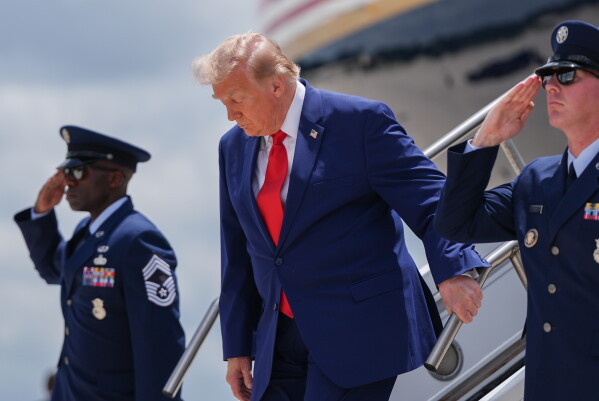
President Donald Trump highlighted the ‘Abraham Accords’ during his Middle East visit, aiming to expand the diplomatic relationships established in 2020 with Arab nations and Israel. The accords, named after a biblical patriarch, hold significant religious and cultural meaning. Abraham, or Ibrahim, is a revered figure across Christianity, Islam, and Judaism. These three faiths collectively represent over half of the global population.
Abraham’s legacy serves both as a bridge and a point of contention. Different faith groups often claim exclusive heritage links to Abraham. Bruce Feiler, the author of ‘Abraham: A Journey to the Heart of Three Faiths,’ discusses how each group seeks ownership of Abraham’s story, yet emphasizes that his legacy should be shared.
The Abraham Accords and Diplomatic Efforts
The Abraham Accords consist of diplomatic and commercial agreements, developed with U.S. influence, between Israel and the United Arab Emirates, Bahrain, Sudan, and Morocco in 2020. These accords could foster peace talks with other majority-Muslim countries.
Biblical Beginnings to Present Headlines
Abraham first appears in Genesis in the Hebrew Bible as an elderly man promised by God to father a great nation. His journey leads to current-day Israel and Palestinian territories. He fathers Ishmael with Hagar and later Isaac with his wife, Sarah. The banishment of Hagar and Ishmael and the eventual sacrifice of Isaac are significant narratives in Abraham’s story.
In Jewish tradition, Isaac and Jacob are considered patriarchs of the Jews. Christianity views Abraham as an example of faith. Both Islam and Judaism depict Abraham as rejecting idol worship in favor of one God. However, Islam focuses on Ismail (Ishmael) in the sacrifice story and views him as an ancestor of Muhammad.
Abraham: Unity and Division
Christianity, Judaism, and Islam each claim heritage to Abraham, contributing to historical tensions yet also serving as a common point in conflict resolution efforts. The ‘Abrahamic faiths’ term broadens inter-religious dialogues beyond ‘Judeo-Christian’ inclusivity. The United Arab Emirates recently welcomed the Abrahamic Family House, a multi-faith religious center.
Current religious tensions underscore the need for dialogue, with increasing antisemitism and anti-Muslim sentiment amid global events. Initiatives like the Abrahamic Family House represent efforts to bridge these divisions.
Trump’s Emphasis on Abrahamic Ties
In a Knesset address, Trump highlighted the Jewish connection to Abraham with references to the ‘God of Abraham, Isaac, and Jacob.’ He preferred the Hebrew term ‘Avraham Accords.’ Despite past controversial statements about Muslims, Trump’s engagement in the agreements reflects the longstanding complexities surrounding Abraham’s story, as discussed by Feiler. This story resonates with themes of tension, inclusivity, and coexistence among different communities.
Associated Press religious coverage continues with funding support, but the content remains their responsibility.