
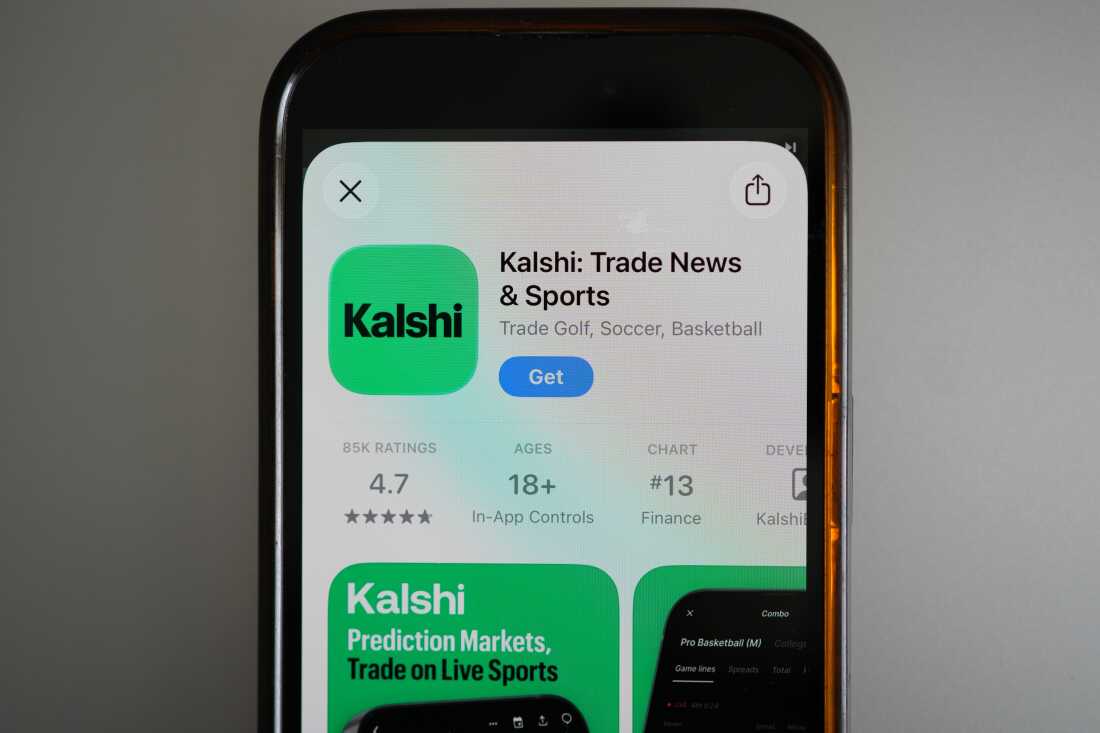
An advertisement for the prediction market app Kalshi was displayed on a mobile phone in Chicago in April 2026. Since the commencement of the World Cup, Kalshi has seen unprecedented trading records. Over $25 billion in wagers have been recorded on the platform during the tournament, surpassing the analysts’ forecast of $4 billion for popular sportsbooks such as DraftKings and FanDuel.
Kalshi’s approach has stirred skepticism in the sports betting community. Advocates question its classification, suggesting a backdoor expansion in the sports betting arena without state gaming taxes. Kalshi’s app enables betting beginning at age 18 and operates in states where sports gambling is outlawed, such as California and Texas. This has been attributed to support from the Trump administration, which backed Kalshi’s claim that it represents a different entity than a sports gambling site.
Kalshi identifies itself as a federally regulated financial product rather than a sports betting site. Bets on Kalshi occur among users, contrasting with sportsbooks where bets are placed against ‘the house.’ Kalshi charges a fee per transaction instead of profiting from bettor losses. Bettors have options beyond sports, including wagering on elections, the president’s language choices, and Netflix’s top-streaming movies.
Elisabeth Diana, a representative for Kalshi, indicates that their platform is equitable and less aggressive. Unlike traditional sportsbooks, Kalshi does not place restrictions on bets or prohibit frequent winners. “Like the stock market, users can withdraw at any time,” Diana explains.
The debate over whether Kalshi is a sportsbook or a novel financial app is central in over 20 federal lawsuits. The outcome influences billions in tax revenue and the prediction market industry’s future.
Victor Matheson, a sports gambling economics professor, observes that from a bettor’s perspective, Kalshi resembles traditional sportsbooks. Matheson advocates for similar regulation and taxes for Kalshi and sportsbooks.
Kalshi’s marketing strategy aims to shift users from conventional betting platforms. A campaign featured monkeys in soccer jerseys enjoying leisurely activities, accompanied by the message: “Life after switching from predatory sportsbooks to using Kalshi.” However, these ads have been removed from digital platforms following NPR’s inquiries.
Researcher David Forman from the American Gaming Association refers to Kalshi as a sportsbook with a small prediction market segment. With sports accounting for 80-90% of wagers, users place bets on game outcomes, player performances, and various aspects of broadcasts.
The escalating trend of prediction market growth contrasts with a slowdown in legal sports betting. Kalshi’s monthly trading reached $30 billion last month, a jump from $5 billion last year. Sportsbook companies have responded by launching prediction market services to expand into untapped states like Texas.
While prediction markets currently do not threaten sportsbook profits, executives express concern over tax avoidance. Sportsbook operators pay up to $4 billion annually in taxes supporting public services across states. Kalshi’s operation circumvents these taxes, sparking state reactions.
Kalshi is engaging with states such as North Carolina to establish middle-ground tax measures, advocating a structured approach. Diana asserts their adherence to corporate tax laws and support for responsible state taxation.
Despite endorsement from President Trump and involvement from Donald Trump Jr., legal challenges persist. Various states including Minnesota, Massachusetts, and Arizona have attempted regulatory action against prediction markets like Kalshi. Federal courts have temporarily withheld such charges, with experts anticipating Supreme Court involvement.
Matheson cautions that a political shift in 2028 could reverse federal support for prediction markets. He equates these platforms to illegal sportsbooks under alternate titles.