
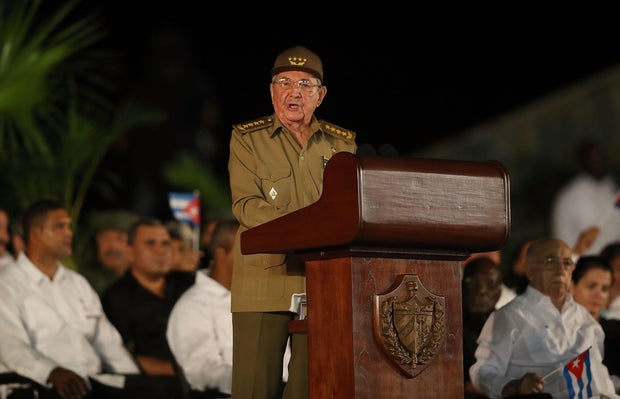
In recent developments, following the removal of Nicolas Maduro from power in Venezuela through swift U.S. military intervention, President Trump indicated potential similar actions regarding Cuba. He expressed intentions for change in Cuba, suggesting the country might undergo significant shifts.
U.S. Efforts and Historical Context
The U.S. has long aimed to alter Cuba’s communist system through sanctions, resulting in limited success. The Trump administration’s oil blockade worsened conditions, prompting U.S. officials to meet with Cuban figures to discuss reform.
President Trump mentioned seeking a substantial transformation for Cuba, akin to the Venezuelan operation. He spoke of a “new dawn” for Cuba, leaving the future of Cuba’s leadership uncertain.
Influential Figures in Cuba
Raúl Castro
Raúl Castro, Fidel Castro’s younger brother, remains an influential figure despite stepping down as President in 2018 and as Communist Party leader in 2021. Recently indicted in the U.S. for charges related to the 1996 downing of planes, the 94-year-old still plays a pivotal role in Cuba’s power dynamics.
Raúl, viewed as more pragmatic, negotiated a significant opening with the U.S. under President Obama in 2014. However, these changes were largely reversed by President Trump.
Miguel Díaz-Canel
Miguel Díaz-Canel, Cuba’s President since 2018, lacks the influential authority of the Castro family. Experts consider him a loyal functionary rather than a central power broker. Despite being Cuba’s President, true power lies elsewhere in the government structure.
Emerging Leaders
Oscar Pérez-Oliva Fraga
As Deputy Prime Minister and Minister of Foreign Trade and Investment, Pérez-Oliva Fraga, a Castro relative, has made notable strides. His policy allowing the Cuban diaspora to invest in Cuba marks a departure from previous stances, although it faces potential legal challenges under U.S. laws like the Helms-Burton Act.
Pérez-Oliva Fraga’s role gives him oversight of GAESA, a significant military-controlled conglomerate with vast economic influence. The U.S. has imposed sanctions on GAESA due to its alleged role in enriching Cuba’s elite.
Raúl Guillermo Rodríguez Castro
Known as “Raulito,” Raúl Castro’s grandson acts as his grandfather’s gatekeeper. Though lacking a formal government role, he is significant for his interactions with U.S. officials, serving as a key contact in potential negotiations.
Prospects for Leadership Change
The Trump administration’s Venezuela strategy is considered for Cuba, yet finding a Cuban counterpart akin to Venezuela’s Delcy Rodriguez remains challenging. Analysts speculate potential roles for Castro family members in any new governmental framework.
Despite U.S. pressures, Cuban leaders resist external influences on their political system. Negotiations between the U.S. and Cuba face hurdles, especially concerning Cuban sovereignty and leadership decisions, according to experts like American University’s William LeoGrande.