
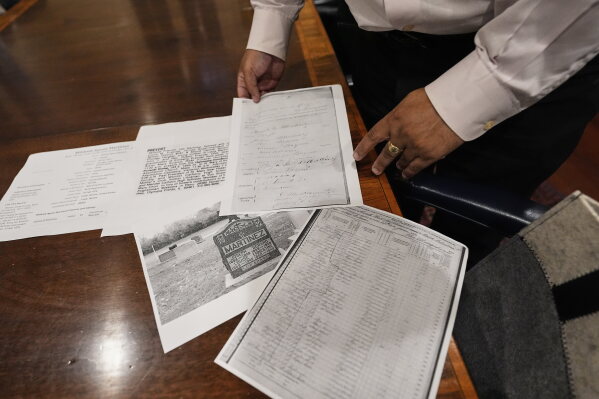
Genealogist Jari Honora from New Orleans discovered that Pope Leo XIV has significant connections to the city. All four of his maternal great-grandparents were classified as ‘free people of color’ in 19th-century census records, linking him to the Creole culture, a blend of French, Spanish, African, and Native American influences. Honora, a historian at the Historic New Orleans Collection, shares this heritage with many Catholics in the city.
Pope Leo, a Chicago native with two decades of experience in Peru, including eight years as a bishop, is seen as a unifying figure for the Catholic Church. Honora and members of the Black and Creole Catholic communities believe that his ancestry could raise the profile of Black Catholics, whose contributions have often been overlooked.
Ancestral Connections
Pope Leo’s ancestry includes a possible Haitian connection through his maternal grandfather, Joseph Norval Martinez, though historical records remain unclear. However, Joseph’s parents resided in Louisiana since the 1850s. Professor Andrew Jolivette discovered that the Pope’s ancestry reflects the diverse cultural identity of southern Louisiana. The presence of Cuban ancestry adds pride for Creoles, according to Jolivette, whose own family is Creole from Louisiana.
Most Creoles are Catholic, and historically, their faith has united families as they migrated to cities like Chicago. Cardinal Robert Prevost’s grandparents, marked as ‘mulatto’ and ‘Black’ in historical records, married in New Orleans in 1887 and lived in the Creole Seventh Ward. After the Civil War, the Jim Crow era restricted their lives, even affecting their church relations.
Migration and Identity
Around 1910, the pope’s grandparents moved to Chicago, following many African American families escaping the racial oppression of the South. They might have ‘passed for white,’ with the pope’s mother, Mildred Agnes Martinez, recorded as ‘white’ on her 1912 birth certificate. Honora notes the precarious nature of life for people of color in the South.
Their New Orleans home was demolished to create a highway during the 1960s, erasing a stretch of a predominantly Black neighborhood. Former New Orleans Mayor Marc Morial described the family’s history as an ‘American story’ of overcoming racism. He feels proud yet perplexed by the shifting racial identity necessitated by societal pressures.
Influence on Catholicism
Rev. Ajani Gibson sees the pope’s heritage as reinforcing African American influence on New Orleans Catholicism, highlighting contributions to Mardi Gras and jazz traditions. Gibson hopes the pope’s heritage will promote a more inclusive Church outlook.
Historian Shannen Dee Williams of the University of Dayton believes Pope Leo’s background underscores the dual history of American Catholicism, involving both European and African influences. Williams hopes his story will highlight African American Catholics’ crucial role and history.
Future Aspirations
Professor Kim R. Harris anticipates that the new pope might expedite the canonization process for African American Catholics, like Pierre Toussaint, and bring attention to their contributions. Reynold Verret, President of Xavier University of Louisiana, expresses joy at this acknowledgement, seeing it as an affirmation of the universality of the Catholic Church.
The new pope’s heritage encourages a broader perception of identity within the Catholic community, emphasizing shared history and culture.