
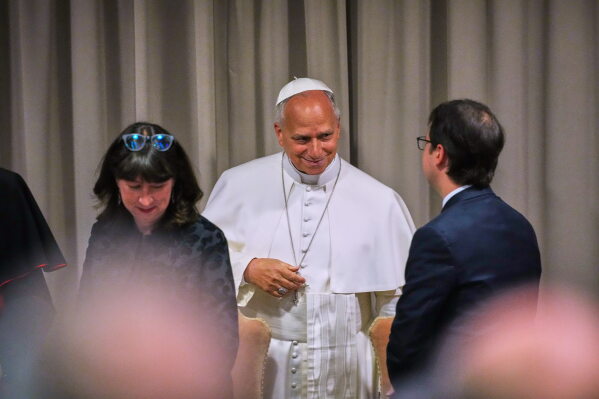
Pope Leo XIV issued a historic apology on Monday regarding the Holy See’s involvement in legitimizing slavery. He acknowledged the Vatican’s past failure to condemn slavery, describing it as a ‘wound in Christian memory.’ This marks the first time a pope publicly admitted and apologized for past papal actions that authorized European rulers to enslave ‘infidels.’
Pope Leo XIV, the first U.S.-born pope with a family history that includes both enslaved individuals and slave owners, made the apology in his encyclical, ‘Magnifica Humanitas’ (Magnificent Humanity). Released Monday, the document calls for strict regulation of artificial intelligence and urges developers to focus on the common good rather than profit. Leo XIV highlighted the link between historical slavery and modern-day digital exploitation, such as unregulated labor practices in the procurement of rare minerals needed for AI chips.
Anthea Butler, a senior fellow at the Koch History Center, Oxford University, emphasized the importance of Pope Leo addressing the Church’s complicity in historical slavery. She argued that only then could he credibly address current issues of technological exploitation.
Pope Leo expressed deep sorrow for the suffering and humiliation endured by enslaved individuals, contrasting their experiences with their immeasurable dignity. He sincerely asked for pardon in the name of the Church.
“For descendants of enslaved persons, this is once again a much-needed apology from the pope,” said Butler.
The Vatican has long maintained that it upholds the dignity of all human beings. However, directives from the 15th century authorized the Portuguese to conquer and enslave non-Christians. For instance, Pope Nicholas V issued the papal bull ‘Dum Diversas’ in 1452, allowing conquests and the enslavement of ‘Saracens, pagans, and infidels.’ Subsequent bulls expanded these rights, forming the basis of the Doctrine of Discovery, which justified the colonial-era seizure of land and people.
Though the Vatican recently repudiated the Doctrine of Discovery, it did not formally rescind the original bulls. The encyclical ‘Sublimis Deus’ in 1537 sought to protect Indigenous peoples, affirming they should not be deprived of liberty or property.
In his encyclical, Pope Leo discussed the Church’s delayed condemnation of slavery. Pope Leo XIII notably condemned slavery explicitly only in 1888, long after many countries abolished it. This acknowledgment of past papal actions forms part of Christian memory that cannot be detached, according to Leo.
Leo stressed the Church’s duty to condemn trafficking tied to technological advances. He warned that future apologies for failing to respect human dignity must be avoided.
Christopher J. Kellerman, a Jesuit priest and author, praised Pope Leo’s apology but called for further acknowledgment of the Church’s historical role in slavery.
In past apologies, such as during a 1985 visit to Cameroon and a 1992 visit to Senegal, St. John Paul II asked for forgiveness for Christians’ involvement in the slave trade. Pope Leo XIV’s genealogy includes enslaved individuals and slaveholders, adding personal resonance to his apology.