
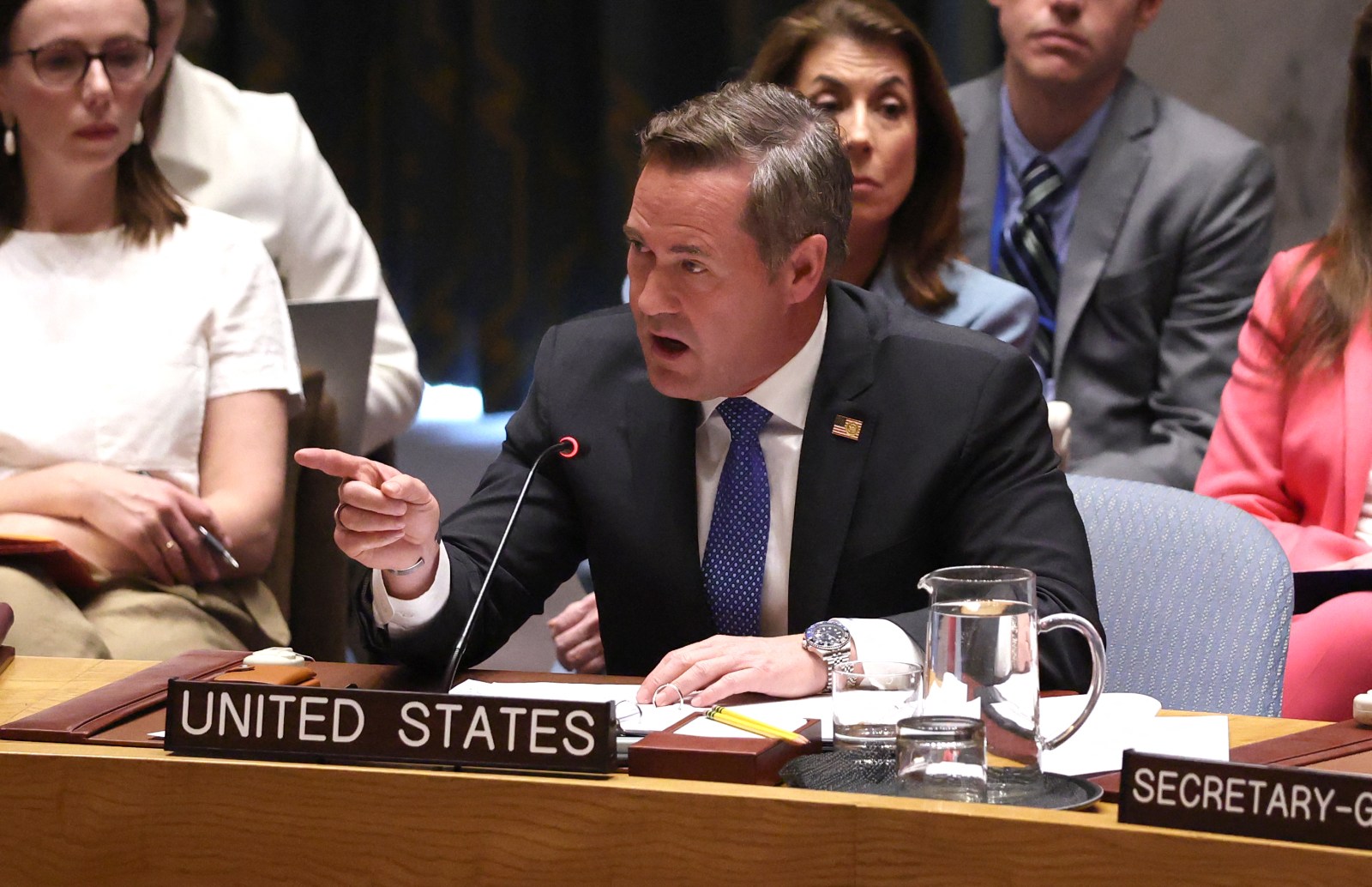
U.S. Ambassador’s Outlook on the Iran Conflict
President Donald Trump’s ambassador to the United Nations has not provided a timeline for ending the Iran war, now in its seventh month. This contrasts with Trump’s earlier prediction that it would conclude within weeks. Amid skepticism, a new NBC News poll reveals that 62% of voters believe the war has not been worth the effort, and 57% would be less inclined to support candidates favoring it. Increasing Republican concerns over the war’s political impact have emerged, especially in tight midterm races. Attempts to reach the White House for comment were made on Sunday.
Mike Waltz, appearing on CNN’s State of the Union, was questioned about reports suggesting the conflict might continue for years. He refrained from setting a timeline, highlighting that U.S. economic pressure and the naval blockade were effective, with time on the administration’s side. Meanwhile, Iran issued warnings that any new U.S. attack would provoke sustained retaliation against American interests.
Impact of NBC Poll Findings
The NBC News poll underscores the political challenges the Iran war poses for Republicans. Key findings include:
- 62% of respondents consider the Iran war unjustified.
- 57% are less likely to support candidates backing the war.
- 24% are more inclined to support such candidates.
- Democrats hold a slight advantage over Republicans in handling the Iran conflict.
This sentiment adds to Republicans’ political hurdles ahead of the November midterms, with Trump’s approval rating at 41% and 56% disapproval. The economy, suffering according to 55% of responders, remains a significant concern.
Republican Dissent on Iran Policy
The administration faces growing dissent among Republicans. Recently, seven House Republicans supported a resolution to limit military actions against Iran without congressional approval. Although largely symbolic, it marks the most significant Republican defection to date, reflecting concerns that the war exceeds initial expectations.
Notably, Iowa Representatives Zach Nunn and Mariannette Miller-Meeks, along with South Carolina Representative Nancy Mace, backed the measure. Nunn, with substantial military experience, voiced opposition to indefinite warfare, while Miller-Meeks demanded an administration plan to end the conflict.
Effects on Economic and Political Landscape
Beyond military aspects, the war impacts economic issues, with the NBC poll showing majorities fear Trump’s policies harm the economy. Prior surveys highlighted worries over increased energy prices due to the conflict, especially affecting rural areas.
The economic fallout, particularly concerning inflation and energy, presents challenges for Republicans, compounded by the conflict’s disruptions in global energy markets.
Midterm Election Concerns
As Trump and Republicans prepared for his second term, issues like immigration and crime were expected to dominate campaigns. However, inflation, energy costs, and the Iran conflict now centralize the discourse.
Divisions within Trump’s coalition regarding U.S. involvement duration are emerging, with some Republicans distancing themselves from the administration’s approach. This situation provides Democrats with an opportunity to link the war to broader economic woes and government priorities.
Future of the Iran Conflict
Waltz’s reluctance to provide a conflict resolution timetable raises questions about long-term strategies. Iran continues its threats while global energy markets remain unstable. Despite this, the White House maintains that its strategy will eventually compel Iran to concede.
The ongoing war, approaching its seventh month, continues to provoke discussion about an exit strategy among Republicans. Polling reflects skepticism regarding both the conflict’s rationale and its economic burden. The upcoming midterms demand strategies to persuade voters that the war, initially depicted as a short-term operation, still has a plausible path towards resolution.