
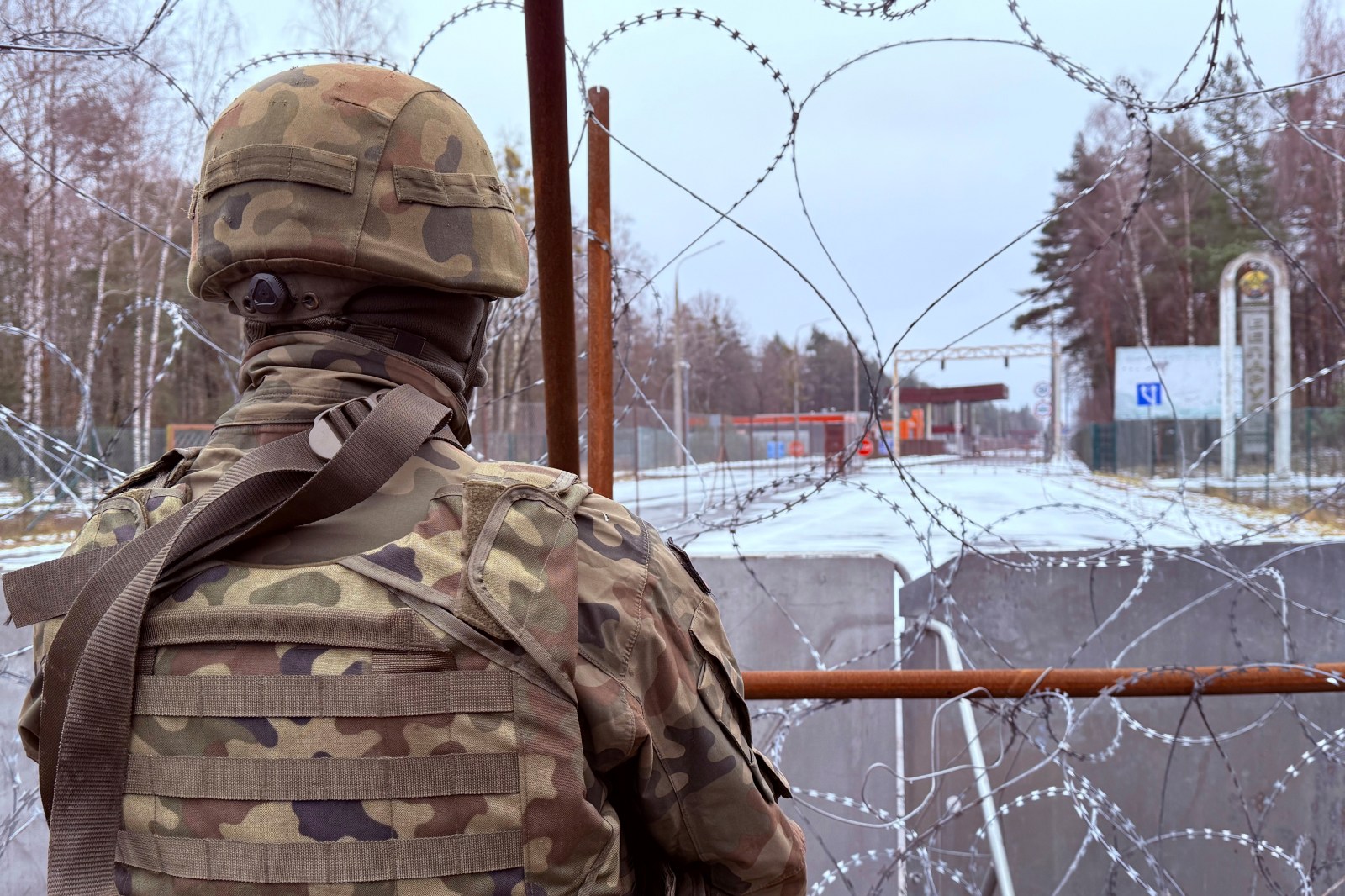
Polish lawmakers are developing legislation to prepare for a ‘pre-war period,’ as reported by domestic media. This comes amidst NATO concerns that Russia might attack a member state soon. Poland’s defense ministry crafted a draft law to enhance the country’s ‘defense capabilities’ and strengthen ties between the military and security services, according to Rzeczpospolita newspaper.
An unidentified source close to the president indicated that the state is preparing for such a period. Newsweek reached out to the Polish defense ministry for comments. In 2022, Poland announced major changes to its military, aiming to increase army size, procure new weapons, and simplify recruitment.
Warsaw plans to raise its army to 300,000 active-duty soldiers by 2039, tripling its 2015 numbers, according to RMF24, a Polish online news outlet. The outlet also reported plans for 200,000 reservists. Since Moscow’s invasion over four and a half years ago, Poland has strongly supported Ukraine. It is NATO’s top military spender, dedicating over 4.81% of its GDP to defense this year.
NATO Concerns Over Russia
NATO officials have warned about potential Russian escalation, including ‘hybrid warfare,’ or minor land grabs against NATO nations. ‘Hybrid warfare’ involves activities like cyberattacks, misinformation, or targeting infrastructure without open conflict.
Recently, European capitals expressed concerns over incidents labeled as hybrid warfare, with Russia being accused or suspected. However, Russia’s embassy in London denies these claims, blaming routine issues without evidence.
In September, Polish authorities labeled a Starlink site fire linked to the Ukrainian military as sabotage, suspecting Russian involvement. A Russian drone attack on a Kyiv-Warsaw train’s engine near the Polish border and a Russian helicopter violating Polish airspace in September further strained relations.
European NATO countries, particularly those near Russia or Ukraine, are on alert due to increased airspace violations, seen as Russian tactics to test NATO’s response and weaken support for Ukraine.
Polish Prime Minister Donald Tusk mentioned intelligence reports indicating a ‘real risk’ of more drone and missile intrusions into NATO airspace. He noted Russia’s likely denials of such incidents being intentional.
Deputy Prime Minister Władysław Kosiniak-Kamysz announced increased helicopter and fighter jet flights in response to diverse Russian provocations threatening traditionally safe areas.
Denmark’s Warnings and the Kaliningrad Factor
Late September saw Denmark’s military and intelligence highlighting increased Russian cyberattacks and sabotage attempts across Europe, describing Russia as more risk-prone.
Danish intelligence warned of heightened hybrid warfare pressures against NATO, implying serious consequences for targeted nations. Russian President Vladimir Putin emphasized on using Russia’s nuclear arsenal to defend Kaliningrad if attacked.
NATO condemned ‘irresponsible nuclear rhetoric,’ asserting that its Baltic Sea exercises pose no threat to Russia. Kaliningrad, a Russian exclave bordered by NATO countries, houses significant military assets.
Last month, a Sky News miniseries explored a hypothetical Russian attack on the UK and response strategies, generating British media attention.
The Danish Defence Intelligence Service (DDIS) assessed a ‘low but increasing risk’ of Russia executing a limited attack on NATO’s eastern territory. A small-scale land grab or military action remains the most plausible worst-case scenario for NATO, rather than a full-scale invasion.