
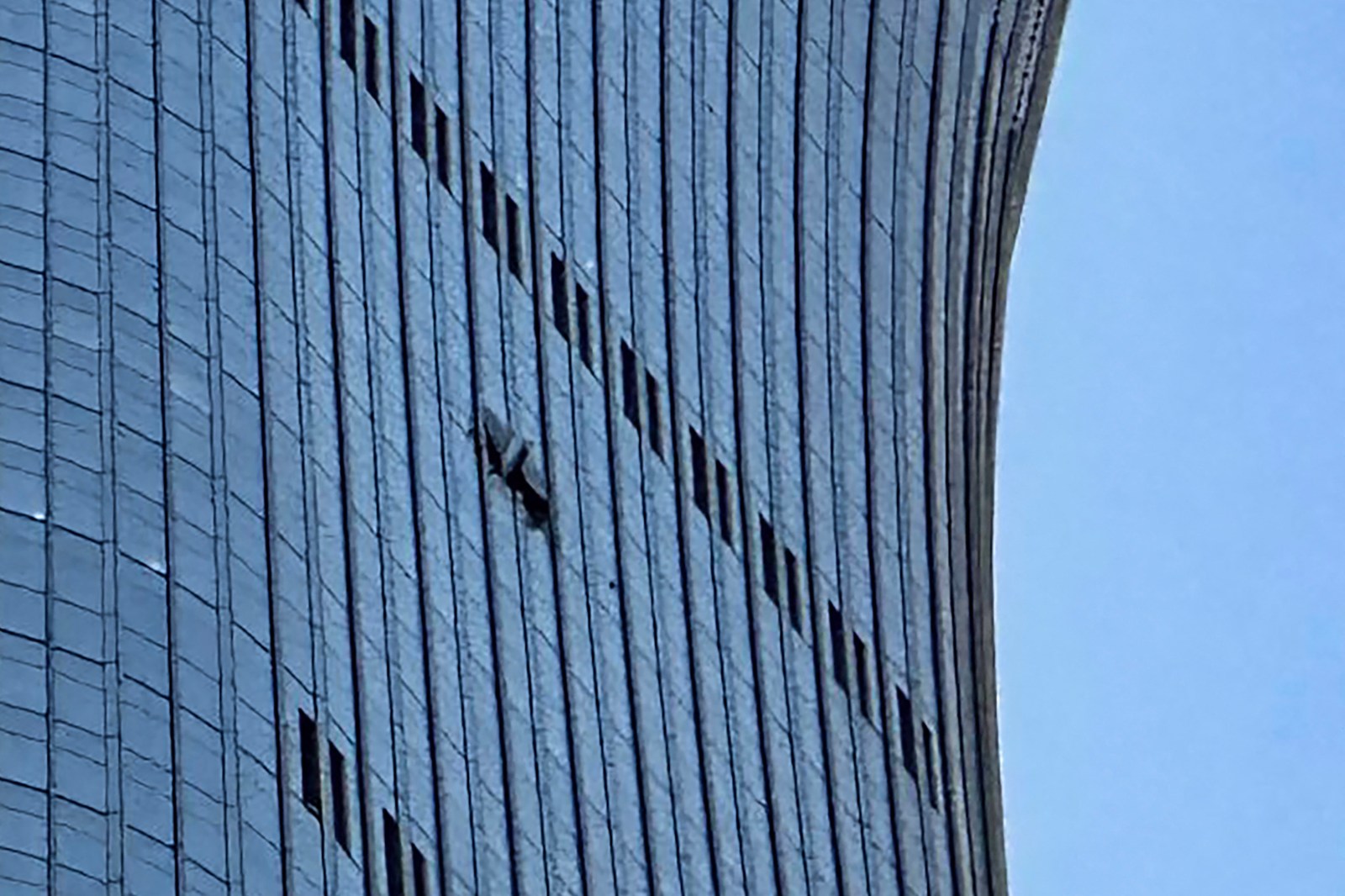
Government officials reported on Thursday that the pilot who died when a small plane crashed into Beijing’s tallest skyscraper experienced chronic insomnia and anxiety. The incident occurred on a Friday, involving a 66-year-old pilot known only by his surname, Liu. Authorities stated that personal reasons led him to crash into the 108-story CITIC Tower, also known as China Zun, in the Chaoyang district of Beijing.
Liu, a freelance pilot residing alone in Beijing, had documented his ongoing battles in his diary, which expressed thoughts of ending his life. Officials categorized the incident as a case of endangering public safety for personal reasons. The crash, which injured 13 people, resulted in debris falling from the upper floors of the skyscraper, which stands over 1,700 feet in a bustling business district. Although Liu died in the wreckage, authorities did not initially disclose his identity.
Beijing enforces strict control over its airspace, and civilian flights over the city center are generally prohibited. Major airports are outside central districts, and low-altitude activities face heavy restrictions. The flight data revealed that the Sunward SA 60L Aurora aircraft took off from an airport about 30 miles east of Beijing, eventually veering off course and crashing near the East Third Ring Road around 6 p.m. on Friday.
A witness described a loud bang, followed by falling debris and a swift emergency response. Streets were sealed off and evacuations initiated, with ambulances rushing to the scene. “I ran out without my ID card or bag,” a woman inside the building told a local newspaper.
In Beijing, flying light sport aircraft requires prior approval from the Civil Aviation Administration of China and the People’s Liberation Army Air Force. Unauthorized flights are exceptionally rare, occurring just weeks after authorities tightened restrictions on low-altitude airspace, essentially banning recreational drones. Now, authorization is necessary for all outdoor flights, and the transport, sale, or use of drones within Beijing is broadly prohibited.
Ben Lewis, a Washington, D.C.-based analyst, explained the complexity of Beijing’s air defenses, which are primarily designed to counter military threats rather than slow, general aviation aircraft in low-altitude airspace. He questioned how the light aircraft navigated into the central business district.
Lewis remarked, “Until we have more details about the flight, such as whether it involved pilot error, mechanical failure, or other factors, identifying the cause remains premature.” Chinese authorities revealed Liu obtained a sport pilot license in 2021 and a private pilot license in 2024. Pilots in China must meet health and certification requirements to secure and maintain such licenses, including psychiatric evaluations.
Reports also indicated Liu conducted an accompanied flight before the solo trip on the day of the crash. It remains uncertain how he managed to pilot the plane near a permanent no-fly zone within a highly restricted airspace. Authorities continue to investigate how he bypassed the stringent aviation restrictions in place.
If you or someone you know may be considering suicide, please contact the 988 Suicide and Crisis Lifeline by dialing 988. You can also text “988” to the Crisis Text Line at 741741 or visit 988lifeline.org.