
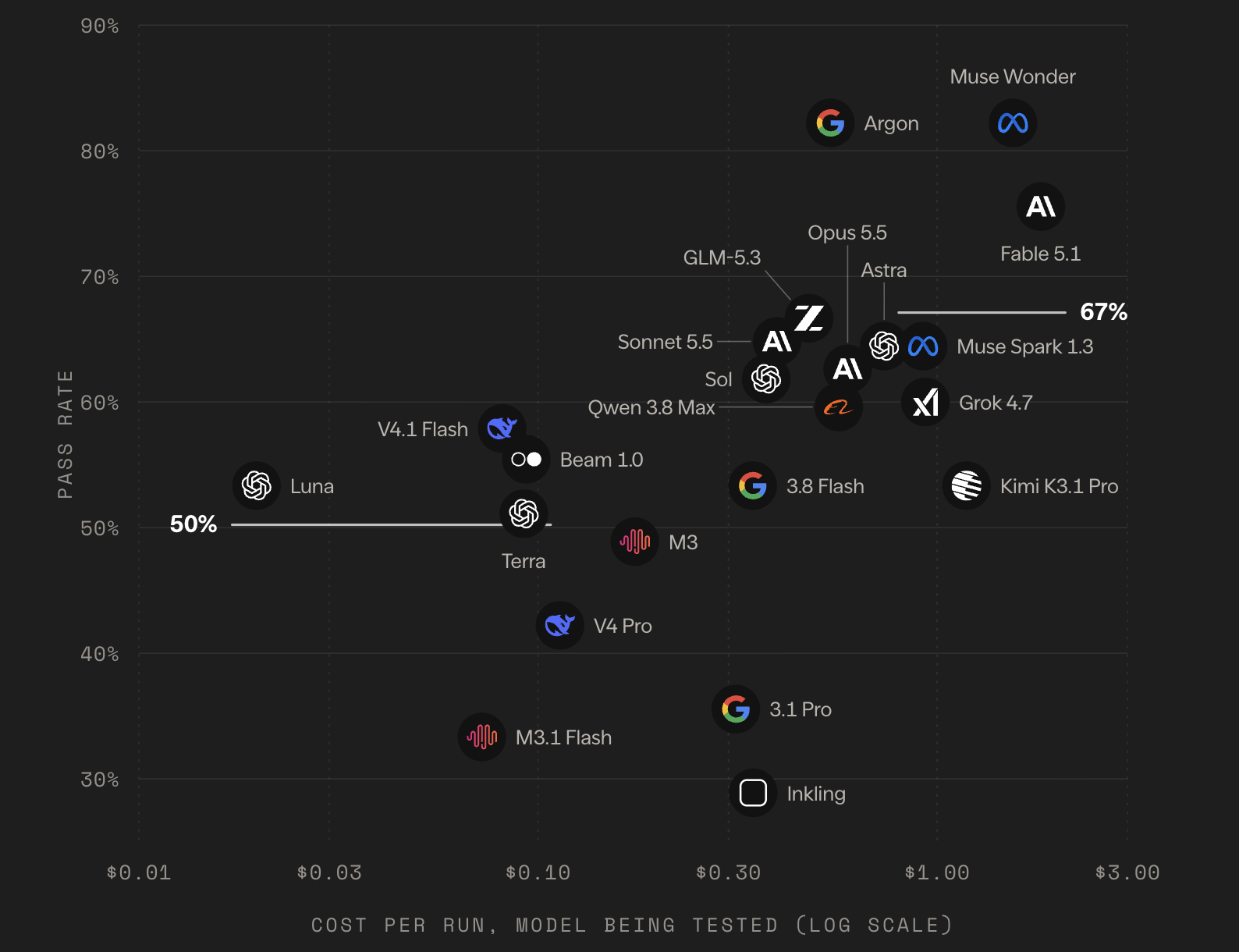
As personal AI agents such as Muse and Claude become more integrated into daily life, many people are turning to them for shopping tasks. However, these agents often face challenges in executing shopping effectively. A groundbreaking study by Visa revealed this issue when 22 different agents were instructed to purchase three common items: a TV, a laptop, and a hair appliance. While some agents performed better than others, the overall success rate was about 57%.
The study’s findings are presented on a new Visa website showcasing the outcomes of 15 separate shopping missions by each of the 22 agents. Not surprisingly, agents powered by advanced AI models performed best. The Aragon 4 version of Google’s Gemini and the Wonder version of Meta’s Making achieved the highest success rates, with each successfully completing purchases 82% of the time. A Claude agent followed with a 76% success rate, while an OpenAI agent ranked sixth with a 64% success rate.
Visa’s diagram provides a visualization of the performance across all 22 models. The vertical axis represents the success rate, and the horizontal axis indicates the cost to run each shopping query. Visa notes that the five most expensive models averaged a 67% success rate, while the least expensive five scored 50%.
The difficulties AI agents face in making successful purchases are partly due to the complexities of purchasing motivations and consumers’ uncertainty about their needs. Visa’s experiment highlighted this by assigning TV shoppers a list of required attributes, such as compatibility with a child’s gaming console, a 30-day return policy, and Dolby Vision capability. Much like real consumers, the purchasing agents had to navigate incomplete information.
For an AI agent to succeed, it needed to interact with the consumer to gather missing details promptly. The goal was to purchase a TV that met the customer’s requirements. Often, though, agents bought incorrect products or failed to suggest suitable options. “We are not there yet from a trust or technology perspective,” stated Rubail Birwadker, Visa’s Global Head of Growth. “But we will soon enter a phase where consumers can trust and delegate.”
Birwadker pointed out that agent-driven shopping is still in its infancy but progressing quickly. He mentioned that Visa’s experiment focused on product discovery, which is merely one facet of this new commerce type. Retailers and AI firms are striving to resolve these challenges. Payment processes must also become seamless and secure—a challenge that Visa and Mastercard are addressing by educating merchants and developing tools to facilitate agentic commerce.
Legal issues pertaining to AI agents shopping also remain unaddressed. Questions of liability for erroneous or fraudulent purchases by agents need answers. Birwadker predicted that these matters will be resolved over time, similar to how consumers and merchants adapted to ecommerce. However, he noted that agent-based shopping will differ significantly from current online shopping experiences.
Alongside announcing its agent shopping experiment results, Visa unveiled a website where consumers can engage with the agents featured in the survey.