
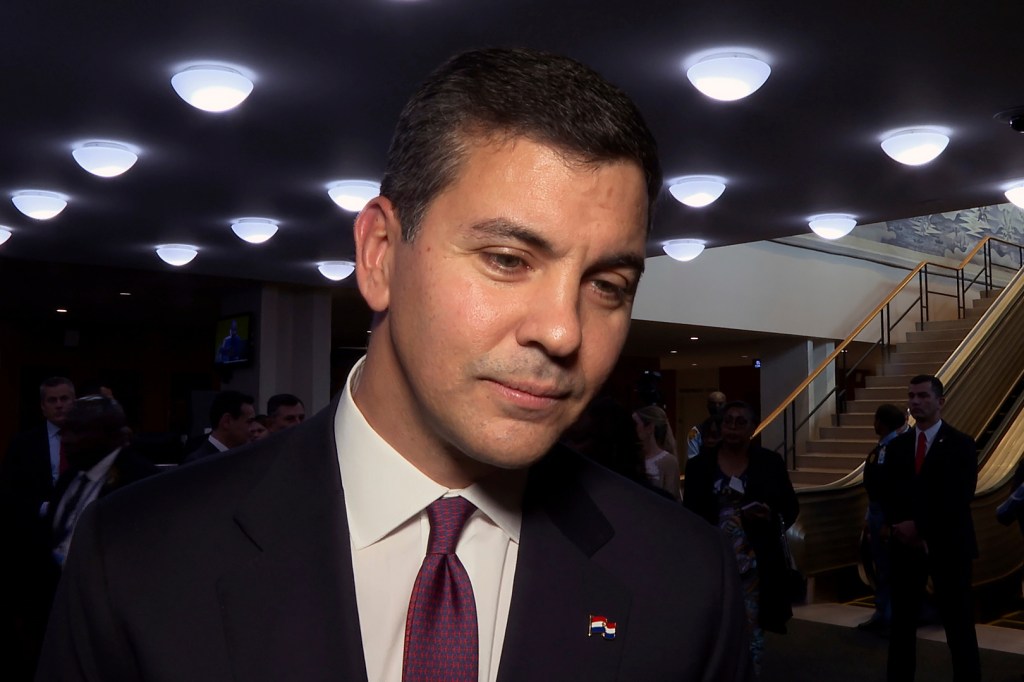
Former Paraguayan President Santiago Peña found himself under house arrest on Friday. Authorities suspect him of misconduct, including breach of trust and influence peddling. This development came soon after the Senate removed him from office due to the failure of Ueno Bank, which left half of Paraguay’s six million people unable to access their savings.
All 44 senators approved the motion to impeach Peña, marking him as the second president ousted in this manner since the end of Gen. Alfredo Stroessner’s authoritarian regime in 1989. The result triggered significant public reaction, with chants of Dictatorship never again!
heard outside Congress.
The financial crisis intensified when regulators took control of Ueno Bank, setting off the worst political turmoil in Paraguay in over a decade. The bank’s collapse froze customer accounts, sparking widespread anger as people lost access to their finances.
Charges and Reactions
Peña is to remain at home in Asunción until his hearing on Saturday. He faces severe charges, potentially leading to a 10-year prison sentence. The allegations involve using political influence to channel public funds into Ueno under risky conditions.
Police secured Peña’s house to prevent an escape attempt, while a crowd demonstrated outside, determined to ensure he faced justice. Meanwhile, prosecutor efforts extend to Carlos Carvallo, a former finance executive associated with Ueno.
Pedro Alliana was sworn in as the new president, tasked with resolving the crisis and recovering the lost deposits. He faces the challenge of stabilizing a shaken financial sector and retaining public trust.
Betrayal of Public Trust
Peña supposedly manipulated financial systems for Ueno’s advantage, leaving state funds in precarious positions. The public, including impacted pension fund members, consider this an exploitation of trust and demand accountability.
The bank aggressively recruited low-income clients with attractive offers, yet upon the seizure, clients could not access their finances. The affected included national soccer players and a substantial segment of Paraguay’s banking populace.
The economic repercussions touched various areas, with several services ceasing operations due to financial constraints. Economic indicators like bonds and currency value suffered substantial setbacks.
Peña’s Political Connections
The charges against Peña detail his ties with Ueno, including his divested stake and the appointment of Carvallo to central bank leadership. Lawmakers argue that Peña permitted excessive state pension funds in Ueno, raising concerns over regulatory oversight.
Analysts criticize these ties, suggesting Peña’s administration compromised fiscal credibility to support Ueno’s interests. This critique stemmed from Peña’s public defense of the bank shortly before its downfall.
Fall From Power
Once a prominent figure and ally to Washington, Peña’s swift fall from grace highlights the volatility in Paraguayan politics. His mentor, former President Horacio Cartes, influenced this downfall by questioning Ueno’s financial practices.
Cartes’ intervention brought Peña’s actions into the spotlight, leading to the impeachment. Political analysts note Peña’s attempt to create an independent power base, which backfired amid the financial crisis.
The political dynamics in Paraguay have once again shifted as the country grapples with restoring confidence amidst lingering distrust. Moving forward, the nation faces the challenge of reconciling political divides while addressing the financial repercussions felt across the populace.