
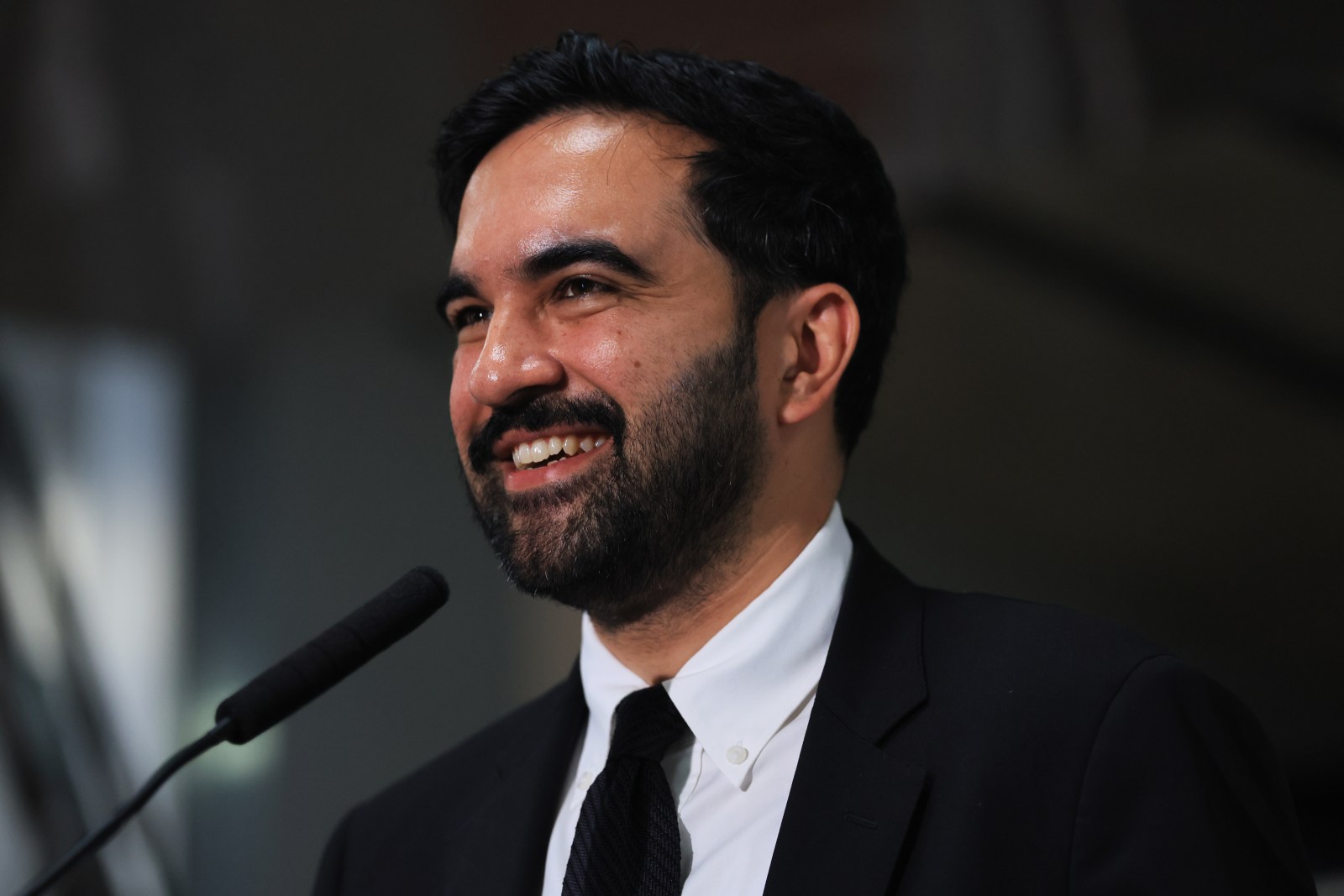
Rabbi Zalman Leib Teitelbaum, the Satmar Rebbe of Williamsburg, recently spoke out against allegations labeling Mayor Zohran Mamdani as antisemitic. This places a leading anti-Zionist Hasidic figure in opposition to Jewish groups accusing the mayor of increasing hostility toward Jews in New York City. The event underscores the complexity of treating Jewish New York as a unified political constituency.
Satmar’s stance does not indicate support for Mamdani’s progressive politics. Their opposition to Zionism is rooted in religious beliefs and predates the mayor’s tenure. Satmar leaders typically focus on maintaining amicable relations with governing bodies. Teitelbaum highlighted this tradition by citing a biblical directive that encourages seeking the welfare of the city and cautioned against conflict with political authorities.
Mamdani’s connection with Satmar stems from reasons vastly different than those that attract left-wing anti-Zionist activists, complicating the old assumption that attitudes toward Israel dictated political alliances among Jewish voters in New York.
Different Paths to Partnership
Mamdani’s Jewish allies do not make up a homogeneous pro-Mamdani group. Satmar leaders collaborate with him despite their anti-Zionism originating from a religious tradition distinct from the left. Meanwhile, some progressive Jewish groups may share positions with the mayor due to opposition to Israeli policies or broader political agreement. In contrast, liberal Zionists may disagree with Mamdani over Israel but prioritize city relationships.
For Satmar, maintaining city hall relations is also practical. The city makes critical decisions affecting Hasidic neighborhoods. During Mamdani’s tenure, Satmar argued for engaging with City Hall, even when some Orthodox voices suggested a confrontational stance.
This dynamic reveals that support for Mamdani among Jews arises from various, sometimes conflicting, reasons. Jewish politics in New York increasingly operates constituency by constituency, making Israel-related disagreements less predictive.
Broad Jewish Consensus and Its Limitations
Satmar’s relationship with Mamdani does not imply a waning Jewish attachment to Israel. Satmar’s anti-Zionism is longstanding, with surveys still indicating significant support for Israel among American Jews. A 2026 Pew Research Center survey found 64% of Jewish Americans view Israel favorably, although 56% lacked confidence in Prime Minister Benjamin Netanyahu. Meanwhile, a separate poll showed two-thirds of Jewish New Yorkers believe opposition to Israel as a Jewish state undermines Jewish identity.
The significant divergence lies in translating these views into domestic politics. Jewish leaders who generally support Israel might disagree on whether to cooperate with Mamdani. This discord appeared when Orthodox leaders met the mayor in March. Former Assemblyman Dov Hikind criticized the meeting as legitimizing an adversary of Israel, whereas Rabbi Yaacov Behrman saw refusing the mayor’s audience as counterproductive.
Thus, the conversation encompasses more than views on Israel, as it includes political access, community interests, and ideological conflicts.
Rethinking Jewish Political Representation
For decades, New York mayors turned to institutions like the UJA-Federation and the Jewish Community Relations Council for Jewish viewpoints. Mamdani’s leadership tests their indispensability. When key Jewish organizations skipped the Jewish American Heritage Month reception at Gracie Mansion, over 100 attendees joined, including progressive Jewish representatives willing to engage with the mayor.
Mamdani assembles coalitions without relying on traditional organizations, altering political strategies. This change continued when Mamdani invited 10 rabbis from various denominations for a private dialogue on antisemitism. They critiqued his rhetoric on Israel but attended, demonstrating a new approach where City Hall engages directly with diverse Jewish leaders rather than depending on a single organization.
Whether major organizations will continue influencing appointments and policies despite disagreements remains a question. If the administration further negotiates with Jewish groups individually, the evolution will be institutional—not ideological. No organization will claim authority to represent a single Jewish political voice.
Rabbi Teitelbaum’s defense of Mamdani does not negate prior criticisms but illustrates why expecting a unified Jewish political stance might be misguided. Mamdani faces opposition from some Jewish leaders and support from others, highlighting the fragmented nature of Jewish political representation in New York.