
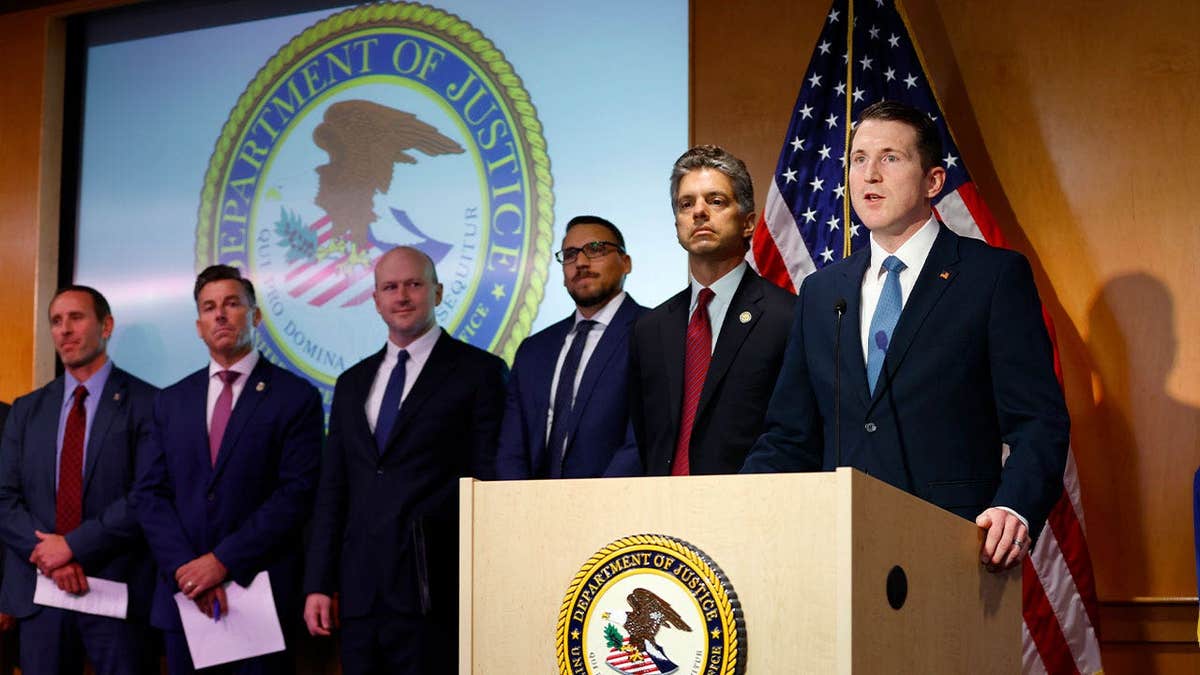
The Justice Department announced a significant tax fraud operation on Wednesday. The crackdown involves 76 defendants and an estimated $490 million in intended tax losses, with new charges against 31 individuals accused of targeting American taxpayers.
The National Tax Enforcement Surge marked its debut, spanning six weeks and enlisting 35 U.S. attorneys’ offices and IRS criminal investigators. This initiative unveiled 23 new charging actions for over $350 million in alleged intended tax losses. Simultaneously, another 45 defendants faced trials, guilty pleas, and sentencings linked to nearly $140 million in estimated intended losses.
Every dollar stolen through tax fraud is a dollar taken from the American people,
Attorney General Todd Blanche stated in a press release. He emphasized that the findings represent only a fraction of the larger issue. The Justice Department aims to expand investigations and expose schemes to evade accountability, leaving no refuge for fraudsters.
At a news conference, IRS Criminal Investigation chief Jarod Koopman described this operation as a novel enforcement strategy. He emphasized that more crackdowns will follow, as this collaborative approach with the DOJ focuses resources on a wide range of tax crimes.
Among noteworthy cases, a fraudulent trust scheme in Texas allegedly concealed over $1.5 billion in income, leading to estimated tax losses exceeding $200 million. In Georgia, three Mexican citizens face charges for an alleged $74 million tax refund scheme involving more than 16,000 U.S. Treasury checks. Prosecutors claim the defendants used Mexican identification documents to acquire IRS taxpayer identification numbers and filed fraudulent returns.
Assistant Attorney General Colin McDonald noted that the Justice Department is forming a team dedicated to asset forfeiture and recovery. This team will pursue assets allegedly bought with fraud proceeds, such as luxury vehicles and real estate, but a total recovery figure is not yet available since some cases are in early stages.
The crackdown is part of the Justice Department’s recent launch of its National Fraud Enforcement Division in April. Defendants with criminal charges are considered innocent until proven guilty.