
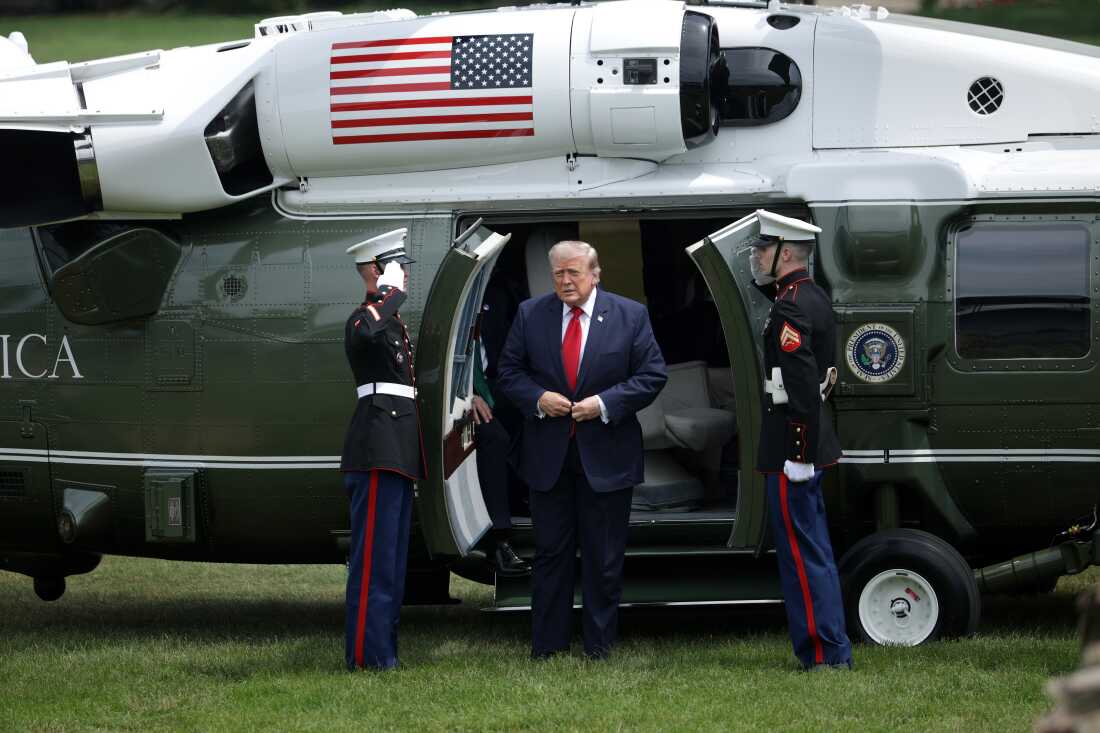
President Trump arrived in Carlisle, Pennsylvania, for an event on Wednesday. Recent financial statements show his wealth has increased since taking office, with his family businesses reporting $2.2 billion in revenue last year, mostly from cryptocurrency.
Voter Opinions in Pennsylvania
Pennsylvania voters are divided on the significance of this financial growth. Two online focus groups, consisting of a total of 12 voters, discussed their views, observed by NPR on Tuesday. Opinions varied; half of the participants expressed concern about Trump’s financial gains during his presidency.
Todd A., a 62-year-old independent voter, expressed cynicism, stating, “When it comes to ethics, moral and financial, I think that just about every politician is corrupt.” The sentiment echoed a belief that political corruption is widespread.
Rich Thau, who moderated the focus groups, noted the participants’ cynicism. He is president of Engagious, a messaging firm that collaborates with Sago and NPR to conduct monthly focus groups with swing voters.
Betsy D., a 48-year-old Republican, described Trump’s approach as “typical behavior” for politicians. “I am not saying it’s OK,” she noted, “but I just think it’s typical for politicians to increase their wealth while in office.” Ken J., 44, shared similar views, suggesting Trump’s wealth increase wasn’t illegal.
Meanwhile, Bhavana G., a 54-year-old independent voter, viewed Trump’s earnings as concerning. “For me, when I see that, the first thing that comes to my mind is abuse of power,” she said.
Margaret M., 58, worried about potential undue influence from Trump’s business dealings, fearing these associations might impact his decisions.
Focus Group Insights
Focus groups are not scientific polls but offer insights into voter sentiments. Participants shared two notable observations:
- Politicians’ Health: Reports of absentee Congress members due to health issues led eight participants to believe representatives should disclose health concerns if absent frequently. Four participants favored privacy for health issues.
- Iran Conflict: With renewed U.S.-Iran conflict, only seven voters were aware of the ceasefire’s end. Just two felt confident Trump could end the war by year-end.