
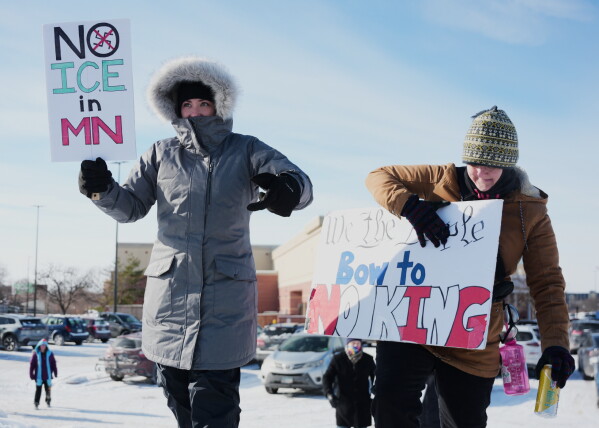
The streets around a federal office complex near the Minneapolis airport have become a focal point in the resistance against President Donald Trump. U.S. immigration agents conducted deportation operations from the Bishop Henry Whipple Federal Building, prompting protesters armed with whistles and cellphone cameras to gather. Two protesters were shot and killed before Trump backed down amidst pressure.
This tension set the stage for Minnesota’s Democratic primary for the U.S. Senate occurring on Tuesday. The race includes establishment-backed U.S. Rep. Angie Craig and her more progressive challenger, Lt. Gov. Peggy Flanagan. The issue of immigration adds complexity to a race reflecting the broader left-center divide seen nationwide.
Craig initially supported stricter enforcement policies after Trump returned to office but expressed regret after the administration’s surge of agents in Minneapolis. Despite backing a resolution condemning antisemitism post-2025 firebombing in Boulder, Colorado, her choices have become contentious and a central theme in her campaign against Flanagan, who positions Craig as unwilling to oppose an unpopular administration.
Memorials remain for the protest victims, Renee Good and Alex Pretti, near the Whipple building. Vigilant volunteers assist those released from immigration detention. Local teacher and business owner Bryce Bohne supports Flanagan, reflecting some voters’ disappointment with Craig.
Craig, having faced right-wing pressure in her congressional races, now encounters criticism from the left. Despite adopting more progressive rhetoric, she struggles to shake off her past decisions, like voting for the Laken Riley Act, which empowered federal authorities amidst ongoing immigration tensions.
Explaining her support for the Act, Craig acknowledged criticism yet stressed her intention to represent her constituents’ border concerns. Former party official Corey Day noted her past decisions’ acceptance when facing tough choices. Craig aims to highlight her resilience in challenging races as she campaigns for the Senate.
Although unendorsed by Democratic Gov. Tim Walz, Craig has support from his wife Gwen Walz. Meanwhile, the Republican field features Michele Tafoya, a former NFL reporter. In light of these dynamics, Flanagan and her backers view Craig’s immigration legislation support as a betrayal, insisting trust should not be conditional.
Flanagan supports policies like Medicare for All and seeks to limit U.S. military support for Israel. Her campaign challenges not only Craig but also the financial backers supporting Craig. Despite Craig’s greater campaign expenditures as of late July, Flanagan calls on progressives, including Sen. Bernie Sanders, for grassroots support. Sanders urged Minnesotans to resist corporate influences in the electoral process.