
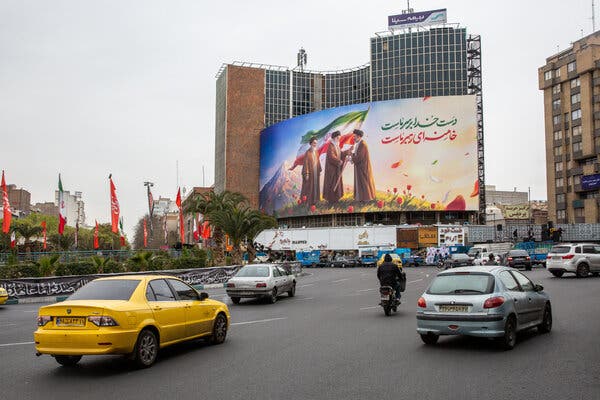
Decision making in Iran is heavily influenced by a select group, predominantly associated with the Islamic Revolutionary Guards Corps (IRGC). This small, elite cadre is composed mainly of current or former senior commanders, who have shaped the nation’s hard-line stance over decades.
Ayatollah Ali Khamenei, the supreme leader for 37 years, was killed in an airstrike by Israel on February 28 during the start of the war against Iran. His successor, Mojtaba Khamenei, though holding a position of authority, struggles to match his father’s influential legacy.
Senior Iranian officials assert that the 56-year-old Mojtaba is at the forefront of key decisions. Nonetheless, experts highlight that decision making is a collective endeavor among many individuals, particularly those with ties to the IRGC.
The IRGC’s leadership comprises a group known as a “band of brothers,” shaped by the devastating Iran-Iraq war that lasted from 1980 to 1988. Founded to protect Iran’s revolution, the Guards swiftly elevated these commanders, many of whom were promoted to generals in their 20s and 30s.
Their experiences during the war, alongside Western support for Iraq, instilled a belief that Iran must independently carve its path, irrespective of the consequences. These leaders also transitioned into controlling intelligence and security sectors, maintaining close ties with Mojtaba Khamenei through their interactions when he managed his father’s affairs.
These commanders represent some of the country’s most hard-line members. Their militancy spans beyond merely upholding the Islamic revolution; it extends to endorsing severe tactics while managing government repression mechanisms.