
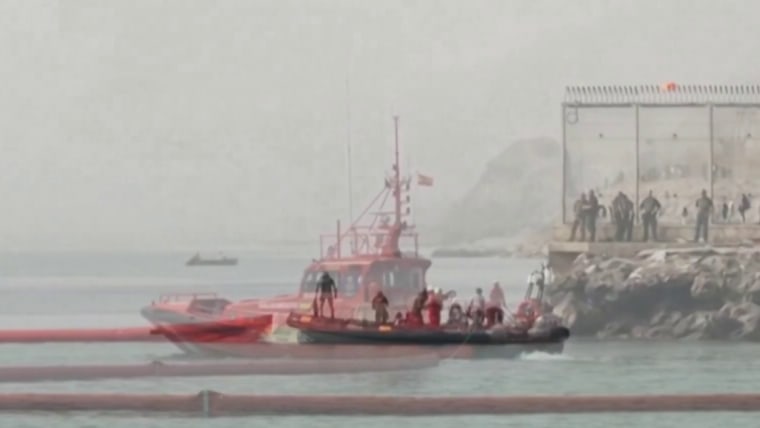
On Monday, hundreds of migrants set up camp at a beach in Ceuta, a Spanish exclave in North Africa, as local authorities grappled with the large number of migrants following a massive border surge. Spain estimates that about 69,500 migrants returned to Morocco over four days, surpassing early estimations of 50,000 arrivals in Ceuta last Thursday. The death toll stands at 72 on the Spanish side and 11 on the Moroccan side.
Many migrants left due to shop closures, lack of food, local hostility, and the inability to travel to the Spanish mainland. Ceuta and the other Spanish exclave, Melilla, often experience crossings by migrants aiming to reach Europe. Video footage from Reuters showed numerous migrants, mainly from sub-Saharan Africa, on El Trampolin beach wrapped in towels for protection from the wind as army and police patrolled nearby.
Ceuta’s leader, Juan Jesus Vivas, informed broadcaster Telecinco that between 3,000 and 5,000 migrants remained. The migrant reception centers for adults and minors are overwhelmed. Local official Alberto Gaitan stated that the city is processing 862 migrant minors, who have specific legal protections against deportation.
The migrant crisis has intensified anti-immigration sentiment in Europe and provoked diplomatic tensions within the EU regarding border policy. Spain has accused some partners of responding negatively. Foreign Minister Jose Manuel Albares highlighted that Spain supported EU countries during past migration crises and expects support in return. The EU scheduled an emergency video conference of interior ministers for Tuesday.
Albares criticized Italy’s government for spreading misinformation. He noted Morocco’s immediate police support, allowing swift return of most border crossers. Yet, Vivas criticized Morocco, suggesting that the crisis might have been orchestrated from Rabat, noting, “Morocco has shown us that it isn’t reliable. We must ensure this doesn’t happen again.”
Morocco’s Interior Ministry attributed the surge to social media misinformation, human trafficking, and misinterpretation of a court ruling on immediate migrant returns, aligning with Madrid’s official stance. Reports by El Pais and Cadena SER said Spanish intelligence concluded Morocco didn’t plan the mass crossing but permitted it. During July, Moroccan border controls allegedly relaxed and were removed during the Throne Day holiday.
The Moroccan Interior Ministry did not immediately respond for comment. It reaffirmed its commitment to international cooperation against irregular migration and human trafficking. Spain’s Interior Minister Fernando Grande-Marlaska mentioned that his foreign intelligence agency CNI wasn’t warned of the surge, causing reported frictions between ministries. However, an Interior Ministry spokesperson downplayed these tensions. Defense Minister Margarita Robles avoided discussing CNI’s prior knowledge, praising the “exceptional” work of Spanish security services.