
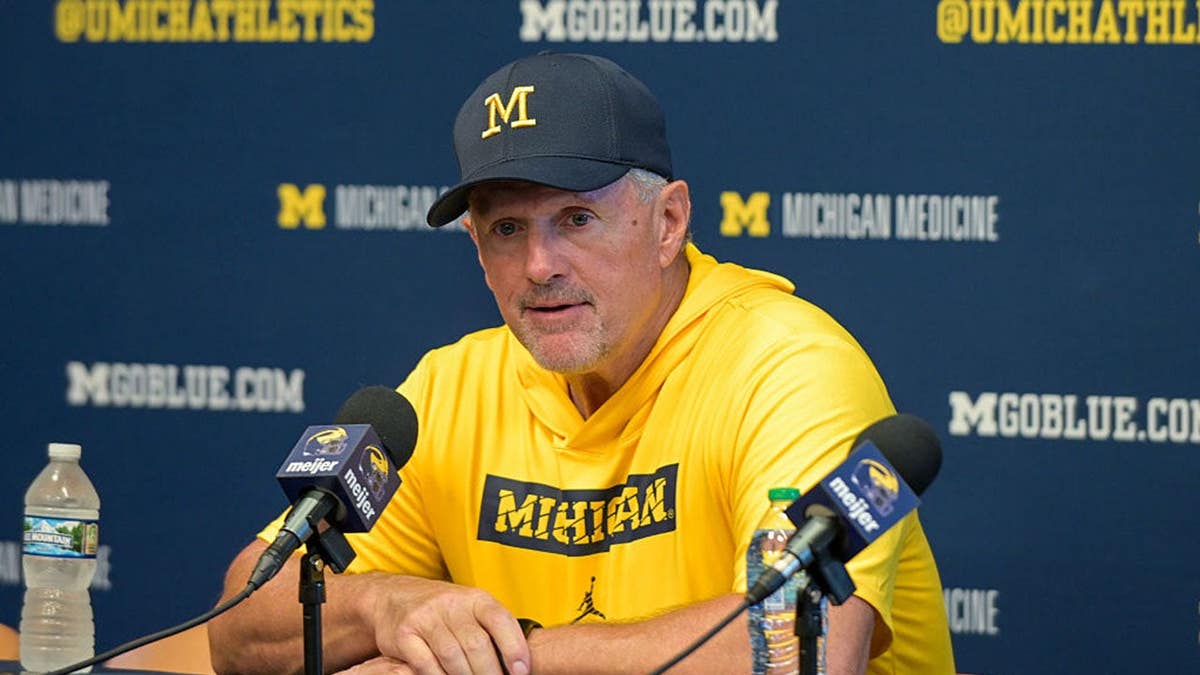
At some point, a school must confront the reality of an ineffective situation. The Michigan Wolverines are facing such a moment. There are concerns about head coach Kyle Whittingham and the optics surrounding his leadership. Questions arise over whether the athletic department should reconsider his position in light of recent struggles.
Following the departure of former head coach Sherrone Moore, athletic director Warde Manuel aimed to bring stability by hiring Whittingham from Utah. However, Michigan has seen more controversy recently than some programs face in a decade.
After suffering a 15-6 loss to Michigan State, there is no denying the chaos in Ann Arbor. The team’s poor performance and financial mismanagement are evident. Initial hopes among donors were that hiring an unconventional coach could stabilize the program, but now concerns escalate as they await further consequences.
Whittingham’s leadership seems disjointed. Since his introduction, his relaxed approach to rivalries has not aligned with Michigan’s competitive traditions. Understanding the significance of rivalries against teams like Ohio State is essential for any head coach. While Whittingham is not overstating the Michigan-Ohio State rivalry, his attitude toward such formidable opponents is questionable for fans.
The Wolverines have little to play for besides pride and a win against Ohio State. Whittingham remains committed to rallying his players. Yet his recent comments about remaining games and potential trophies generated criticism, particularly from donors supporting the costly roster.
Whittingham’s handling of the offensive staff has sown more doubts. Despite backing offensive coordinator Jason Beck, changes occurred less than 24 hours after indicating no staff changes. The decision leaves questions about who controls team direction—the coach or those financing the operation.
Michigan announced moving on from Beck despite Whittingham’s initial defense. The internal dynamics and decision-making continue to perplex fans. Discrepancies between Whittingham’s statements and program realities reflect tensions.
Currently, the university seeks a replacement for Manuel along with a school president. Terminating Whittingham could cost approximately $24 million. Meanwhile, financial challenges remain, as they must fund a competitive Big Ten roster while adhering to budget constraints.
Future hires inherit the complications left by Manuel and the athletic department. Despite past achievements, the program’s current direction results in a divide between Whittingham and fans seeking consistency.
Michigan’s fans face a tumultuous period as discussions continue about the team’s future. A once-dominant program is now struggling to regain stability, searching for leadership that aligns with its storied past.