
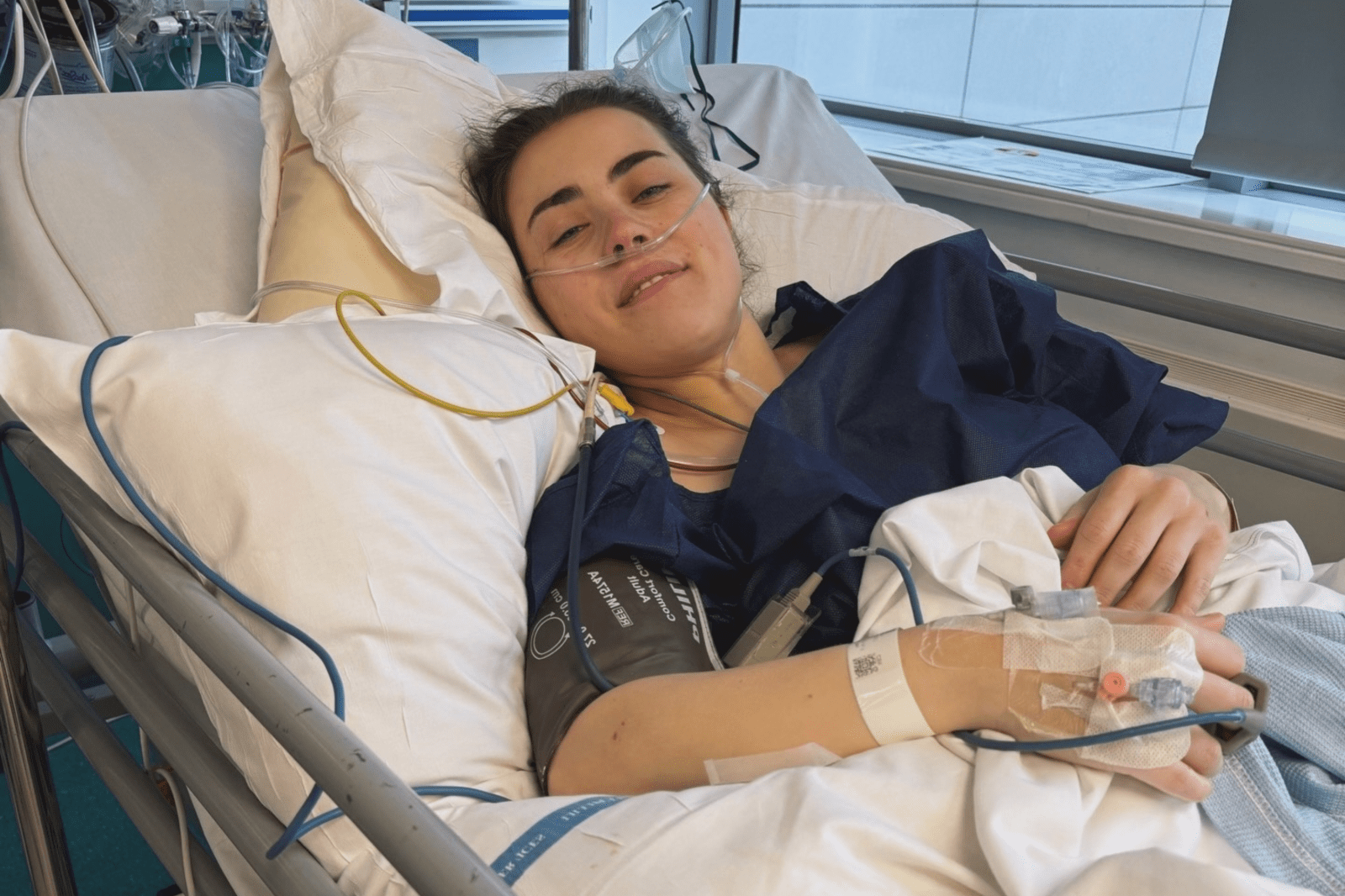
Mia Constantinou, a 28-year-old soccer player from Northern Ireland, experienced an unexpected turn in her life following a game with the Ballymoney Ladies. After the match, she felt intense pain in her left leg, describing it as akin to a ‘lightning strike.’ The discomfort was accompanied by severe back pain, which was significantly more intense than usual.
Despite having a history of endometriosis and multiple surgeries, Mia tended to avoid hospital visits unless absolutely necessary. Her partner, Alexs, persuaded her to seek medical attention, leading to an examination where doctors administered suppository medication for pain relief.
Though she continued her activities as a soccer player and healthcare assistant, Mia’s pain progressively worsened over the months. She consulted a physiotherapist, expressing the impact on her daily life and pleading for an MRI referral. Initially, her concerns were dismissed by the physiotherapist, who was doubtful about the necessity of the scan.
Mia eventually underwent a lumbar MRI scan in November 2025. She scrutinized the images herself, comparing them to reference scans online, convincing herself there was more to her condition than initially thought. Upon receiving the official results, it was confirmed her lower back had several issues, including small vertebral fractures, disc and nerve complications, along with a benign growth and cyst.
“I was an anxious mess,” Mia said. “I must have looked at my pictures hundreds of times in the space of that week, saying to myself, that doesn’t look right…”
In April 2026, Mia underwent spinal fusion surgery, uniting two lower spine bones to alleviate her spinal damage-related pain. However, the recovery was more challenging than anticipated. She woke with excruciating pain, comparable to having a hot rod lodged in her spine, and struggled with movement.
Determined to walk again, Mia faced numerous obstacles after discharge, relying on a recliner and commode while adjusting to assistance in daily activities. A subsequent diagnosis revealed retrolisthesis, a condition resulting from instability post-surgery, causing her walking ability to deteriorate.
In July, Mia underwent further surgery, yet continued to endure severe nerve pain and mobility issues. She became dependent on a wheelchair and experienced ongoing pain. Despite extensive efforts with scans and treatments, she was advised to undergo another major fusion surgery.
Post-operation, Mia experienced a brief glimpse of improvement, able to walk corridors without neuropathic pain, and was discharged soon after. Still, eight weeks later, she lives with persistent pain managed through morphine and rehabilitation therapy aimed at restoring some independence.
“I feel heartbroken and I grieve the life I once had,” Mia said. “If there is any advice I can give anyone of any age, please listen to your body.”