
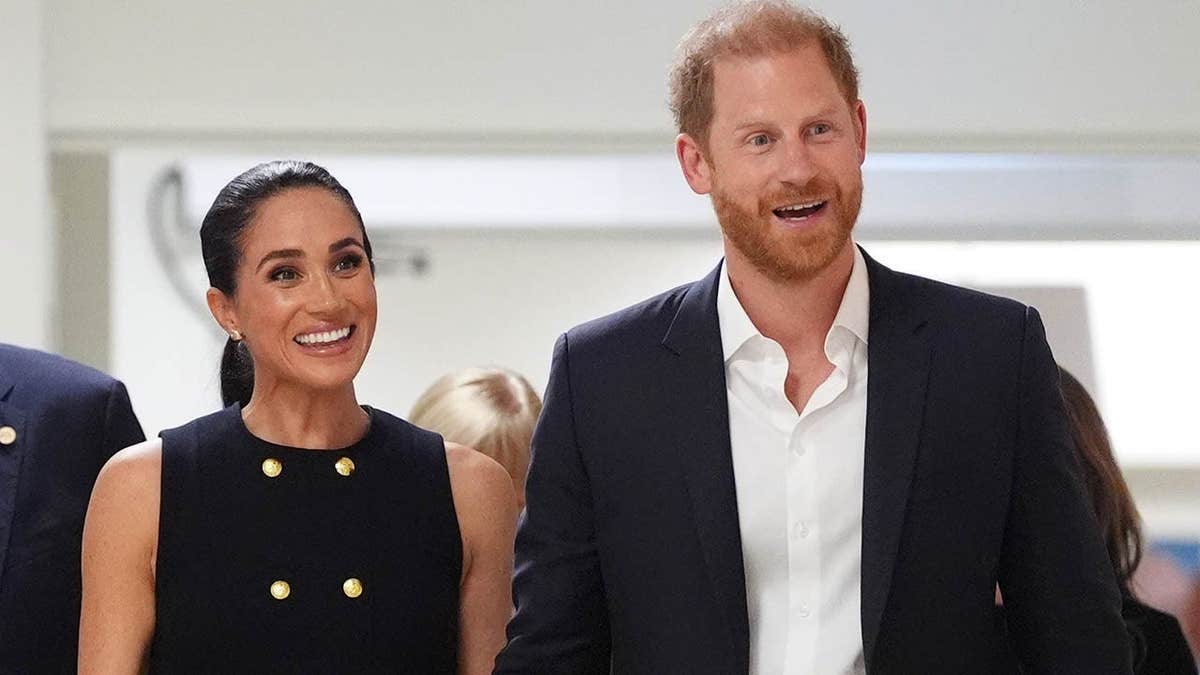
Meghan Markle is set to return to Britain, bringing with her more independence than she had as a working royal. This move, experts suggest, may challenge Buckingham Palace’s boundaries. Meghan, 45, and Prince Harry, 41, have recently moved to the United Kingdom with their children, Prince Archie, 7, and Princess Lilibet, 5, for an extended stay. They remain private, non-working members of the royal family.
Royal observers note that Meghan’s ability to pursue media, business, and other public projects from Britain may cause tension with the institution she once represented. “The nightmare for the Palace is that they can’t be controlled,” royal commentator Richard Fitzwilliams explained. He noted that royal engagements might be overshadowed by the Sussexes’ activities.
Kinsey Schofield, host of “Kinsey Schofield Unfiltered,” emphasized that Buckingham Palace will have “very little control” over the couple’s public and commercial activities. “They are private citizens and no longer represent King Charles as working royals,” Schofield said. However, she added, “Harry is still the King’s son and Meghan is still the Duchess of Sussex, so there is an inevitable association with the monarchy.”
Despite being private citizens, there is still significant public interest in them because of Harry’s royal connection.
Meghan Markle’s status as a private citizen in the U.K. marks a significant shift from her time as a working royal. Previously, palace protocols shaped her public role. Now, she returns with her own career and support system.
Another source mentioned that the Sussexes’ support network is stronger now than before, aimed at protecting the couple. Nonetheless, Schofield pointed out that Buckingham Palace retains control over access to the institution. “The palace can’t control what they do, but it can control access to the institution,” she stated.
Buckingham Palace may limit the Sussexes’ participation in official events. However, this wouldn’t prevent their public appearances and ventures from drawing attention away from working royals. Fitzwilliams indicated that this dynamic could create challenges, particularly with the carefully coordinated royal calendar.
Schofield explained that competing announcements might not break formal rules, but they violate expectations. “If Meghan were repeatedly scheduling appearances to coincide with major royal engagements, people would notice,” she stated. She emphasized that consistent attempts to overshadow royal activities could become a story.
This concern echoes Queen Elizabeth II’s previous dilemma regarding Harry and Meghan’s suggested ‘half-in, half-out’ arrangement when they stepped back in 2020.
While Meghan enjoys the interest due to her royal connections, she lacks the royal institution’s support. “There is no royal communications operation to defend her, no royal security, and no assured place at major royal events. Many perks are gone.”
The couple’s strained relationship with the royal family complicates the situation further. This tension was evident in their interview with Oprah, Netflix docuseries “Harry & Meghan,” and Harry’s memoir “Spare.” Schofield commented that these revelations create a significant “trust deficit.”
Broadcast journalist Helena Chard suggested that King Charles and Prince William might establish new expectations around the Sussexes’ access to official roles as they settle in the U.K. “Formalities need to be drawn up, put in place, and made clear to all,” Chard advised.
The move is also motivated by a desire to connect their children with Harry’s heritage. People magazine reported that the Sussexes considered the decision a family move to help Archie and Lilibet appreciate their father’s world.
Royal broadcaster Ian Pelham Turner speculated that Meghan might initially adopt a restrained approach while establishing their new life in Britain. He noted, “Meghan will likely play a cautious hand … epitomizing decorum, style, and elegance.”
Turner added that Meghan’s ability to empathize and her intelligence could drive opportunities for many communities in Britain. “I think she will relish the chance to prove her doubters wrong,” he concluded.