
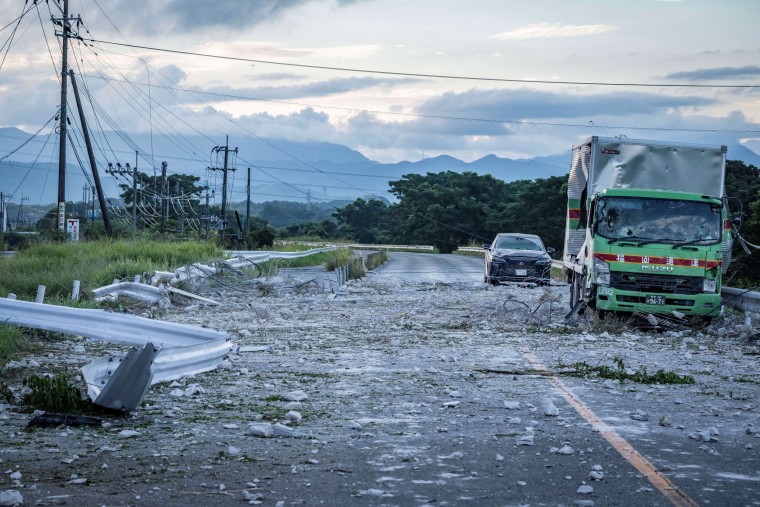
On July 28, 2026, a magnitude-7.1 earthquake struck the Kumamoto prefecture in southwestern Japan, resulting in at least 13 fatalities. Prime Minister Sanae Takaichi confirmed these figures and emphasized the urgency of ongoing rescue operations. She stated, “Even now, there are people waiting to be rescued, and this is a race against time. We will marshal all available resources on the ground to save and rescue as many people as possible.”
The earthquake hit at a shallow depth of 6 miles, leading to tsunami warnings and evacuations in coastal areas. Though the tsunami warnings were lifted soon after, the earthquake inflicted significant damage across the region. Notably, the historic Kumamoto Castle suffered further damage, adding to ongoing repairs from a previous earthquake in 2016. Infrastructure damage included ruptured roads and power outages affecting thousands of homes. The government warned residents of heat stroke risks, with temperatures reaching the 90s.
In Kashima, a partially collapsed Aeon mall led to the deaths of two women in their 20s. Rescuers managed to pull eight survivors from the debris, although four individuals remain missing. Authorities are investigating a potential gas leak as the cause of a mall explosion. Meanwhile, a chimney collapse at a Nippon Paper Industries factory in Yatsushiro has left seven people missing.
Thousand of soldiers have been deployed to assist local rescue teams. Hospitals are treating dozens of injuries, including passengers from the high-speed trains, which were suspended along with all train services on Kyushu following the quake. NHK reported a freight train derailment in Yatsushiro due to the intense shaking, with aerial footage showing overturned carriages and collapsed pillars of Yatsushiro Shrine.
Power outages continue to affect approximately 35,000 households, according to Kyushu Electric Power. Some airport operations remain halted. Japan’s meteorological agency cautioned of potential aftershocks of similar intensity over the next few days.
There was no reported damage to nuclear facilities in the area. Japan’s nuclear authority informed the International Atomic Energy Agency that the Sendai nuclear power plant was unaffected. The IAEA announced its continued monitoring of the situation.
Japan’s nuclear infrastructure receives heightened scrutiny during seismic events, a concern amplified by the 2011 Fukushima disaster. Located on the “Ring of Fire,” Japan experiences frequent seismic activity, with nearly 20% of the world’s earthquakes measuring 6.0 or higher occurring in the country.