
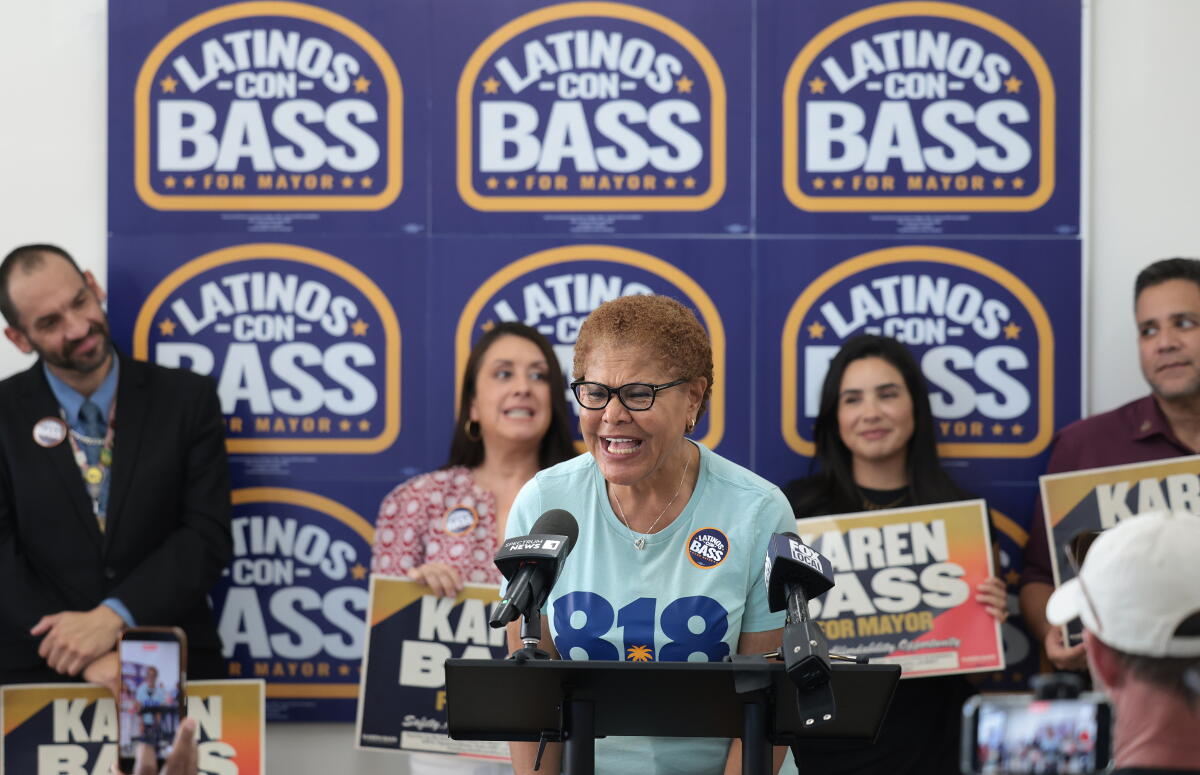
The Los Angeles mayoral race kicked off with a surprising twist in February. Councilmember Nithya Raman, known for her technocratic approach and alliance with the Democratic Socialists of America, entered the race against incumbent Karen Bass. This unexpected move put Bass, who faced criticism due to her handling of the Palisades fire, on the defensive.
Bass has worked to regain her footing by highlighting her achievements in tackling crime and promoting affordable housing. In contrast, Raman has criticized Bass for various missteps during the campaign. A poll by Berkeley IGS and the L.A. Times shows the candidates in a close contest, with 20% of voters still undecided.
“The race boils down to whether voters stick with the status quo or take a risk with a new face,” said Dan Schnur, a political communications expert at USC and UC Berkeley.
The election concludes a nine-month, intense competition between Bass, 73, and Raman, 45, who were once allies. Raman previously supported Bass during her 2024 election, but now, both candidates are attacking each other’s records at campaign events.
Raman has accused Bass of ineffective leadership, pointing out her management of the Palisades fire, the homelessness crisis, and inadequate city services. She blames Bass for the city’s deteriorating infrastructure and financial management issues, such as the delayed SkyLink people mover project costing $1.4 billion over budget.
Bass counters by criticizing Raman’s inconsistent policy positions on issues like police hiring and mansion tax. Bass has garnered support from all 14 council colleagues, who have expressed distrust towards Raman.
The victor will oversee Los Angeles during the 2028 Summer Olympic Games, facing financial and security challenges. A key task will include handling increased homelessness rates and negotiating new contracts with city employees, impacting the availability of funds for essential services.
Debate over the candidates symbolizes a choice between established politics represented by Bass and the evolving Democratic wave embodied by Raman.
Bass’s campaign began post-2024 elections, shortly after progress was noted in homelessness reduction. Bass credited her Inside Safe initiative for relocating vulnerable individuals. However, her political standing suffered following the Palisades fire, worsened by her absence during the crisis.
The incident led to escalated criticism, notably from Rick Caruso, real estate developer, whose family experienced losses due to the blaze. Despite Bass’s swift return, the firefighting efforts drew scrutiny, notably by Los Angeles County Supervisor Lindsey Horvath over communication mishaps.
Additionally, Bass faced fiscal challenges, with a $1-billion budget deficit exacerbated by wage increases for public safety personnel and city workers, resulting in workforce cuts.
Raman’s campaign gained momentum by exploiting Bass’s vulnerabilities, attacking her association with special interests. Raman accused Bass of approvals benefiting business groups, at the city’s expense.
Bass defended the police raises and Convention Center’s planned improvements, arguing necessary police retention and downtown prosperity, respectively. The mayor questioned Raman’s stance on public safety, especially concerning homeless encampments near schools.
Raman’s initial resistance to Bass’s law enforcement expansion shifted as she approached more centrist policies. Complications in Raman’s campaign emerged, such as controversial statements on police leadership, leading to criticism.
Attempts to gain traction among undecided voters continued as Raman addressed issues at LAX and utility costs. Bass emphasized crime reduction, countering with arguments about potential instability under Raman’s leadership.
Ultimately, undecided voters, including supporters of Spencer Pratt, may find themselves choosing based on disruptions versus conservative choices, influencing outcomes in this intense electoral battle.
Reporter Sandhya Kambhampati supported this analysis with data and graphics.