
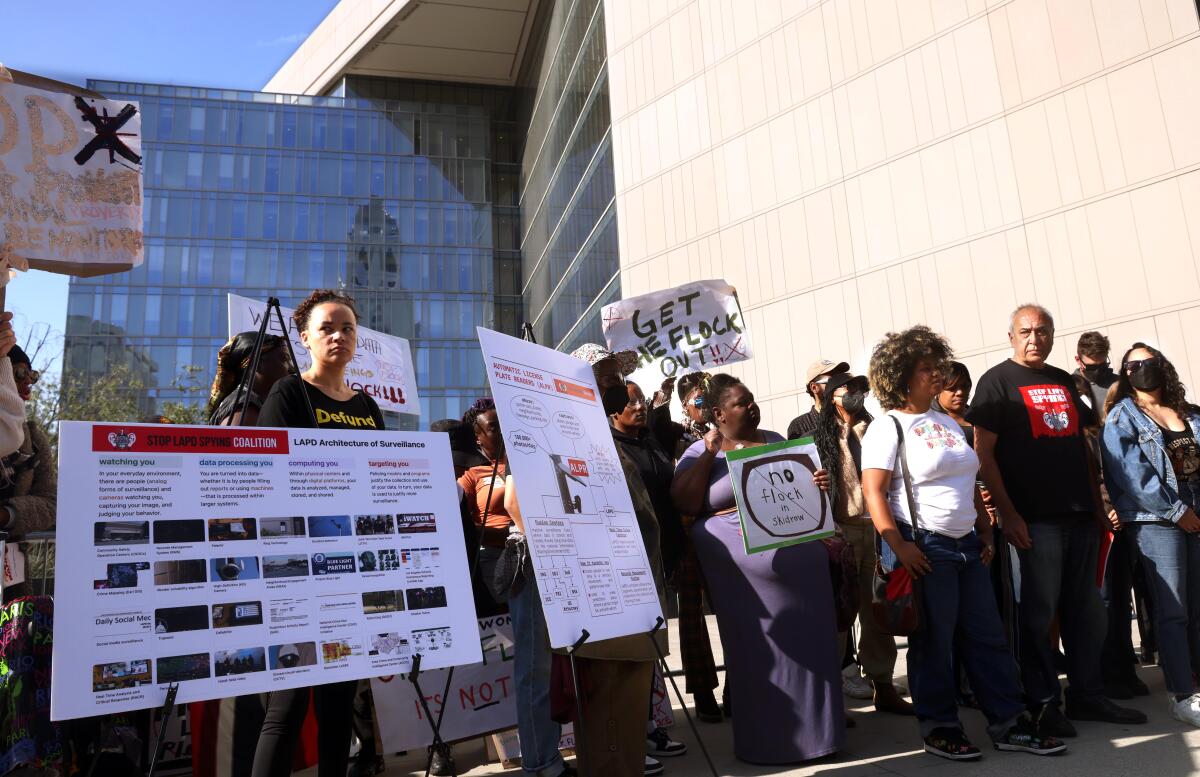
The Los Angeles Bureau of Street Lighting, established over a century ago, has traditionally focused on lamppost management. However, in recent months, the agency has become embroiled in a contentious debate regarding L.A.’s relationship with Flock Safety. This surveillance company has faced criticism for providing data that supported the Trump administration’s immigration policies.
In Los Angeles, Flock Safety operates numerous automated license plate readers, enabling authorities to locate reported stolen vehicles or those registered to known fugitives. These readers are often installed on city-owned light poles, placing the Bureau of Street Lighting in charge of their setup.
Reports emerged that Flock shared license plate data with federal agencies like U.S. Immigration and Customs Enforcement, leading several smaller cities to sever ties with the company. In L.A., however, the LAPD and other agencies continue to collaborate with Flock.
Emails obtained by The Times reveal the lengthy efforts of LAPD advocates, homeowner groups, and city officials to expedite the installation of plate readers. Flock, headquartered in Atlanta, stated that it collaborates with around 5,000 U.S. law enforcement agencies, maintaining that its operations comply with California laws regulating data sharing with federal authorities. Flock asserts that its technology emphasizes transparency and accountability, with data maintained under local control and deleted after 30 days by default.
Despite its primary duties of repairing the city’s extensive network of streetlamps and maintaining electric vehicle charging stations, the Los Angeles Bureau of Street Lighting has become a central player in the broader debate over surveillance technology. Calls for greater transparency in LAPD’s affiliations with Flock have led the Police Commission to request more information on the data collected and shared by the company’s scanners.
In recent months, the commission refused donations of Flock cameras and initiated an audit on the LAPD’s use of license plate readers. The findings are expected to be published in summer. Councilmember Ysabel Jurado has introduced a motion urging the commission to avoid partnerships with Flock Safety.
The LAPD’s involvement with Flock continues amidst mounting pressure from council offices and community groups. An email exchange highlighted concerns about rushing installations when existing city poles might not support the weight of the readers. The bureau emphasized safety in ensuring poles can withstand high winds without falling.
The Los Angeles Police Foundation, a nonprofit heavily supporting the LAPD, has criticized delays in installations, facilitating camera donations in affluent Westside and San Fernando Valley areas. Dana Katz, the foundation’s executive director, urged waivers of typically prohibitive fees for mounting devices, suggesting alternative poles approved by the County of Los Angeles.
Email records show Flock’s outreach to the Bureau of Street Lighting began in spring 2024, proposing donations to help with copper thefts. Additionally, efforts to establish a public-private partnership were noted. After wildfires affected several areas in January 2025, Flock donated over fifty plate readers, free for six months, to the Palisades, a region vigilant against theft.
City and police officials have consistently pressured the bureau to accelerate the approval process, underscoring the urgency driven by safety concerns.