
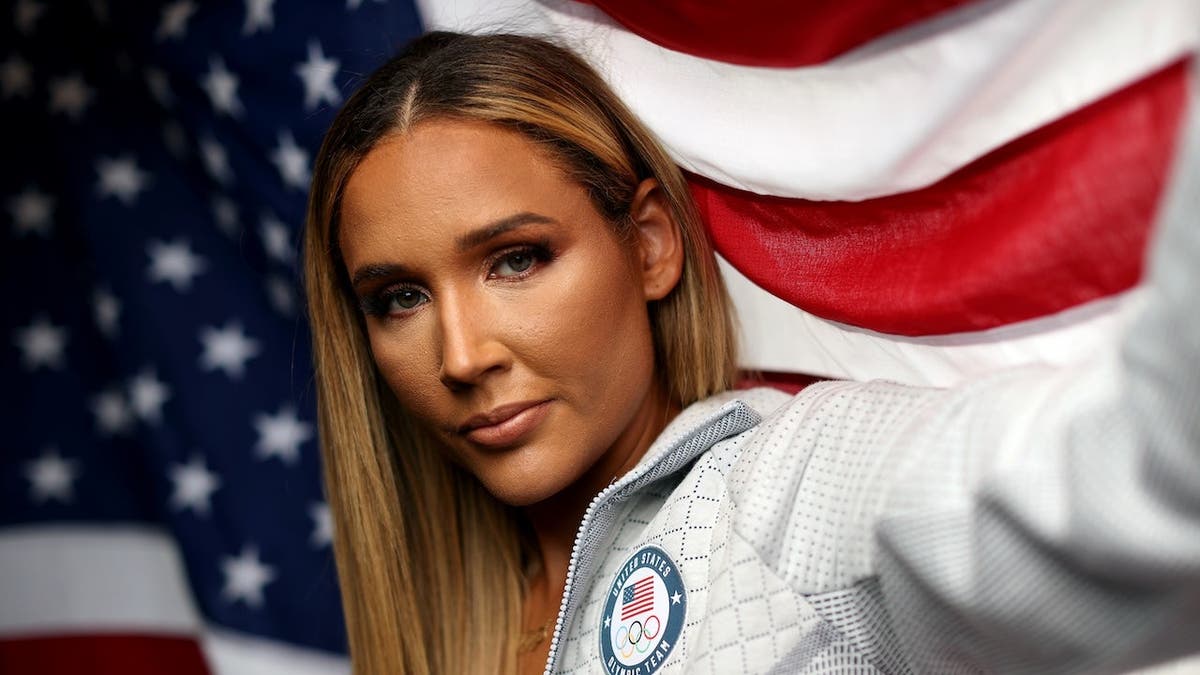
Lolo Jones faced an unsettling moment with Team USA during February 2025. While at the Olympic training complex in Lake Placid, New York, she experienced a severe incident. Jones, an accomplished athlete, had entered a team-issued bobsled, ready for the World Championships equipment test. As the sled accelerated close to 90 mph, Jones sensed something was wrong.
At the track’s end, she noticed intense pain in her lower back. A new issue arose: loss of bladder control. “I’ve never had that happen in my life,” Jones shared. She immediately informed her athletic trainer about her condition.
Jones is not new to sports challenges. She participated in the 2008 and 2012 Summer Olympics as a hurdler and in the 2014 Winter Olympics as a bobsled athlete. Her record includes world championship victories. She understood her body’s signals. This pain was different.
Despite the urgency of her symptoms, including severe back pain and bladder dysfunction, the head of sports medicine canceled a scheduled treatment, citing Jones had received prior care that week. When Jones arrived for the treatment, she learned of the cancellation. As she prepared for a significant race, she was injured and anxious.
Adding to her challenges, officials later restricted her access to sports medicine. This included barring her from essential facilities like rehabilitation areas, housing, and the push track. The stated reason was a supposed violation of the facility’s code of conduct, but no specific rules were cited or hearings held.
USOPC officials later admitted the treatment should not have been canceled, according to the Southern California News Group. Despite Jones’ apologies before the World Championships, her access remained revoked.
Jones highlighted the inequality athletes face in accessing medical care. The symptoms she described could point to cauda equina syndrome, a condition needing urgent medical attention. No evaluations or imaging were conducted by the center, leaving Jones without a clear diagnosis. Instead, she continued competing, securing medication from her Louisiana doctor and completing the World Championships.
Post-championships, Jones personally funded an MRI. The results: a herniated disc, lumbar tears, and a cerebrospinal-fluid leak. These findings led to her spinal surgery. Further, she financed her rehabilitation and related medical costs, totaling about $100,000.
Jones argues the financial burden reflects a larger issue within Olympic sports. Many bobsled athletes survive on limited stipends, facing high training and travel expenses. “I make good money, but not like Michael Phelps,” she noted.
Jones advocates for enhanced athlete protections, challenging the governing bodies overseeing their medical care and careers. She criticizes the expensive grievance system lacking athlete power against these institutions.
Her experience reshaped her view of the Olympic dream. Jones once envisioned her child pursuing elite sports. Now, she is resolute. “I will not let my daughter be an Olympic athlete,” she said, disheartened by her treatment.
For over two decades, Jones dedicated herself to Team USA. She endured challenges and represented the country proudly. Yet, when seeking support, she felt abandoned. “When I needed Team USA back, they absolutely abandoned me,” Jones concluded.