
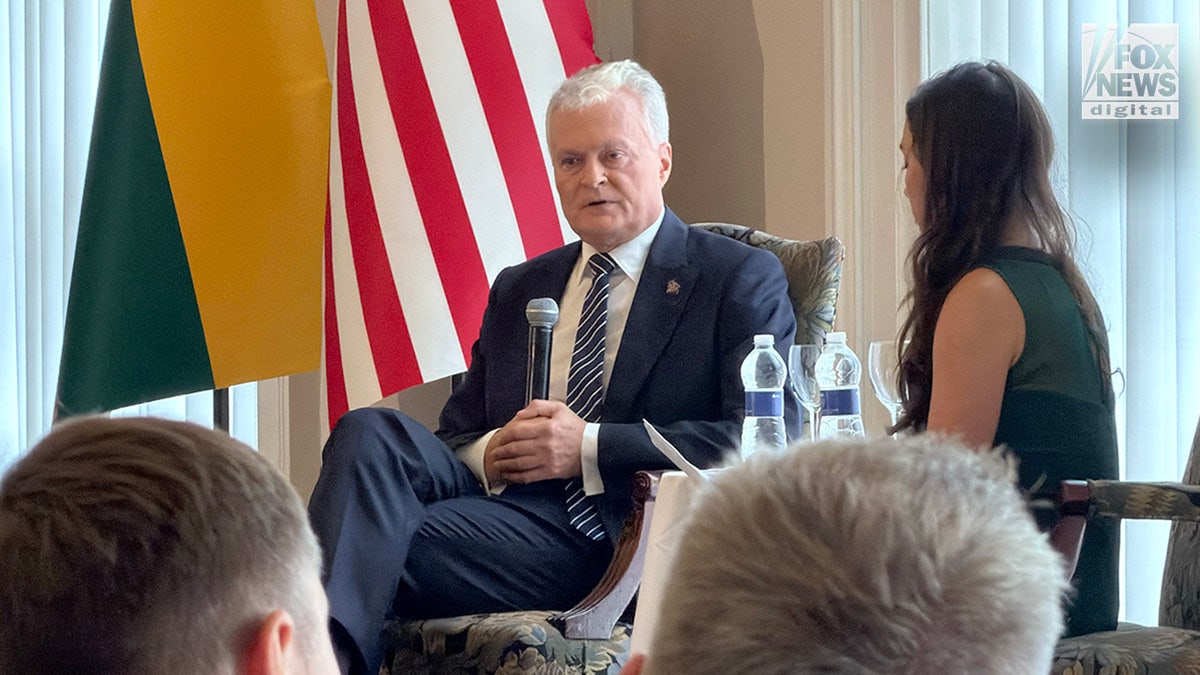
Lithuanian President Gitanas Nausėda has urged President Donald Trump to maintain U.S. military forces on NATO’s eastern flank as the U.S. reviews its military presence in Europe. Nausėda emphasized this during a fireside chat at the Presidential Business Forum on Resilience, held alongside the United Nations General Assembly in New York.
Nausėda expressed Lithuania’s readiness to offer substantial support for American troops to stay in the region. He mentioned sending two letters to President Trump, highlighting the appeal to retain U.S. troops.
Reduction in Forces
The Pentagon has commenced reducing some troops and capabilities in Europe. This is part of a strategy to shift the main defense responsibility to European allies, while the U.S. aims for a more limited role. However, the U.S. has shown interest in establishing a permanent Army base in Poland, reflecting Poland’s significant defense spending.
Frontline allies are working to understand their roles in this emerging strategy, which seeks reduced overall U.S. involvement in Europe while strengthening ties with certain countries.
Russian Threats
Russia’s ongoing war with Ukraine, which has impacted NATO territories, remains a pressing concern. Last week, NATO downed a drone entering Lithuania from Belarus. Nausėda noted it was likely Russian, aimed at Ukraine but deviated.
Lithuania’s 2026 National Threat Assessment reveals that if a ceasefire occurs in Ukraine, Russia might rebuild its military presence near NATO’s borders. Such developments could enable Moscow to pursue regional dominance before NATO’s full response.
Nausėda refrained from predicting a timeline but cautioned that any ceasefire might lead Russia to identify new targets. The strength and deterrence capacity of NATO will largely influence whether Moscow decides to challenge the alliance.
Peace Talks Unlikely
Nausėda expressed skepticism about immediate peace talks since Russia seems unprepared for negotiations. Instead, he suggested that Russia plans to exploit the upcoming winter to pressure Ukraine by targeting its energy infrastructure, complicating civilian life and potentially forcing concessions.
Energy Independence
Lithuania is well aware of the threat to energy infrastructure. Recently, Lithuania secured a long-term natural gas agreement with U.S. producer EQT Corp. since it started importing U.S. liquefied natural gas (LNG) in 2017. Lithuania now sources about 70% of its LNG from the United States.
At the forum, Lithuanian energy company Ignitis signed a new long-term LNG contract with EQT Corp. Nausėda stressed that Lithuania’s pursuit of energy independence stems from years of dependence on Russian energy and the misuse of that dependency.
The country is increasing its defense spending to 5.4% of GDP and plans to host a German brigade by 2027. Additionally, Lithuanian intelligence highlights ongoing risks to critical infrastructure, prompting enhanced protection measures.