
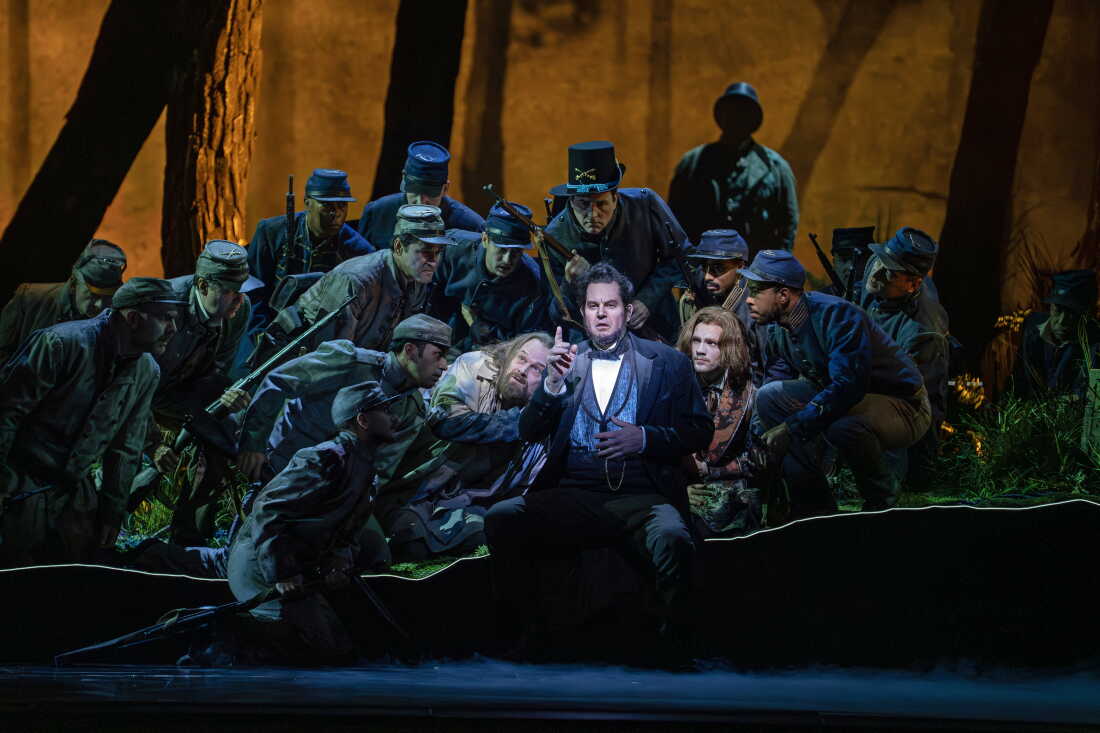
A production of Lincoln in the Bardo, adapted from George Saunders’ Booker Prize-winning novel, is now showing at the Metropolitan Opera House in New York. This opera, set in a supernatural world between life and the afterlife, presents a unique storytelling challenge, embraced by its creators with enthusiasm.
A Surreal Beginning
Before the performance begins, the audience experiences a sense of the eerie atmosphere awaiting them. As chandeliers flicker, the curtain reveals a moonlit graveyard with a child wandering through it. Suddenly, numerous ghosts emerge from the graves, making their presence known with kazoos.
“Sixty-five brilliant, trained opera singers playing the kazoo,” notes Missy Mazzoli, the composer of the opera’s music and the first female composer to have a world premiere at the Met.
She explains her intent to start the performance with an unusual sound, indicating a departure from everyday reality and a move into another realm. This sets the tone for an unconventional opera experience.
The Narrative Arc
The opera draws from Saunders’ novel, which features 166 characters narrating the tale of Abraham Lincoln grieving his son’s death, while spirits in limbo surround him. The story unfolds in a graveyard where Lincoln visits his son’s body, as spirits—unaware of their death—observe.
Librettist Royce Vavrek, working alongside Mazzoli, condensed the narrative to focus on five key characters. He emphasizes the goal of keeping George Saunders’ imaginative essence alive within the streamlined opera.
Character Highlights
Among the selected characters is the Reverend, portrayed by dramatic soprano Christine Goerke, known for her roles in Wagner and Strauss operas. Mazzoli created this role specifically for Goerke’s strengths. The Reverend, aware of his death, guides spirits in the afterlife.
“The Reverend continues his life’s work—shepherding souls,” Goerke explains.
Staging Challenges
Director Lileana Blain-Cruz faces unique staging demands. She explains that the story involves physical interactions between souls and imaginative scenes such as a child’s ascent through a roof and characters disappearing into another realm. Techniques like puppetry, pyrotechnics, and stage illusions help bring the narrative to life.
“Moments of ‘matterlightblooming,’ a transition to the afterlife, punctuate the orchestration,” Mazzoli says.
Lincoln’s Personal Trial
The narrative portrays Lincoln’s personal struggle and growth, mourning his son while reflecting on the loss faced by other families during the Civil War. This personal battle strengthens him, providing the resolve to lead the country through the crisis.
“Grief transforms Lincoln, reinforcing his commitment to peace,” Mazzoli states.
Finding Light in Darkness
Despite the themes of death and the afterlife, the creators hope to highlight moments of joy. Blain-Cruz believes audiences can find life and joy within the opera’s darker themes.
“It’s a universe filled with life as much as it is about grief,” she notes.