
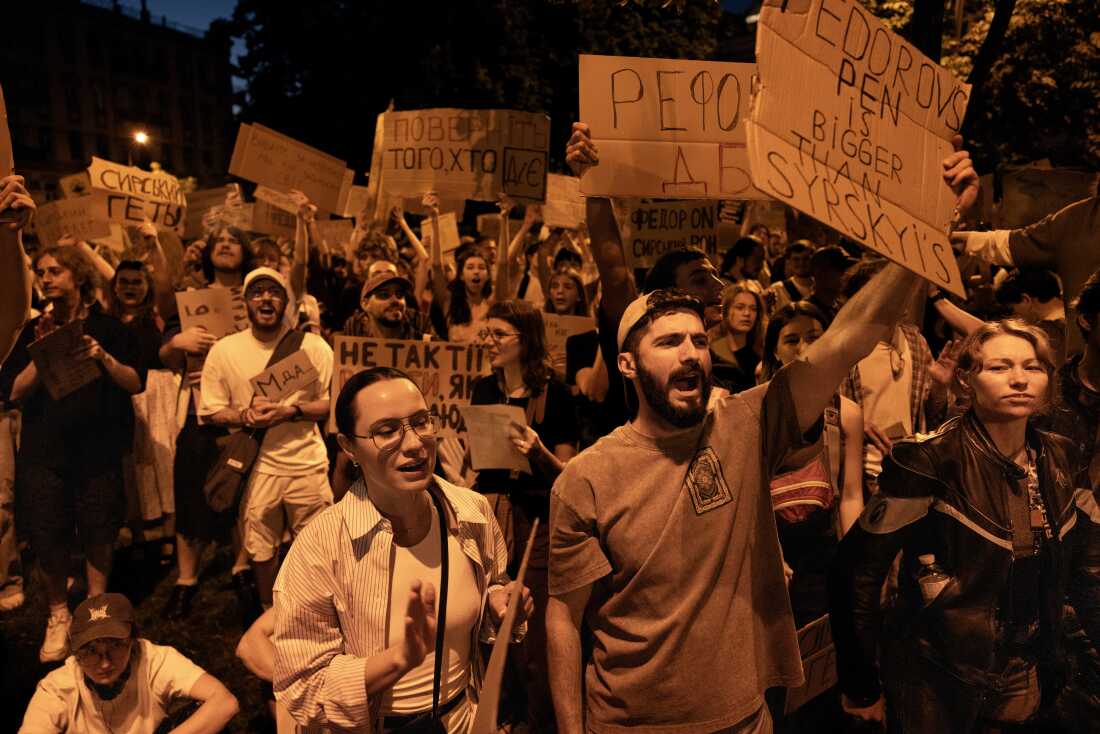
Protests erupted in Kyiv on Friday following the dismissal of Mykhailo Fedorov from his role as Ukraine’s defense minister by President Volodymyr Zelenskyy. Fedorov had been recognized for implementing technology advancements in Ukraine’s military. The upheaval came amidst a week of nationwide demonstrations over military strategy in the ongoing conflict with Russia.
President Zelenskyy appointed Mykhailo Drapatyi as the new commander of Ukraine’s armed forces, replacing Gen. Oleksandr Syrskyi. Drapatyi addressed the nation, stating, “There is a difficult task ahead, so we are not making loud promises. We are working with responsibility for our decisions and for the people who hold the front line and help Ukraine stand firm.”
The 43-year-old Drapatyi, seen as a reformer, assumes command during a time of political and military change in Ukraine. He represents a younger generation of military leaders embracing technology-focused battlefield strategies. Drapatyi was pivotal in developing the “drone line” technique, which uses drones for both attack and surveillance near the front lines. He succeeds the 60-year-old Syrskyi, a proponent of traditional warfare, who faced criticism following conflicts with the tech-forward former defense minister.
Zelenskyy honored Syrskyi for his achievements, including defending Kyiv from Russia’s invasion in February 2022 and reclaiming northeastern regions later that year. However, Syrskyi’s removal followed the controversial firing of Fedorov on July 15, which fueled protests across the country.
Protesters, like 42-year-old Mila Timchenko, acknowledged Syrskyi’s experience but noted the evolving nature of warfare. They argued that Fedorov’s focus on drones had shifted the balance against the larger Russian forces. Ukraine’s drone strategy has been significant in disrupting Russia’s oil, gas, and supply chains.
Tensions between Fedorov and Syrskyi highlighted a generational divide. Rob Lee, a military analyst, noted that Syrskyi did see the value of drones, even if he was slow to adopt tech-driven reforms. Fedorov claimed that resistance to digital initiatives hampered Ukraine’s defense capabilities.
Drapatyi succeeds Syrskyi, who became commander-in-chief after the firing of Valerii Zaluzhnyi in February 2024. Syrskyi, valued for his dedication, still operated under the Soviet system of command. Within the ranks, however, there was dissatisfaction over his leadership style, especially following the loss of Bakhmut in 2023.
Syrskyi addressed the situation, emphasizing his commitment to the war effort and expressing apologies for any personal conflicts with Fedorov. Drapatyi, upon taking command, praised Fedorov for initiatives fostering faster decision-making, stating, “The military needs change but without justice, no change will make sense.”
Drapatyi has been celebrated for his leadership since 2014 when he successfully repelled an attempted occupation of Mariupol by Russian-backed forces. Known for accountability, his resignation in 2025 following a Russian attack on a training center demonstrated his commitment to military responsibility.
Kremlin spokesperson Dmitry Peskov downplayed both Syrskyi’s firing and Drapatyi’s appointment. Drapatyi’s new role did attract immediate attention from Russian authorities, who issued an arrest warrant for him soon after his appointment.
As Russia continues missile strikes on Ukrainian cities, Drapatyi faces significant challenges in his new role, amidst ongoing calls for reform and a generational shift in military strategy.
Meanwhile, Ukrainians continue to protest against Fedorov’s dismissal. Dmytro Koziatynskyi, leading the protests, demanded Fedorov’s reinstatement as defense minister. Although Zelenskyy offered Fedorov a new position within the government, Fedorov remains focused on defense. He expressed gratitude for Syrskyi’s service and support for Drapatyi’s leadership.
Protester sentiments resonate with Fedorov’s statement, “This is a new era and a new hope in the fight of free people for freedom and justice.”