
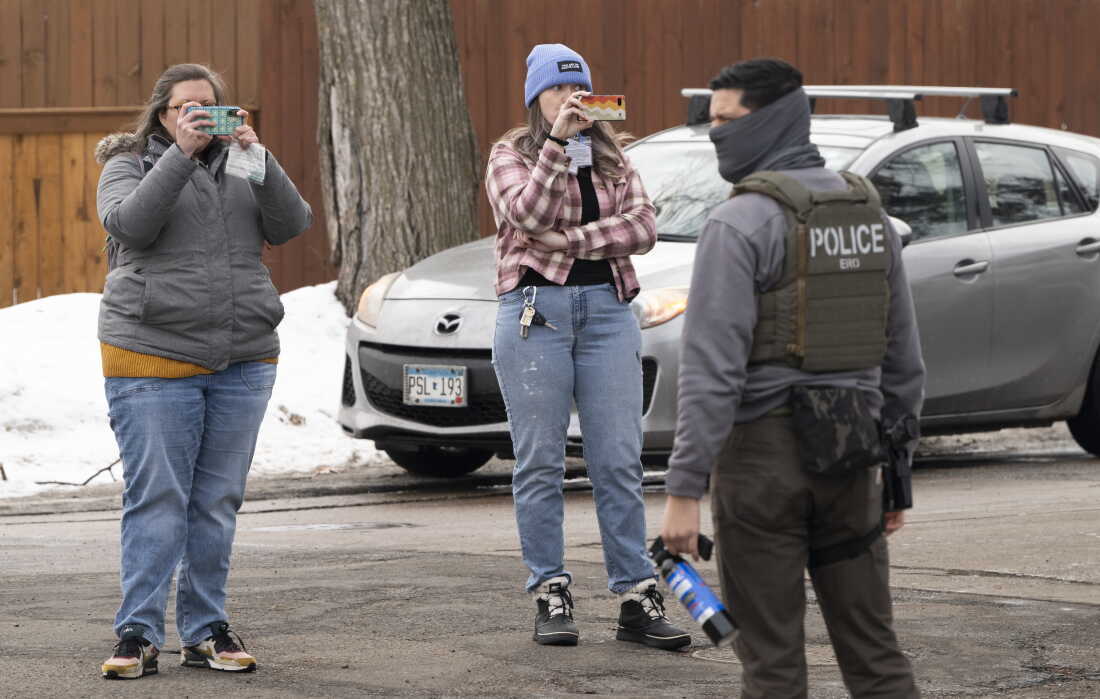
Observers in Minneapolis captured images of ICE agents in action in February. A recent lawsuit claims the federal government aims to intimidate those monitoring immigration enforcement. This development follows the fatal shooting of Minneapolis observer Alex Pretti by immigration officers in January. Bystander videos corrected false narratives by Trump administration officials about Pretti.
Minneapolis resident Michael Khalili spent months documenting federal immigration activities following a significant increase in enforcement in his city last winter. His work stemmed from the need to uncover and correct governmental inaccuracies and misinformation. When his efforts led to personal risk and family concerns, Khalili ceased his observations due to repeated confrontations with federal officers, who at times photographed him and his vehicle.
Khalili experienced further intimidation when his Global Entry status was revoked after a tense encounter, only to be reinstated following media inquiry. State troopers also threatened him with harassment charges for following ICE vehicles. He realized the gravity of the situation when 15 activists faced charges, including one for following ICE vehicles—a charge relevant to his own experiences.
The concerns led Khalili to discontinue his activities, prompted by his wife’s fears of potential arrest in front of their children. However, determined to maintain accountability over the government, Khalili became a named plaintiff in a new lawsuit. Along with Common Cause, they accuse several federal agencies of violating First Amendment and privacy rights. This lawsuit is the most extensive yet, citing incidents from multiple states and advocating for national relief.
Maryam Jazini Dorcheh, vice president for litigation at Common Cause, underscores the importance of maintaining citizens’ rights to hold the government accountable. The lawsuit emphasizes how governmental actions hinder peaceful observation, essential for political participation.
NPR has documented instances of government intimidation across different states, where activists and observers have faced threats of being labeled domestic terrorists or ending up in federal databases. Despite these pressures, the federal agencies involved, such as DHS and DOJ, offered no comment on the lawsuit, while the FBI declined to discuss the matter.
Disturbing accounts within the lawsuit highlight observers being photographed, followed, reported to police, and even pepper-sprayed or threatened at home by federal officers. In one Maryland case, local police banned a Common Cause member from observing an ICE facility after facial recognition was used to identify them.
The lawsuit cites directives from the Trump administration and accuses the government of establishing retaliatory practices against observers. It claims a coordinated approach to retaliate against peaceful monitoring through force, personal data collection, criminal charges, and civil penalties.
Khalili’s involvement aims to shield others from similar mistreatment, using his documented experiences to support the case. His personal encounters have highlighted an alarming increase in law enforcement queries about him, raising concerns about being on federal watch lists.
Khalili’s participation in the lawsuit seeks corrective measures and aims to establish necessary safeguards. He aspires for a time when observing would not be necessary due to transparent and accountable government actions.