
La Grange Park is in the process of revitalizing the branding of its commercial areas. Village officials are now seeking feedback from residents on the Village Market Paint and Post pilot project. This initiative emerged from the Village Market Streetscape Improvement Plan, approved by the Village Board in 2023.
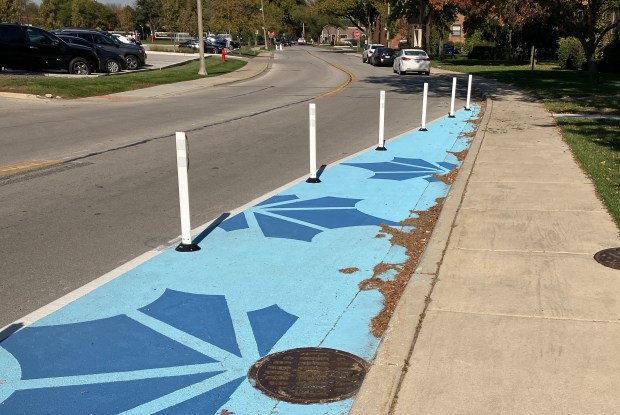
Village planner Derek Rockwell explained, “They’ve installed white posts into the asphalt, creating a temporary curve, and we’ve painted along with the crosswalks.” The project aims to test ideas for improving pedestrian safety and traffic calming at intersections, including Sherwood Road, Woodlawn Avenue, and Homestead Road.
The resident feedback is collected through a survey available on the village website, lagrangepark.org, under the “government” section. The website also features a short film showing project developments and a link to the Improvement Plan text.
The project’s primary objective is to make the area more pedestrian-friendly by using posts, often called “bollards,” designed to reshape the intersection and slow traffic. This creates a “calming effect,” encouraging residents and shoppers to walk around the Village Market area, especially near Jewel Foods and nearby businesses.
Newly installed bollards and painted pavements at the corner of Homestead and Sherwood roads aim to enhance pedestrian safety, as part of the village’s initiative. Officials mentioned this project does not require approval from the Illinois Department of Transportation, since the village owns these roads. However, such approval will be necessary for changes to major streets like La Grange Road and 31st Street.
The pilot project is expected to conclude within a year, focusing on the Village Market area. Depending on results and feedback, officials may extend the approach to other village sections, including the 31st Street area, also undergoing transportation updates.
Explaining the expected outcomes, Rockwell stated, “We are collecting traffic data before and after installation and will compare these figures. This technical data will be supplemented with survey responses to understand community perceptions.”