
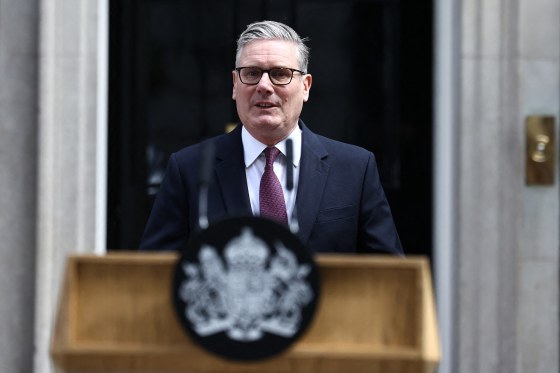
British Prime Minister Keir Starmer announced his resignation on Monday in response to a revolt within his Labour Party. This announcement may pave the way for Andy Burnham to become his likely successor. The new prime minister will be the country’s seventh leader in ten years.
Starmer, who achieved a landslide election victory in 2024, experienced a swift political decline. He faced several scandals and was criticized for policy errors. These issues have made him unpopular among the public and his party members.
Calls for his resignation increased after poor performances in recent elections, where Nigel Farage’s Reform UK made significant gains. Andy Burnham, mayor of Greater Manchester, emerged as a primary contender after winning a parliamentary seat last Thursday.
Burnham, known as the “King of the North,” will likely have strong support from Labour MPs. After his recent election victory, he conveyed a message of change and urged the country to regain hope in politics.
Two significant resignations had already occurred from Starmer’s Cabinet. Health Secretary Wes Streeting and Defense Secretary John Healey departed, both criticizing his leadership and decision-making.
A major controversy arose from Starmer’s decision to appoint Peter Mandelson as U.S. ambassador, despite Mandelson’s ties to late financier Jeffrey Epstein. Mandelson’s subsequent arrest intensified scrutiny on Starmer’s choices. The fallout from this scandal contrasted with Starmer’s campaign promise to clean up politics.
Starmer struggled with adverse economic conditions linked to global conflicts and Brexit. Despite pledging fiscal discipline, he found little room for reforms, facing pressure to cut spending and raise taxes.
His ambitious political projects, like net-zero emissions and digital ID cards, failed to materialize, raising doubts about his decision-making.
Political analysts, like Andrew Barclay and Tim Bale, say Starmer’s downfall resulted partially from his vague government narrative and past decisions that left a lack of financial resources to deliver promised changes.
Internationally, Starmer gained respect for his approach to global issues but faced challenges on domestic policy. His relationship with President Trump soured over the Iran conflict, yet he remained praised for his stance.
The Labour leadership contest will require candidates to gain support from 20% of party MPs. If multiple candidates qualify, a vote among party members will decide the leader. Burnham’s popularity may allow him to avoid a lengthy contest. Experts suggest Starmer’s exit offers him a way to leave with dignity, while Burnham’s recent success signals his ability to take on political adversaries.
The recent instability of prime ministers stems from the 2016 Brexit vote and continues with Starmer’s departure. His background, from working-class roots to a high-profile legal career, illustrates his journey until reaching Labour leadership.
This article will be updated with new developments as they become available.