
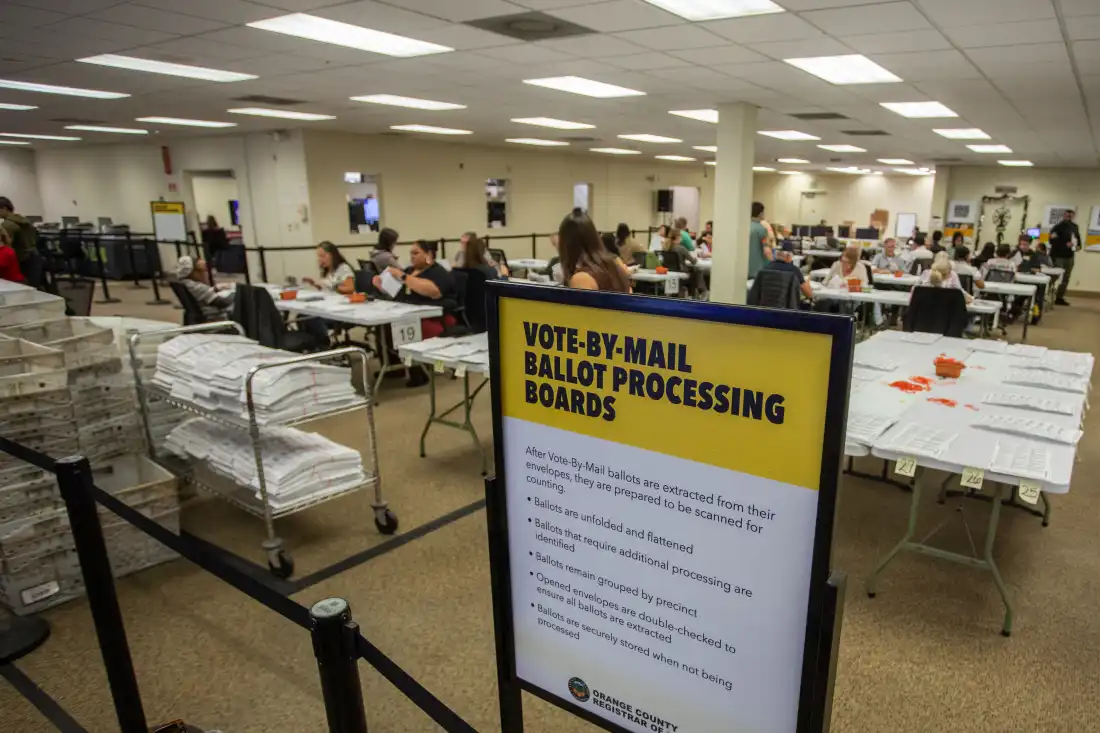
A federal judge has denied an emergency request by the Department of Justice to segregate California ballots in the midterm elections. The request aimed to stop the processing of ballots from 20,000 individuals that federal officials suspect are noncitizens. California officials argue the DOJ’s list is unreliable, with Los Angeles County’s analysis showing many on the list do not have active voter registrations.
California election officials warn that setting aside ballots just before Election Day would be unlawful, infeasible, and disenfranchise eligible voters. U.S. District Judge David Carter, appointed by President Clinton, denied the request for a temporary restraining order, stating that the federal government has never before attempted coercion against state and local election procedures at such a critical time.
Carter wrote, “Once a vote is segregated, lasting harm has occurred. If the Executive can discount votes and threaten an ongoing election due to unproven allegations, then our democracy is in danger.”
Judge Carter emphasized the potential chaos and disenfranchisement such an action could cause. He suggested the federal government continue prosecuting individuals for illegally voting as noncitizens. The DOJ recently charged people for registering or voting without U.S. citizenship.
The DOJ’s lawsuit, filed on October 15 in California, is part of a series of unusual actions before Election Day, raising concerns about federal interference in state election procedures. Similar actions have been taken in Washington and Alaska, attempting to influence local election results.
California Attorney General Rob Bonta, a Democrat, urged the court to resist the DOJ’s demands, noting potential future interference. The DOJ plans to appeal Judge Carter’s decision, and the issue may reach the U.S. Supreme Court due to the urgency, as ballots are in process and ineligible ones can’t be retrieved once separated from their envelopes.
Federal prosecutors argue votes by noncitizens dilute those of U.S. citizens, although such occurrences are rare. The DOJ’s list of “likely” noncitizens is under dispute, with conflicting analyses. A Los Angeles county review found many claimed to be U.S.-born, while USCIS’s review disagreed, noting four might have a claim to citizenship.
Expert opinions differ on the reliability of USCIS’s methodology, with University of Delaware political scientist Kassra Oskooi questioning its accuracy. Oskooi serves as an expert for voting rights groups intervening in the case.