
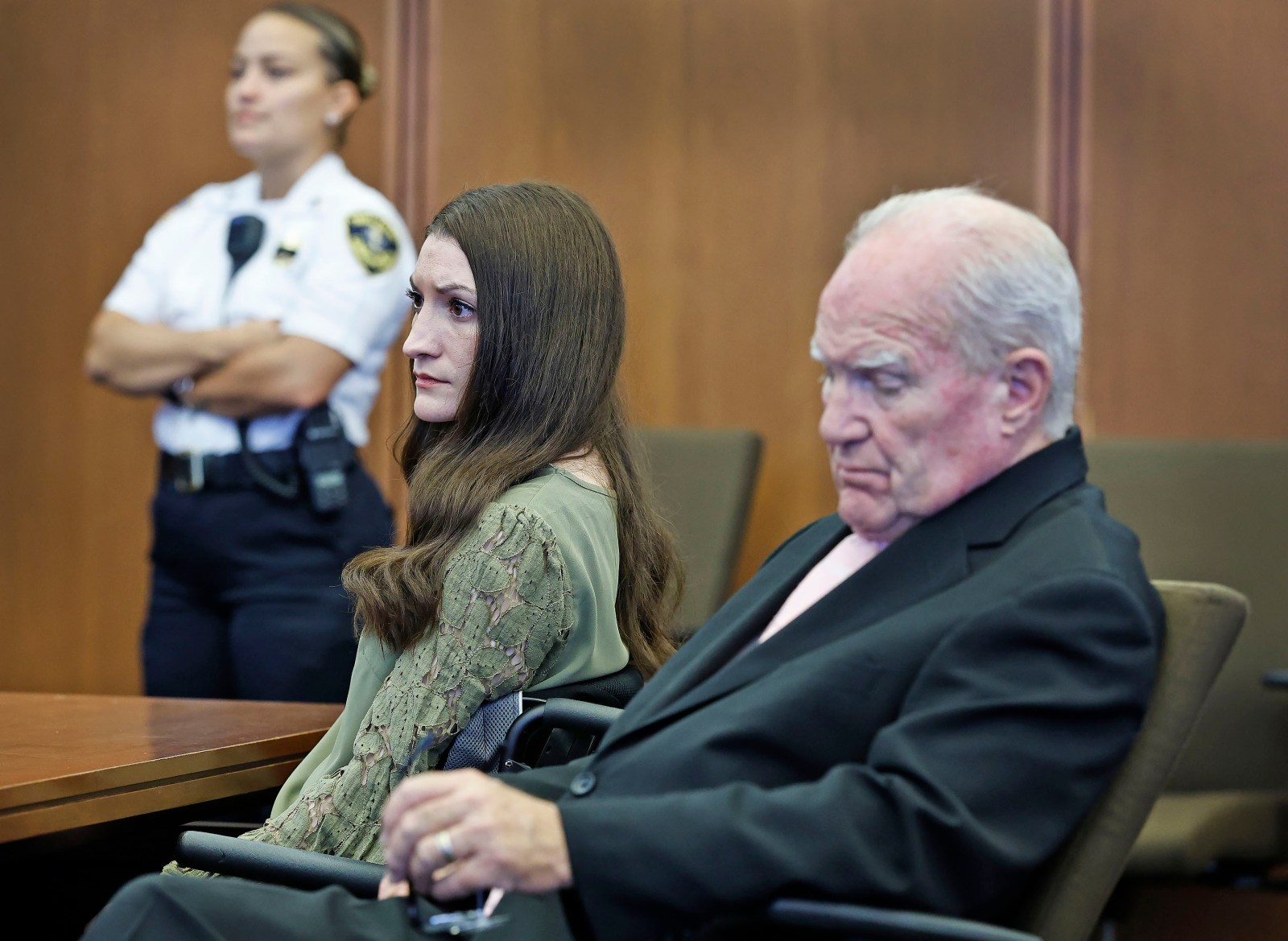
A judge in Massachusetts has rejected Lindsay Clancy’s plea to dismiss murder charges related to the deaths of her three children, allowing the prosecution to pursue a retrial. On Thursday, Plymouth Superior Court Judge William F. Sullivan denied the defense’s Rule 25 motion, which sought a required finding of not guilty after a mistrial occurred in September.
Under the state’s law, a Rule 25 motion allows a judge to assess whether the prosecution presented enough evidence for a reasonable jury to convict. Clancy’s defense attorney, Kevin Reddington, argued that the prosecution failed to demonstrate two crucial elements: that Clancy was responsible for the deaths of her three children and that she was criminally accountable at the time.
Judge Sullivan disagreed, stating the prosecution provided sufficient evidence to allow a reasonable jury to conclude without doubt that Clancy committed the killings and could be held criminally responsible. He stated, “There was evidence introduced, both physical and circumstantial, that would permit a rational trier of fact to find beyond a reasonable doubt the elements of the charge of murder.” The judge’s ruling does not determine guilt or innocence but affirms that the evidence from the first trial was sufficient for a new jury to hear the case.
This development represents a significant win for prosecutors, who contend Clancy intentionally planned the deaths of her children, Cora, Dawson, and Callan, on January 24, 2023, while her husband was momentarily out of their Duxbury home.
Reasons Behind Judge Sullivan’s Decision
According to the ruling, prosecutors presented both physical and circumstantial evidence indicating Clancy was alone with her children during the critical time frame. Her husband, Patrick Clancy, testified that he left briefly for takeout food and medication and returned to find signs of violence, later discovering their children in the basement.
Forensic experts testified that the children’s deaths resulted from asphyxia or mechanical asphyxia complications. Prosecutors claimed they were strangled using exercise bands. The judge did not accept the defense’s objection to the state’s evidence of Clancy’s criminal responsibility. Both parties acknowledged Clancy’s severe mental illness at that time, but the key dispute was whether this illness made her legally unable to understand the wrongfulness of her actions or follow the law.
Sullivan highlighted that three prosecution experts affirmed Clancy retained these capacities, even if the defense presented opposing expert opinions. Deciding between these differing expert views is a question for a jury to settle, he wrote. Thursday’s decision marks the second time Sullivan has denied the defense’s request to dismiss the case, finding the prosecutors’ evidence enough for jury consideration.
Upcoming Developments
A hearing is set for November 2 to address unresolved issues, including Clancy’s plea to prevent a retrial based on double jeopardy and the defense’s demand for a court investigation into Michael Desronvil, the juror who wanted Clancy convicted.
Prosecutors have not yet indicated if they plan to retry Clancy. Their options include seeking another first-degree murder trial, considering lesser charges like second-degree murder or manslaughter, or choosing not to proceed. If a retrial occurs, a new jury will need to decide whether Clancy is guilty or if her mental state rendered her not criminally responsible.