
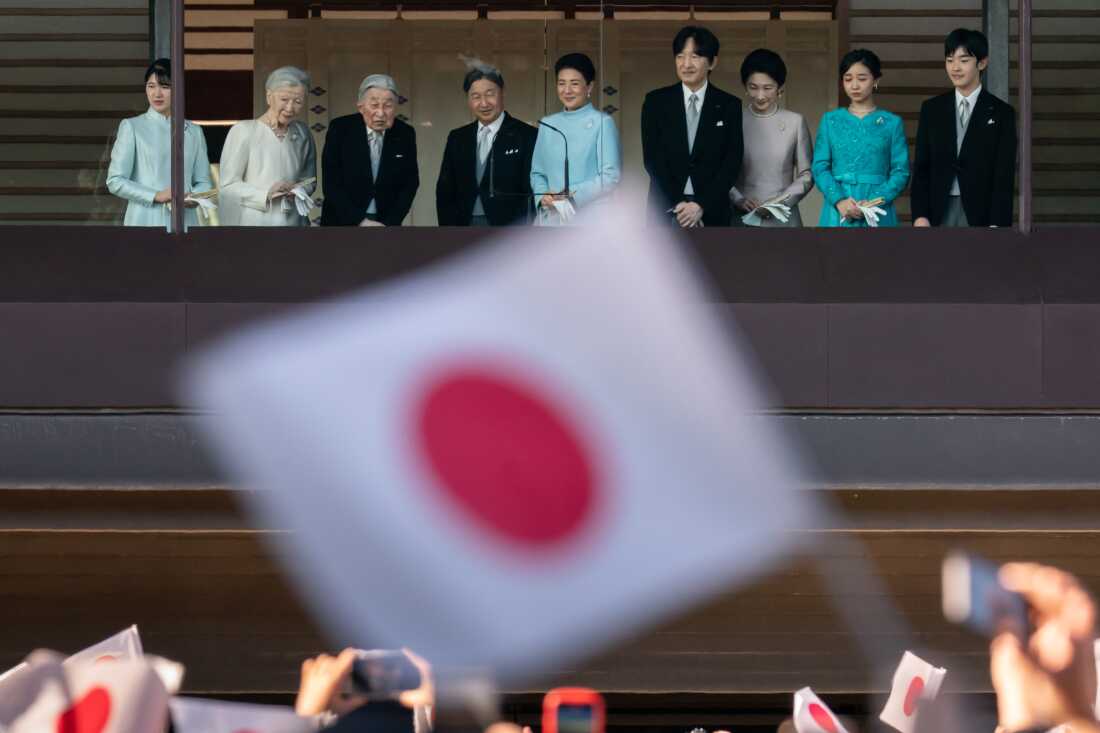
In 2019, Japan’s Emperor Naruhito participated in a ceremony at the Imperial Palace in Tokyo, signifying his enthronement. This event carried significant implications as the upper house of Japan’s parliament recently approved changes to the law that governs succession in the world’s oldest continuous hereditary monarchy. These revisions, following approval by the lower house, aim to address the dwindling and aging membership of the imperial family.
Supporters claim the changes are necessary to maintain the public roles and activities of the imperial family. Critics argue that there’s a hidden agenda: preventing a future female emperor. Seiichiro Noboru, a former Japanese diplomat with ties to the imperial family, contends that this objective is clear.
Japan’s image as a constitutional monarchy relies on public support and political stability, especially as it positions itself as a strong proponent of a rules-based international order. Key aspects of the revisions include allowing princesses to remain in the imperial family after marrying commoners and permitting the adoption of male-line descendants from former imperial branches, though these adopted men cannot inherit the throne. However, their male offspring could.
Currently, only 19-year-old Prince Hisahito, Emperor Naruhito’s nephew, serves as the last young male heir. This situation has sparked public concern about the imperial family’s future. Noboru suggests that recognizing a female emperor would eliminate complex succession challenges. Princess Aiko, Emperor Naruhito’s 24-year-old daughter, stands as a potential candidate. Aiko, who has a degree in Japanese literature and works for the Japanese Red Cross Society, has gained public admiration, with polls indicating 60% to 90% support for female emperors among Japanese citizens.
Despite this support, Japan’s first female prime minister, Sanae Takaichi, opposes female succession. She argues that the male line’s uninterrupted historic succession underpins the emperor’s authority. Historically, eight female emperors have reigned in Japan, all descended from the male line, such as Aiko.
This male-only succession practice started in 1889 with the Imperial Household Law introduced by the Meiji government. At that time, emperors were seen as military commanders and patriarchs, while married women were legally restricted in rights. Due to high rates of infertility and mortality, many male heirs did not survive, leading to nearly half of Japan’s emperors being born to concubines.
Noboru argues that excluding women from the throne contradicts constitutional guarantees against gender discrimination. He emphasizes that Japan’s constitution clearly states the emperor’s authority is derived from the people’s will. In light of public sentiment, he questions the government’s stance on this issue.
Emperor Naruhito has remained neutral but acknowledged the need for public understanding of these discussions. He addressed the matter cautiously at a recent press conference.