
For decades, U.S. presidential hopefuls visited Jerusalem as part of their campaign rituals. This involved significant symbolic gestures like laying a wreath at Yad Vashem, shaking hands with Israel’s prime minister, and speaking on the enduring U.S.-Israel alliance. In 2008, Barack Obama visited Sderot, Israel, highlighting Israel’s ongoing security challenges by referring to his own daughters’ safety. In 2012, Mitt Romney placed a note in the Western Wall, continuing the tradition.
These trips signaled support to Jewish and evangelical voters in the U.S., while allowing domestic politicians with sparse foreign policy experience to enact a statesmanlike presence. George W. Bush, as Texas Governor in 1998, toured Israel from a helicopter, crafting a presidential image for himself without significant risk. Israel was considered a real ally embroiled in ongoing conflict but without major risk of political missteps.
One notable misstep occurred in 1979 when the Rev. Jesse Jackson posed for a photo with Yasser Arafat in Lebanon. This moment marred his presidential ambitions and left a lasting impression on Jewish voters.
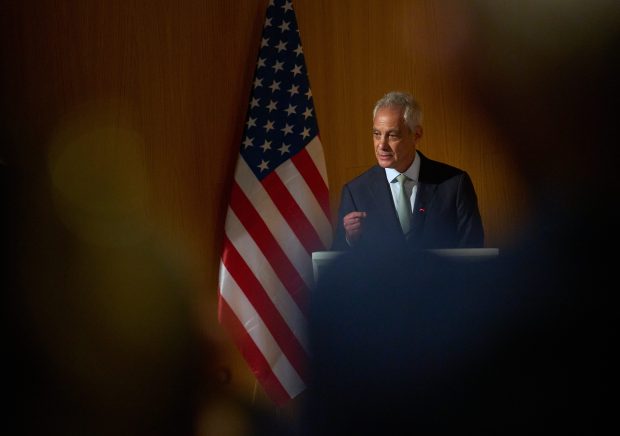
Recently, this diplomatic theater is shifting. On July 8, amid Iranian missile threats, Rahm Emanuel spoke at Tel Aviv University, criticizing Israel’s geopolitical actions. On the same day, U.S. Rep. Ro Khanna reported that settlers detained him in a West Bank military zone. His claims and actions have sparked criticism back home for potentially endangering Jewish lives within his district, which boasts high earnings and significant employment through Israeli companies.
In March, two Israeli Americans faced anti-Semitic aggression in Khanna’s precinct, which Daniel Klein, of Jewish Silicon Valley, linked to Khanna’s rhetoric. Despite the district’s significant economic ties to Israel, Khanna spent three days focusing on conflict areas rather than fostering relationships.
Rahm Emanuel’s position is somewhat rooted in familial history; his father fought in Israel’s War of Independence. Conversely, Khanna’s approach suggests a campaign-driven attempt to appeal to primary voters favoring ideological distance from Israel rather than fostering dialogue.
In 2020, major Democratic contenders avoided Israel entirely. Following October 7, 2023, Israel became more central to Democratic debates. The Republican Party faces similar internal divisions, although these are more pronounced in media rather than in policy decisions.
Neither Emanuel nor Khanna engaged directly with Israeli lawmakers, underscoring a focus on American audiences rather than diplomatic progress. Their visits illustrate a trend where political figures use Israel as a setting to appeal to domestic bases, rather than engaging substantively with the region.
The U.S.-Israel alliance remains strong due to mutual benefits, such as shared military technology and strategic intelligence. The Israeli Iron Dome, an example of this partnership, protected both regional allies and American services, like in Guam.
For future political candidates, there’s value in visiting diverse areas in Israel beyond traditional locales. Engaging with varied communities, such as the Arab student body at the University of Haifa or mixed professional teams at Hadassah Medical Center, provides broader perspectives. Listening to local experiences could foster more genuine discourse.
Aaron Kaplowitz is the president of the United States-Israel Business Alliance.