
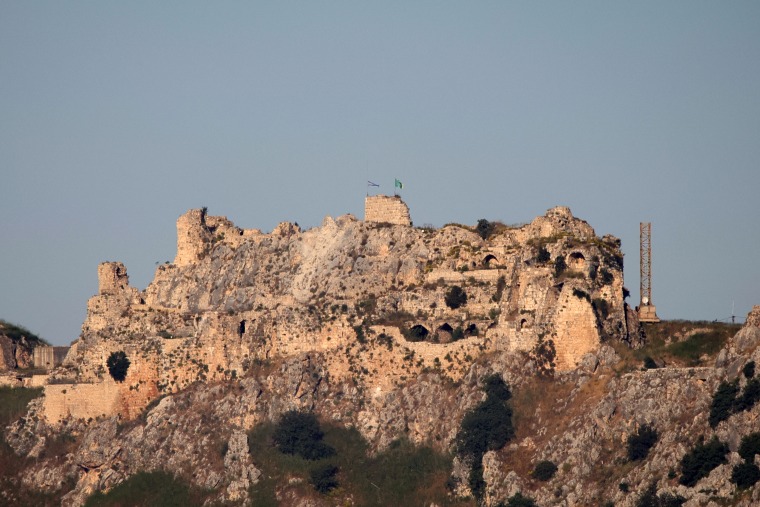
Israeli forces crossed the Litani River and seized a key location in Lebanon, according to their defense minister on Sunday. This marks Israel’s most significant advance into the country in 26 years. The site captured is Beaufort Ridge, known for its medieval castle, following days of fierce battles in southern Lebanon. Prime Minister Benjamin Netanyahu stated he was intensifying actions in Lebanon, even with a ceasefire supposedly in effect since April.
This advance took place while both nations discussed a U.S.-mediated peace plan in Washington. Israeli and Lebanese officials met to address the ceasefire, but mutual accusations of violations persisted. Defense Minister Israel Katz remarked that the Israeli flag now flies over vantage points overlooking the Galilee communities. He noted that troops who took Beaufort Ridge will stay as part of a security zone.
The Israeli military posted a photograph of their forces outside the castle on Beaufort Ridge, highlighting historical significance as the site was occupied by Israel until their withdrawal in 2000. UNESCO expressed alarm over the conflict near Beaufort Castle due to its provisional protected status, urging for its legal protection from attacks.
Crossing the Litani River signified an escalation. It’s a de facto boundary since Israel’s invasion, controlling southern regions with local evacuations. Israel targeted bridges over the river to block Hezbollah’s alleged weapon smuggling and fighter movement.
Opinions varied on the occupation possibility south of the Litani River for Israel’s security. Calls for permanent control came from figures like Finance Minister Bezalel Smotrich, citing historical claims. Professor Fawaz Gerges highlighted risks of a prolonged conflict if such occupation were pursued.
Prime Minister Netanyahu visited northern Israel, praising military advancements. He mentioned operations in Beirut and Bekaa, delivering blows to Hezbollah, including air strikes in southern Lebanon. National Security Minister Itamar Ben Gvir urged for further action against Beirut.
The conflict, a significant spillover of the ongoing Iran war, displaced over 1.2 million Lebanese. Lebanese reports state over 3,350 deaths due to Israeli strikes. In contrast, Israeli casualties included 25 soldiers and two civilians.
Lebanon’s Prime Minister, Nawaf Salam, condemned Israeli attacks as unjustifiable, highlighting recent strikes on Tyre, resulting in 14 deaths. International norms, according to Salam, deplore the collective punishment seen through Israeli actions.
This violence coincides with U.S. and Iranian negotiators attempting to extend a ceasefire in their war. Iran demands this agreement must include halting the Lebanon conflict. While a truce framework was reportedly agreed in Doha, its formalization faces delays.
Defense Secretary Pete Hegseth expressed Trump’s determination for a comprehensive deal preventing Iran from obtaining nuclear weapons. Gerges warned Israel’s actions in Lebanon could jeopardize U.S.-Iran negotiations unless Trump intervenes with Netanyahu.