
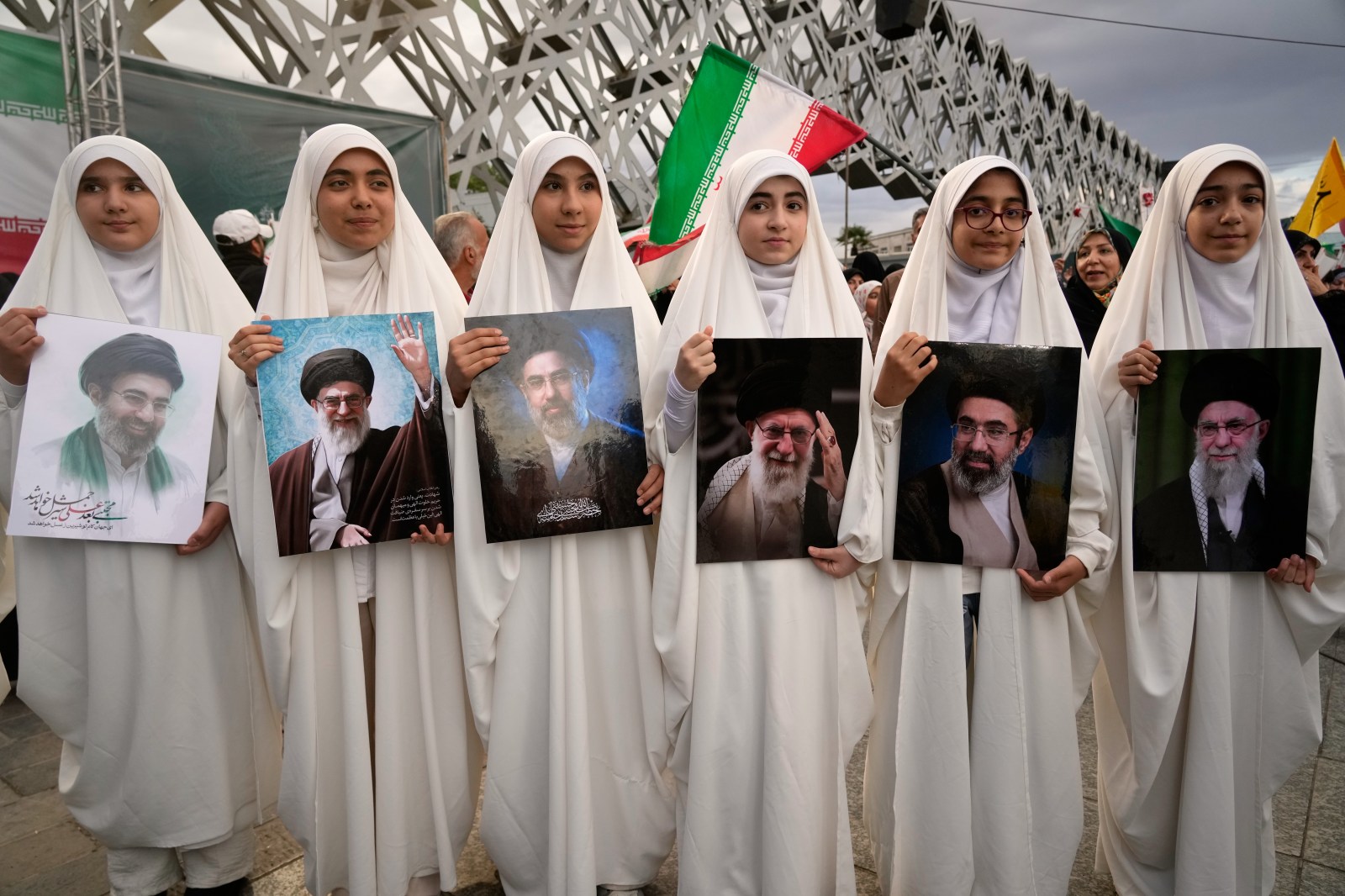
Six months have passed since the U.S. eradicated Iran’s former supreme leader, Ali Khamenei, during the intense barrage of American and Israeli military actions marking the start of Operation Epic Fury in February. In the aftermath, notable shifts have occurred: Tehran has blocked the Strait of Hormuz, Washington initiated another operation called Economic Outcast to deal a significant blow to Iran’s economy, and a coalition of Middle Eastern countries established a NATO-like pact for self-defense. Yet, one element remains constant: Iran’s new Ayatollah, Mojtaba Khamenei, is still missing. However, according to Donald Trump, he is not dead. In a phone interview with Blaze Media’s Glenn Beck, Trump suggested, “I don’t think he’s dead. He was very seriously wounded… if he is dead, they’re putting on a pretty good show.”
In Iran, whether Mojtaba is dead or alive seems to be of little consequence. He retains his capacity to lead the Islamic Republic, even if absent.
Like Father, Unlike Son
Mojtaba Khamenei inherited a prominent name but lacks the political acumen and prowess of his father. Ali Khamenei stood as a revolutionary stalwart and a close ally of Iran’s initial Supreme Leader, Ruhollah Khomeini, since the 1979 foundation of the Islamic Republic. After the Shah’s downfall, Khamenei spent years fortifying Tehran’s authority, establishing the IRGC and security services while building alliances with various internal factions, initially as president from 1981, then as supreme leader from 1989.
His son, in stark contrast, does not possess comparable political experience or sway over Iran’s power structures. Even alive, he struggles to command the influential IRGC and security services, let alone lead a nation engaged in a conflict with one of the world’s foremost militaries at a critical chokepoint.
Currently, Iran’s public diplomacy and wartime actions largely stem from a select group of potent figures potentially steering the helm: parliamentary speaker Mohammad Bagher Ghalibaf negotiating on Iran’s behalf, Dr. Mohsen Rezaei as the Supreme National Security Council’s secretary, and General Ahmad Vahidi, commanding the IRGC.
In comparison, Mojtaba remains a mere name on a letterhead, issuing brief statements via Iran’s news services and social media, with no confirmed source.
Since February, he has neither appeared publicly nor addressed the nation, missing even from his father’s prolonged state funeral.
A Fallen Idol
Mojtaba is described as “an impotent young cleric” by Khosro Isfahani, research director at the National Union for Democracy in Iran, noting that the IRGC exploits statements in his name to justify preferred actions.
Isfahani suggests Mojtaba’s absence “benefits the regime.” He states the IRGC now holds the political weight historically managed by clerics.
Andreas Krieg, a Middle East expert at King’s College London, elaborates this shift, marking competition among various entities like the IRGC command, Supreme National Security Council, parliament, presidency, diplomatic bureaucracy, and clerical establishment. He identifies the IRGC as the dominant force, controlling military, intelligence, and domestic repression.
Mojtaba’s influence potentially lies more in symbolism. As an idol, he can unite Iran’s Shia Muslim majority.
Peiman Salehi, a Tehran-based political analyst, references Shia Islam’s anticipation of the Twelfth Imam, unseen for over 1,200 years, indicating that leadership could emerge through spiritual and doctrinal channels, rendering physical absence moot while retaining ideological sway.
Thus, Mojtaba’s symbolic presence aids Tehran’s true decision-makers in sustaining public support and legitimizing policies amid anticipated hardships under Operation Economic Outcast.
Those in power leverage Mojtaba’s name for political gains, allowing them control and cover. Whether Mojtaba is alive might matter for U.S. and Israeli intelligence and military strategizing, yet his existence has minimal impact on Tehran’s power structure, where governance already proceeds without his direct involvement.