
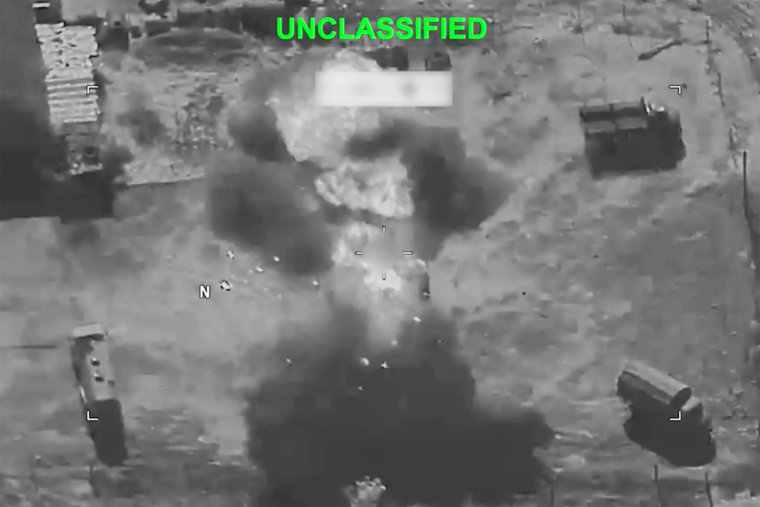
July 30, 2026 – Iran pledged retaliation against the United States following U.S. military strikes prompted by an Iranian attack on American forces in the Middle East. This marks the latest development in escalating tensions between the two nations. The U.S. military has completed numerous overnight strikes against Iranian targets in response.
The recent fighting interrupts a period of relative calm during which diplomatic discussions were pursued to avoid further conflict. President Donald Trump announced that the U.S. would respond decisively following Iran’s attack on an American base in Jordan. The Revolutionary Guard Corps warned that retaliation was imminent, stating, “the aggressor will be punished today.”
Jordan reported intercepting incoming attacks from Iran, and Kuwait confirmed an Iranian strike that resulted in the death of a worker after hitting a Chinese company’s building. The conflict shows signs of broadening, affecting other countries and raising concerns over regional and global stability.
Saudi Arabia joined U.S. efforts in targeting Iran-backed militants, while Egypt reported a drone attack igniting fires on two natural gas vessels at the Port of Damietta. It remains uncertain if Iran orchestrated the attack, but involvement could signify a notable escalation, particularly given the importance of U.S. allies in the region. This also emphasizes the disruption to global energy supplies caused by the conflict.
When asked about the attack, President Trump remarked, “it’s a little more of the same,” but assured that corrective measures were underway. He emphasized a strong U.S. response, vowing severe retaliation. In a reported phone call to Fox News, Trump expressed expletive-laden intentions to respond aggressively after Iran’s earlier attack.
U.S. Central Command (CENTCOM) announced the completion of a wave of strikes aimed at Iranian Revolutionary Guard Corps facilities. Key targets included military command bases, missile and drone facilities, and maritime defense sites. Strikes were conducted across various Iranian cities, with reports of casualties, including a child, occurring on Qeshm Island in the critical Strait of Hormuz.
This vital waterway has become a central aspect of the conflict. Before hostilities, it accounted for about 20% of global oil transit. However, ongoing attacks have hindered shipping through both the Strait of Hormuz and the Bab el-Mandeb Strait.
Despite the interim deal collapse leading to increased hostilities, hopes for diplomatic solutions existed but dwindled with renewed conflict. Oil prices rose, affecting Brent crude oil to approximate $90 per barrel.
Reports indicate a Qatar-managed liquid natural gas (LNG) tanker traversed from the Persian Gulf to the Gulf of Oman, passing through Iranian-controlled lanes in the Strait of Hormuz. It was the first Qatari-linked LNG tanker to complete this passage since early July after another tanker was attacked.
Additional vessels, including two Emirati-managed asphalt and another LNG tanker, were navigating the route. An estimated 59 tankers and cargo ships recently passed through Bab el-Mandeb, indicating ongoing maritime operations despite risks.