
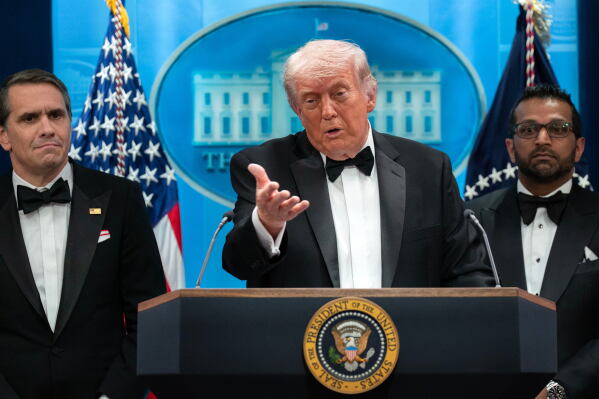
The latest tariff hikes under U.S. President Donald Trump have sparked criticism from trading partners like China, Japan, and Australia. Australia’s Trade Minister Don Farrell condemned the tariffs as ‘completely unjustified.’ Announced Thursday, these tariffs range from 10% to 12.5% targeting 60 economies, citing inadequate enforcement of a ban on goods produced with forced labor. The new tariffs became effective as initial temporary levies expired early Friday.
Objections to Labor Claims
Countries argue the labor accusations lack basis. Don Farrell rejected Australia’s alleged links to modern slavery as a reason for increasing tariffs on its exports to the U.S. He stressed Australia’s commitment to combating slavery, labeling the tariffs as unwarranted. Similarly, New Zealand’s Prime Minister Christopher Luxon deemed the tariffs as ‘extremely disappointing’ and detrimental to trade. He noted that tariffs raise costs and create uncertainty for businesses.
Comments from European Union foreign policy chief Kaja Kallas also questioned the U.S.’s stance, highlighting that Europe provides better labor conditions compared to U.S. standards. Singapore and Japan, both affected by the 12.5% tariff, have expressed continued engagement with the U.S. to address these concerns.
Additional Trade Responses
Japan protested the decision, reiterating prior assurances from the Trump administration against extra tariffs. The country pointed to its adherence to international trade rules. Meanwhile, South Korea noted ongoing discussions with the U.S. over trade benefits, while Thailand flagged potential additional tariffs pending further U.S. investigations.
China’s Response
The Chinese Ministry of Foreign Affairs reiterated opposition to unilateral tariffs, emphasizing the drawbacks of trade conflicts. Tensions have already impacted China-U.S. trade relations. Despite this, some Chinese businesses report minimal current impact, having previously shifted export focus from the U.S. to Europe.
Impact and Outlook
Wendy Cutler, a former U.S. trade official, noted the tariffs were expected, having undergone extensive legal scrutiny. Although legal challenges might arise, these tariffs face a lower risk of being overturned. Future tariffs addressing structural capacity concerns may arise later in the year, but experts predict these will be less disruptive, partly due to exemptions for essential products.
Though these tariffs mean increased costs for consumers and businesses, they spare many Asian trade flows due to exclusions on products the U.S. does not produce. Trade friction continues under the current administration, affecting global economic dynamics.