
Indiana drivers will benefit from another extension of the gas tax holiday, as announced by Governor Mike Braun. This marks the sixth consecutive month of relief at the pumps across all 92 counties in the state. Braun emphasized the importance of this measure, saying, “Keeping these taxes suspended will leave more money in the pockets of Hoosiers, and they need it now because affordability is the real issue.”
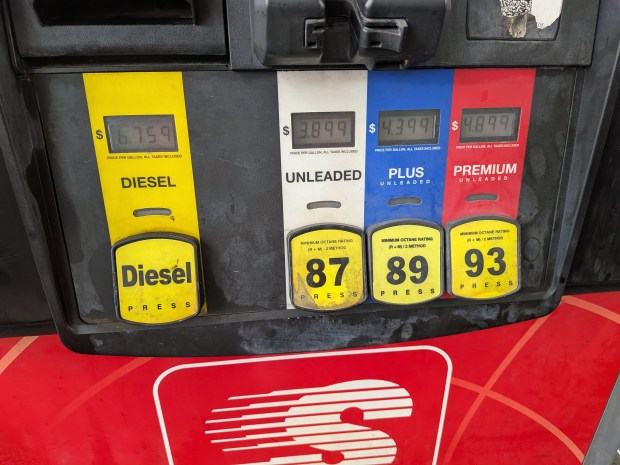
On Wednesday, diesel prices reached $6.75 per gallon at a Speedway located at 444 Ridge Road in Munster. This is nearly double the price from the same time last year. Braun has extended the suspension of both usage and excise taxes through November 4. Additionally, he has lifted certain restrictions on dyed diesel for the first time, permitting farmers to utilize dyed diesel for any farming activity. Dyed diesel, typically marked with a color such as red, is usually designated for specific or off-road uses.
“Farming is the hardest occupation out there,” Braun stated. “Your business partner is the weather. Fortunately, the prices for soybeans and corn have risen slightly, helping to offset the increasing operational costs for farmers.”
Across Indiana and nationally, diesel prices have nearly doubled over the past year, influenced by the conflict involving Iran. The state’s average diesel price was recorded at $6.84 per gallon, compared to $3.69 one year ago, according to AAA data. Previous instances of the gas tax holiday were extended by Braun, with the latest ending on October 6. Initially, when Braun suspended the use tax in April and excise tax in May, the situation was not as severe.
The state is currently able to afford suspending its diesel regulations, according to Braun. He highlighted that, “It’s going to help farmers in a big way, and it takes very little from the revenues intended for roads and bridges.” He assured continued protection of road funding.
In a news release, Braun pointed to ongoing global oil supply disruptions, mentioning Houthi drone attacks in Saudi Arabia affecting the East-West Pipeline, which constitutes 7% of the global oil supply. He also referenced the Houthi advances in Yemen threatening oil shipments and the conflict between Russia and Ukraine, which has been detrimental to Russia’s refining capacity.
Previously, Braun had attributed the surge in gas prices to former President Joe Biden, the Russia-Ukraine war, and U.S. involvement in Iran. Indiana House Democratic Leader Phil GiaQuinta expressed support for Braun’s decision, though he described it as “small, temporary relief.” GiaQuinta noted that while it will aid this fall’s harvest, it barely addresses the broader challenges farmers face.
GiaQuinta argued that Indiana farmers have suffered under poor federal agricultural policy, losing $607 million in export revenue due to tariffs. Fertilizer costs surged nearly 40% during the planting season and are climbing again. Farm bankruptcies rose 46% last year. He advocated for “real, lasting solutions” for farmers.
The State Board of Finance agreed in mid-September to reimburse approximately $139 million to local governments for lost road tax revenue during the gas tax holiday. The State Comptroller’s office planned to distribute nearly $46.2 million statewide, marking the third reimbursement since April. Braun indicated he would seek approval to use Indiana’s $4 billion surplus to cover these losses.
Braun highlighted that Indiana’s gasoline prices are around a dollar lower than the national average. “Compared to our neighbors to the west, that’s right about where it is,” he added, noting the trend of people from neighboring areas purchasing gas in Indiana. According to GasBuddy, various stations in the state offered prices ranging from $3.17 to $4.68 per gallon, illustrating the regional price differences.