
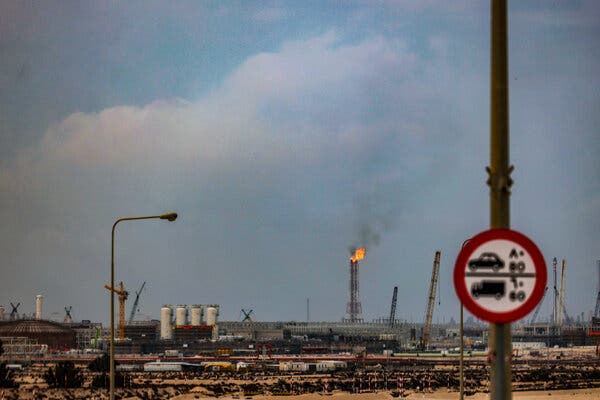
Before the recent conflict, the liquefied natural gas (LNG) market was largely dominated by two countries: the United States and Qatar. This dominance was expected to continue, influencing the majority of supply growth by 2030. However, the geopolitical landscape has altered significantly following recent events.
The LNG facility located in Ras Laffan Industrial City in Qatar has suffered substantial disruptions due to Iranian attacks, severely impacting production. The aftermath of these attacks suggests that repairing the damage will be an extensive, multi-year effort.
The disruption of production in Qatar has removed approximately 20% of global LNG supply from the market.
Asia, reliant on LNG for power generation, has felt the repercussions acutely. Countries like Pakistan, Bangladesh, India, Singapore, and Taiwan, which sourced a significant portion of their LNG from Qatar, have been heavily affected. Consequently, gas prices have surged, causing economic strain.
Anticipating such a predicament was challenging, according to Henning Gloystein, an energy managing director at Eurasia Group. He points out that significant energy supply disruptions happen about once per decade. Therefore, the industry’s dependency on only two main suppliers has inherently determined its vulnerability.
Japan, in particular, had been wary of this dependency, given its status as the second-largest importer of LNG after China. Concerns were amplified with the United States’ political unpredictability and Qatar’s location in a volatile region.
The recent Iranian blockade of the Strait of Hormuz has further complicated matters, as it is the main route for Qatar’s LNG shipments. This event has underscored the strategic importance of diversifying energy sources to mitigate risks associated with geopolitical instability.