
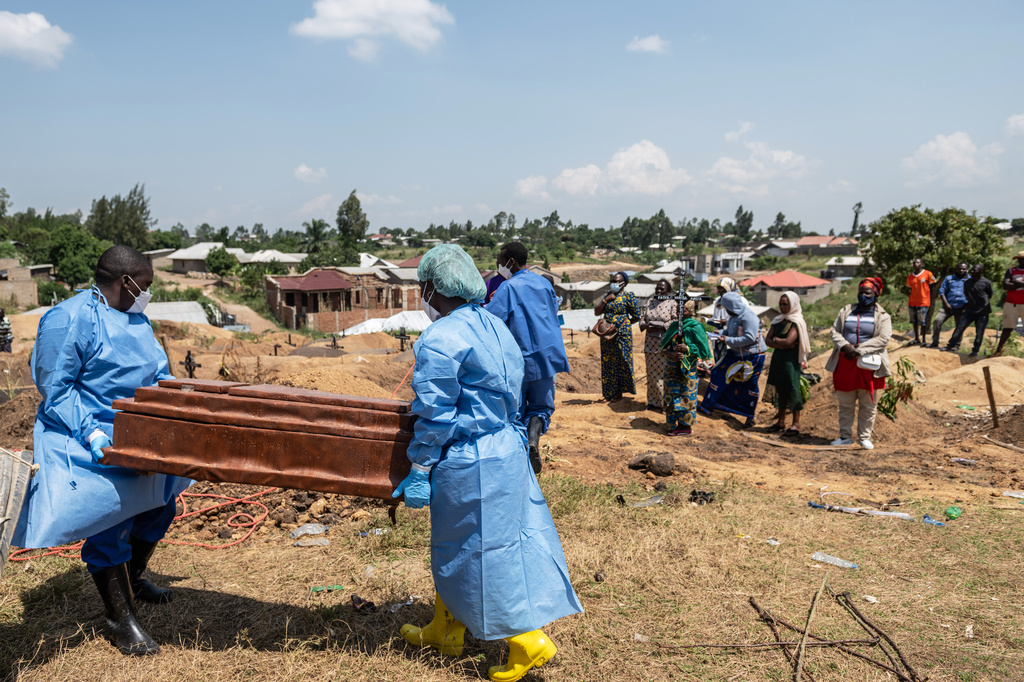
In Bunia, Congo, Red Cross workers prepared to lay to rest Vanisa Anifa, a 6-month-old orphaned by Ebola at the Bigo Cemetery. This tragic event underscores the broader implications of the Trump administration’s approach to handling the Ebola outbreak in Central Africa. The dismantling of U.S. foreign assistance programs, led by the Elon Musk-led Department of Government Efficiency and Secretary of State Marco Rubio, has drawn criticism.
Reports from The Hill and other outlets highlight increased risks due to a lack of coordinated international health response infrastructure. The complexities of the Ebola outbreak remind us of a University of Chicago study. It notes a sharp rise in conflict within African nations heavily reliant on U.S. aid. The study specified increases in conflict-related events (12.3%), battles (7.3%), and protests and riots (6.8%).
Such statistics hide the tragic realities faced by communities in eastern Democratic Republic of the Congo. Here, global emergency responders face challenges in managing the Ebola outbreak. Decades of conflict have left locals traumatized and wary of outsiders, further complicating efforts. Local health facilities are in shambles, and civil society groups are weakened, undermining early warning systems for outbreaks and diseases.
This situation emphasizes the vital role of U.S. investments in conflict mitigation, violence prevention, and peacebuilding. USAID, alongside other institutions impacted by the Department of Government Efficiency, played a crucial role. This less-publicized aspect of U.S. foreign aid worked closely with disease prevention and humanitarian aid, saving lives and reducing suffering overseas before threats could reach Americans.
Post-9/11, USAID’s conflict management office aimed to enhance capabilities. It worked to identify, assess, and deploy aid to support peacebuilders and allies, ensuring effective operations in conflict zones. These efforts helped deter small disputes from escalating into violence and ensured U.S. taxpayer dollars were wisely spent, avoiding exacerbating local conflicts as seen in Iraq, Afghanistan, Haiti, Colombia, and other regions.
Unfortunately, as Congress considers Trump’s $1.5 trillion military spending request for fiscal 2027, peacebuilding investments are virtually non-existent, aside from a few billion dollars in prior appropriations. Without targeted support to local groups in places like Sub-Saharan Africa, detection and response to conflicts face challenges. The State Department’s current capacity cannot fully handle international health and humanitarian needs. The military, despite its strength, is not designed for this.
Peacebuilding efforts had consistent support from military planners and Congress alike. International health threats, instability, and warfare persist. U.S. commitments to development and humanitarian response, focusing on conflict prevention and peacebuilding, require rejuvenation. Ironically, then-Sen. Rubio supported this mission before its dismantling. It is crucial to reconsider decisions that have weakened U.S. strength and safety in a complex global landscape.
Elisabeth Kvitashvili, Neil Levine, Ryan McCannell, and Don Chisholm directed USAID’s conflict office from 2002-2024.