
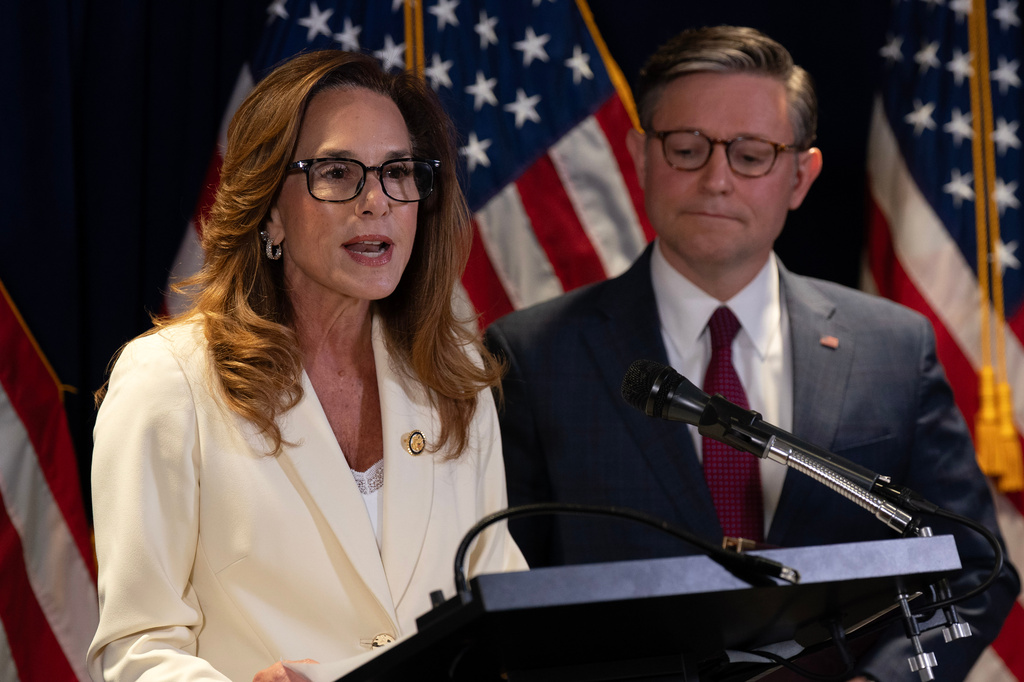
Rep. Lisa McClain, R-Mich., chair of the House Republican Conference, emphasized recent efforts by House Republicans to reduce federal oversight during a Capitol Hill news conference. Accompanied by Speaker of the House Mike Johnson, R-La., McClain highlighted significant legislative actions taken by the 119th Congress.
McClain outlined how Washington often equates progress with new initiatives, offices, or regulations. She contended that such measures frequently centralize power and complicate citizens’ lives. House Republicans sought to address this by reversing some of these expansions of authority.
This Congress overturned 23 federal rules through the Congressional Review Act, setting a historical precedent. This effort returned regulatory power to the people rather than unsupervised federal bodies. The act has become a key tool for ensuring local freedoms and reducing bureaucratic expansion.
The Republicans also worked on tax-related matters. They focused on making the 2017 tax cuts permanent, reducing taxes on tips and overtime, and providing relief for seniors. These changes allowed Americans to benefit directly from their earnings, anticipated to save families and businesses $4.6 trillion over the next decade. By reducing projected federal spending by $1.1 trillion, the federal government aims to retain less taxpayer money.
Opportunity and freedom are tied to a limited yet effective government. McClain emphasized the importance of security, such as enforcing borders and maintaining law and order, to protect individual rights. The Republican stance has ensured no illegal immigrants have been released into the country for 16 months.
Economic policies underlined the commitment to limited government. Small businesses received enhanced tax stability, promoting investment and growth. By removing regulatory obstacles, encouraging American energy sources, and simplifying construction procedures, the Republicans aimed to empower individual decision-making.
This approach contrasts with what McClain described as governance by permission, where federal authorities dictate industry growth or consumer choices. The boundaries between governmental authority and citizen freedom have been a critical focus for the 119th Congress, contributing to structural changes rather than mere legislative output.
The reforms reflect a foundational change, laying groundwork for future growth rather than being the endpoint. McClain stressed the importance of tax certainty, regulatory relief, border security, and expanded opportunities for work and investment. These measures form a base from which Americans can build their future, emphasizing personal autonomy over governmental design.
McClain concluded by asserting that the 119th Congress redirected the nation’s path, aligning with the idea that individual citizens, not the government, should determine their lives. She expressed pride in creating a framework that fosters American innovation and independence, countering government expansion with increased personal agency.