
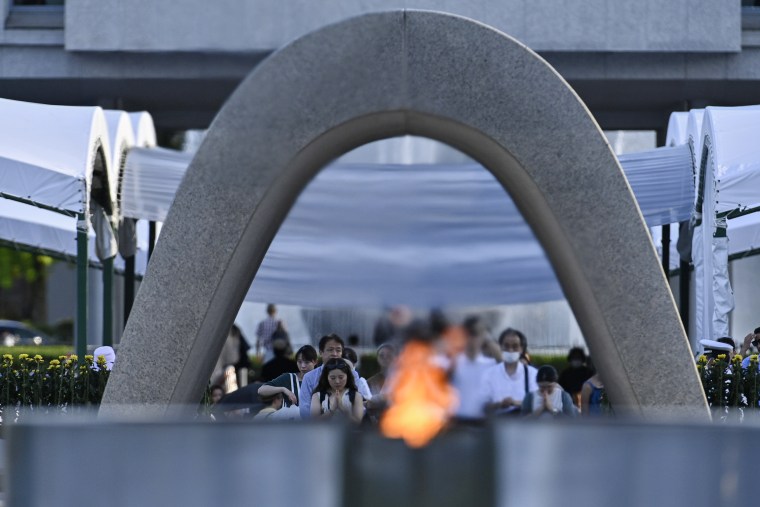
On Thursday, Hiroshima observed the 81st anniversary of the atomic bombing. The city’s mayor, Kazumi Matsui, criticized major powers for engaging in wars and urged them to stop justifying nuclear weapons as a form of deterrence.
“Downplaying the inhumanity of nuclear weapons and accepting the use of force for one’s own prosperity risks cycles of violent retaliation that could ultimately result in another Hiroshima or Nagasaki,” Matsui stated.
Matsui noted that relying on nuclear deterrence and legitimizing violence pushes the vision of a world without nuclear weapons further out of reach. His peace declaration at the ceremony emphasized the importance of learning from history and taking action.
Around 50,000 people attended the ceremony, including representatives from 120 countries and regions, such as the United States and Iran. Attendees observed a minute of silence while a peace bell rang at 8:15 a.m., the time the bomb was dropped.
Prime Minister Sanae Takaichi attended the memorial for the first time as prime minister. She pledged to work realistically towards a world where nuclear weapons are never used, aligned with the United Nations’ treaty to prevent nuclear weapon proliferation.
Speculation surrounds Takaichi’s government, which supports nuclear deterrence, potentially revising Japan’s postwar three non-nuclear principles as it compiles new security and defense documents.
Takaichi has suggested reviewing these principles, particularly considering removing the ban on nuclear weapons being brought into Japan. Though she affirmed Japan’s commitment to these principles, she did not promise that the policy would remain unchanged.
Survivors of the bombings have voiced concerns over rising global support, including Japan’s, for nuclear deterrence. Japan relies on the U.S. nuclear umbrella and seeks reassurance from Washington for strengthened protection. This reliance has caused Japan to reject signing the Treaty on the Prohibition of Nuclear Weapons and attending meetings as observers.
The Hiroshima bombing on August 6, 1945, devastated the city and claimed 140,000 lives. Three days later, another bomb struck Nagasaki, killing 70,000. Japan surrendered on August 15, concluding World War II and its aggressive history in Asia.
The number of bombing survivors has dwindled to 91,105, with their average age over 86 years. Many survivors fear the fading of memories as the youngest were too young to remember the events clearly.
United Nations Secretary-General António Guterres emphasized that Hiroshima teaches two lessons: the horrors of nuclear weapons and the need for a future where their threat or use is unimaginable.
In a written statement, Guterres described Hiroshima as a symbol of resilience, renewal, and hope. He encouraged dialogue, cooperation, and broad security over confrontation and narrow advantage.