
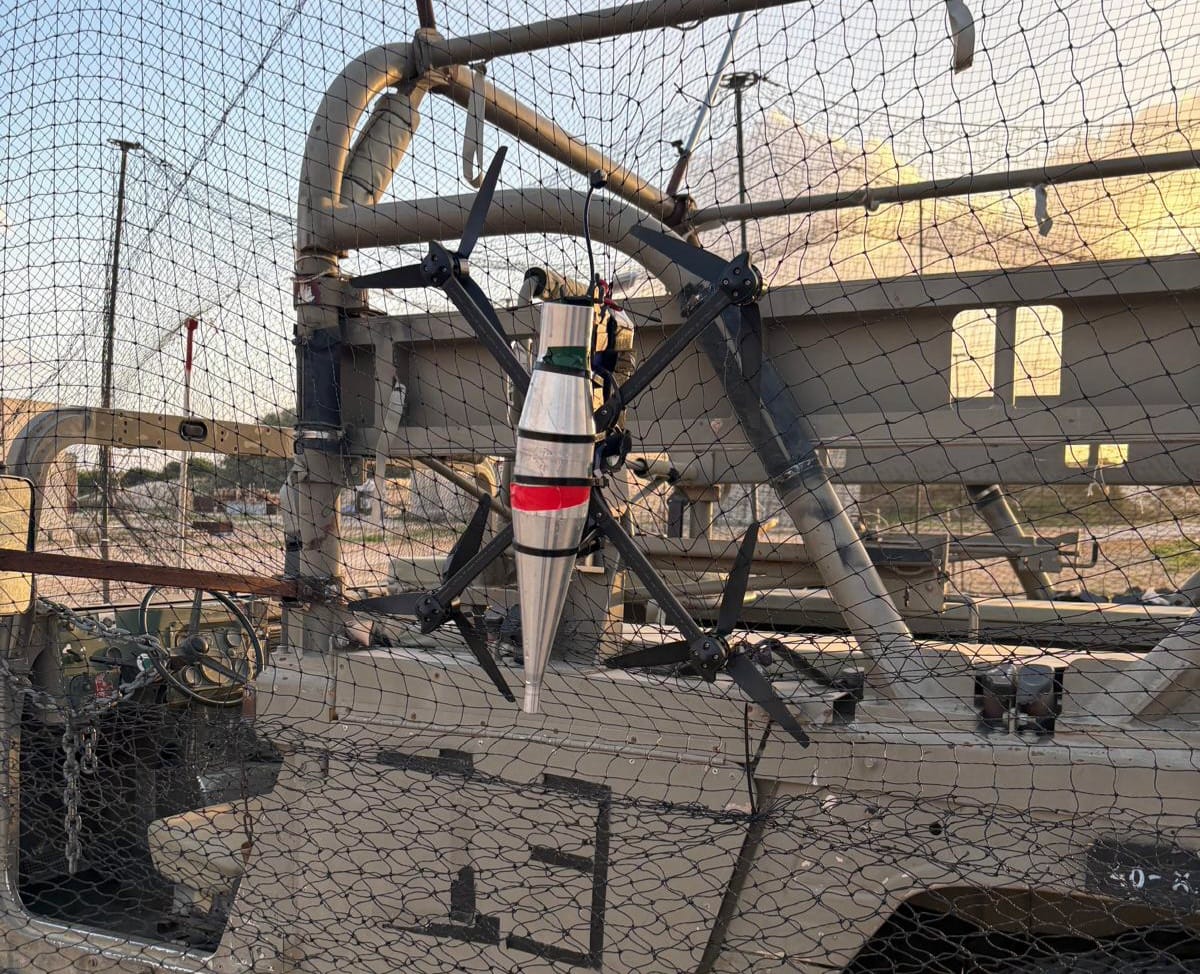
Hezbollah’s renewed activity with advanced tactics is putting considerable strain on Israel and the United States as they strive for diplomatic achievements in the Lebanese sector of the Middle East crisis. A significant recent development is Hezbollah’s use of fiber-optic first-person view (FPV) drones. Previously noted in the Russia-Ukraine conflict, these drones first appeared with Hezbollah in March, responding to the U.S.-Israeli assault on Iran initiated on February 28.
The Armed Conflict and Location Event Data (ACLED) monitor indicates that Hezbollah employed FPV drones in 21 percent of attacks over the past five months. These drones were involved in over 50 percent of the 33 incidents where Israeli forces sustained casualties. One-way attack drones, often called suicide drones, made up 24 percent of Hezbollah’s actions, a rise from 6 percent during the escalation in October and November 2024.
Hezbollah’s operations, including rocket launches, soared from about 163 per month to around 199 per month in the recent conflict phase. According to Nasser Khdour, ACLED’s Middle East assistant research manager, the FPV drones allow Hezbollah to maintain military pressure on Israeli forces in southern Lebanon, inflict casualties, and execute strikes from a distance with operators less visible.
Hezbollah’s Continuous Adaptation
The surge in Hezbollah’s drone assaults has led to changes in Israeli tactics as well. In May, an IDF official mentioned the Ground Forces’ Technological Brigade’s efforts to provide troops in Lebanon with wire mesh nets to counteract explosive drones. Israeli forces acquired approximately 158,000 square meters of netting, with an additional 188,000 square meters ordered.
Hezbollah has a history of seeking advantages over technologically superior foes since their initial conflict in the 1980s. During the 2006 month-long war, the group effectively used Kornet anti-tank guided missiles against IDF Merkava tanks. By 2015, they developed twin Kornet launchers known as “Tharallah” to counteract Trophy protective systems on Israeli vehicles.
In October 2023, Hezbollah engaged in another significant confrontation with Israel, utilizing Iranian Almas-1 anti-tank missiles, reportedly reverse-engineered from Israeli Spike-MR systems. Despite these efforts, Israeli incursions backed by drones proved challenging for Hezbollah.
Defense analyst Hamze Attar noted that Hezbollah anticipated repelling Israeli forces with a ground invasion, which proved ineffective, leading them to the Litani River’s edge. The losses prompted Hezbollah to adapt innovations from the Ukraine conflict, employing fiber optic technology to enhance drone warfare, allowing for stealthier flight without radio signatures or susceptibility to electronic jamming.
Middle East Eye reported that Hezbollah shifted tactics from traditional military strength to technological reliance, highlighting drones as a key example. Skills from gaming culture aided this transition, as minimal training is required for gamers accustomed to handling joysticks.
Diplomatic Complexities
The evolution of Hezbollah’s tactics poses challenges for Israeli Prime Minister Benjamin Netanyahu and U.S. President Donald Trump, both seeking diplomatic success before crucial elections. Attempts for a ceasefire in April required addressing Israel-Hezbollah hostilities, leading to separate truce efforts, including one in Lebanon.
Despite agreements, accusations of violations persist, with Israel demanding Hezbollah’s disarmament and Hezbollah insisting on Israeli withdrawal from Lebanese territory. The Lebanese government’s call for Israeli troop departure generates concerns of sectarian tension.
Khdour emphasized the connection between the Lebanon conflict and broader Iran-related confrontations. While the U.S. pushes for a trilateral agreement, Israel questions Lebanon’s ability to manage Hezbollah’s disarmament. This ongoing complexity highlights differences between U.S. and Israeli strategies.
In June, a U.S.-mediated agreement was hailed as progress, yet Hezbollah remains committed to resistance as long as occupation exists. Netanyahu stressed ongoing operations during a government meeting, emphasizing the continuance of strategic actions alongside the IDF.
As U.S.-led negotiations continue, on-the-ground conflict persists. The Lebanese National News Agency reported new IDF attacks in southern Lebanon, and Israel conducted strikes following the deaths of soldiers due to explosives in the area.
The ongoing confrontation involves growing involvement from Iran’s Axis of Resistance coalition. Hezbollah’s adaptability might offer insights for other groups aiming to endure and evolve in the face of losses.
Khdour underscored Israel’s concern about the potential spread of Hezbollah’s tactics across other fronts, including Gaza and the West Bank, highlighting the broader implications of this evolving warfare strategy.