
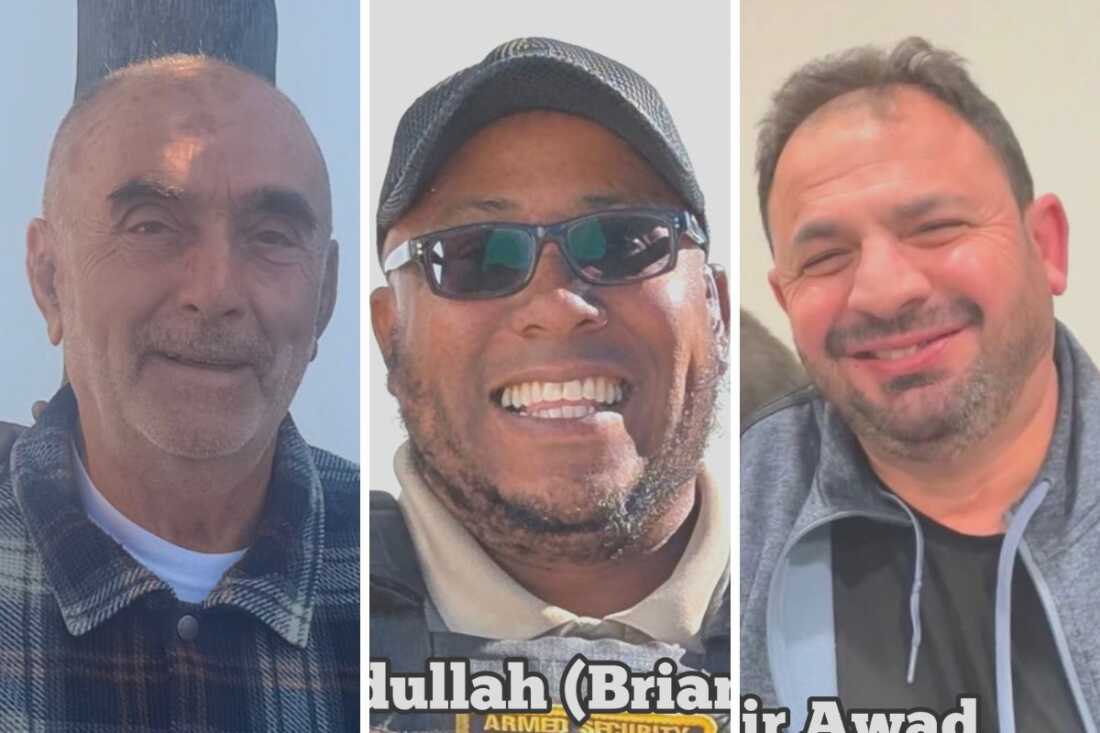
Three men from the Islamic Center of San Diego, known for their everyday interactions with the community, became heroes on Monday. Mansour Kaziha, Amin Abdullah, and Nadir Awad sacrificed their lives to prevent two gunmen from reaching the mosque’s children and staff.
Mansour Kaziha had been a longtime figure at the mosque, managing the center’s store and known for his generous spirit, letting children take candy for free. Nadir Awad, cheerful and humorous, regularly attended prayers. Amin Abdullah, a dedicated security guard, greeted people warmly, often sharing life advice.
Community members expressed grief and gratitude for their courageous actions. The attack led to discussions about anti-Muslim rhetoric online and from elected officials, contributing to the violence.
“At no point were they hiding or running away from what’s happening,” Ghouse Mohammed, head of security at the mosque, told NPR. “All three of them were heroes.”
The shooting is being investigated as a hate crime. Mark Remily from the FBI’s San Diego office stated that the suspects were teenagers with broad hatred toward different races and religious groups. He emphasized the ongoing investigation to understand the incident and prevent future violence.
The victims’ families shared heart-warming stories about them. Amin Abdullah’s daughter recalled his dedication to his security role, skipping meals to ensure safety. He was impacted by the 2019 New Zealand mosque shooting, which motivated his vigilance.
“The fact that so many lives were saved because of him is not a surprise to us because that’s who he was,” said Ismahan Abdullahi, an attendee at the mosque.
Mansour Kaziha, part of the community since the 1980s, was cherished as ‘uncle’ by many. Known for his cooking, he fed hundreds during Ramadan. Nadir Awad, despite having no official role, responded immediately to the attack, embodying his cheerful and helpful personality.
The incident points to a broader trend of increasing threats against mosques. Reports indicate a rise in anti-Muslim sentiment, fueled by international conflicts and political rhetoric. A Washington, D.C. think tank highlighted surges in derogatory social media posts targeting Muslim Americans.
“This is literally the manifestation of how hate fueled violence,” stated Raqib Naik, executive director of the think tank.
Security at the mosque had already intensified after the 2019 New Zealand attack. Monday’s shooting underscored the need for increased security measures at religious sites, especially due to rising threats since recent global events.
The Islamic Center had prepared for such crises with active shooter drills, but mostly for single attackers. As the community grieves, Ghouse Mohammed reviewed footage that showed Abdullah acted according to his training, demonstrating the effectiveness of their security protocols.