
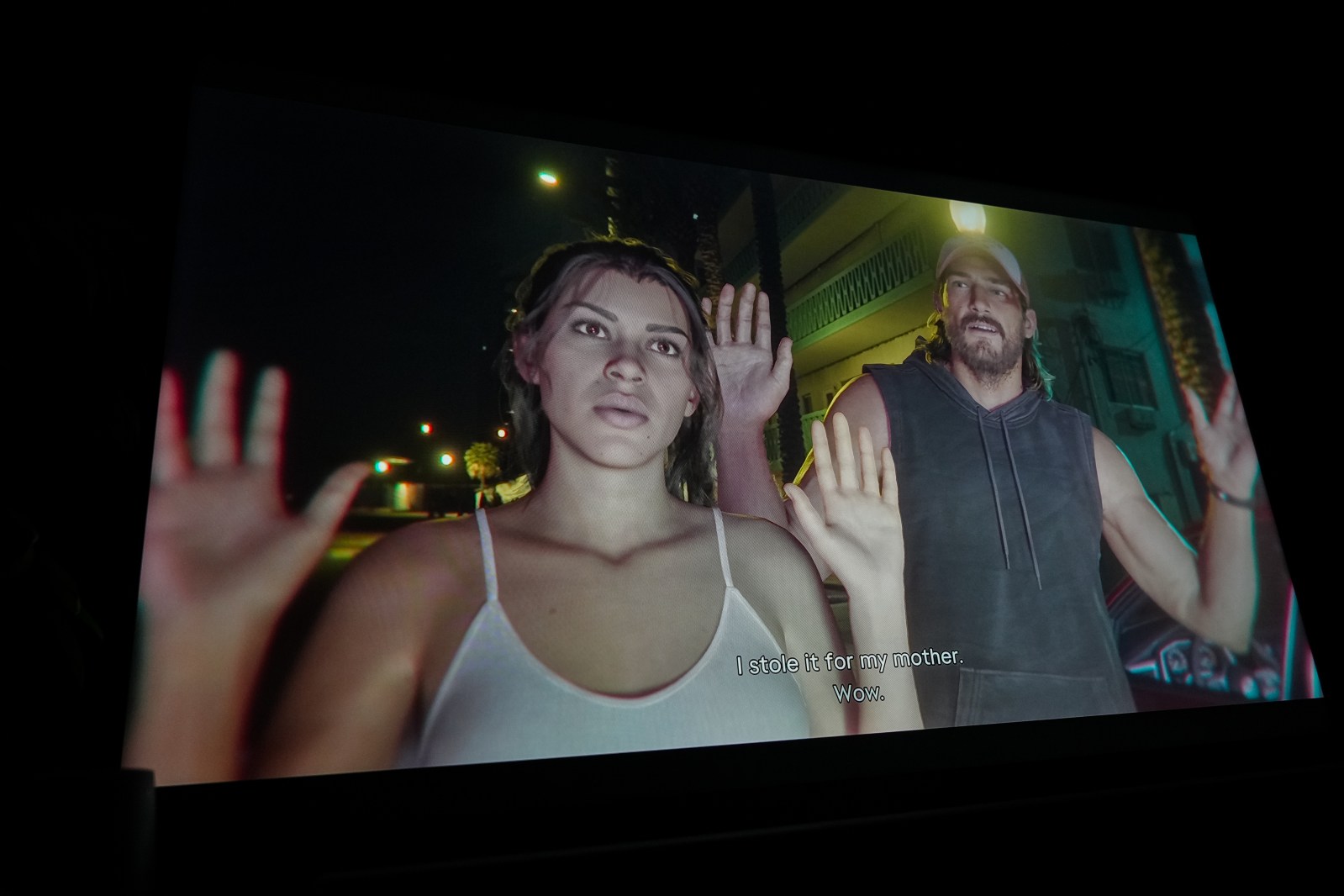
For over 20 years, evading the police in Grand Theft Auto (GTA) involved high-speed pursuits until the stars indicating your wanted level faded. GTA VI, released recently, alters this dynamic with a more realistic approach to police work. In Leonida, Rockstar Games’ fictional version of Florida, officers now require a witness, an alarm, or camera evidence to start a chase. Once they have clues, players see what the police know: a face, outfit, car, or weapon. Stolen vehicles may have trackers, and traffic cameras in the game scan license plates, reminiscent of Flock Safety readers used in some American cities.
Rob Nelson, co-head at Rockstar North, explained to IGN how past GTA games allowed players to feel invincible. In GTA VI, the game environment reacts differently, with characters not retreating in fear automatically. This new dynamic emerges as Rockstar reevaluated game elements post-2020, following George Floyd’s murder. Planned modes like Cops ‘n’ Crooks were shelved, reflecting a shift in how law enforcement is portrayed. The game continues to allow players to engage in firefights with police, a controversial yet central part of its appeal.
Police Mechanics in Leonida
In previous installments, committing a crime in an isolated area could still trigger police response. Now, someone must report the crime in Leonida. Rockstar terms evidence against players as ‘heat’, represented by icons under the wanted stars. Stars change color to indicate the level of information police have, from unknown to fully aware.
Players can reduce this ‘heat’ by changing outfits, repainting vehicles, or erasing security footage. A six-star wanted level makes a return, with police not automatically appearing but instead searching for the player. In leaked footage, a license plate scan feature was noted, making vehicle tracking more complex. Civilians also play a role, as they may report crimes or even retaliate, affecting the player’s Criminal Profile and relation with law enforcement.
Shifting Representation Post-Floyd
The gaming studio reconsidered law enforcement representation after Floyd’s death, quietly removing modes that opposed community sensibilities. More considerate approaches were announced, focusing less on jokes targeting marginalized groups, a marked change from the franchise’s history. Despite the changes, the game continues to hold a mirror to American culture, illustrating societal elements through its game mechanics.
Police and Political Reactions
Various police departments used the game’s release to share public safety messages. The Atlanta Police Department, for instance, warned against mimicking game behaviors in reality. Colorado’s Aurora Police invoked the game’s wanted system humorously, reminding citizens of real-life consequences. This dialogue underscores ongoing societal interactions with games portraying crime and law enforcement.
Florida Senator Ashley Moody critiqued the game’s depiction of her state, emphasizing real-world law enforcement’s efficiency. The White House joined discussions with themed posts that garnered mixed reactions. Miami-Dade County collaborated with Rockstar for promotional events tied to the game’s opening, although local officials raised concerns about the partnership given the game’s themes.
License Plate Readers and Privacy Concerns
Flock Safety, providing license plate readers to numerous police agencies, faces scrutiny over privacy and data access. Critics from both political spectrums challenge these systems, citing unauthorized data use. In Georgia, a controversy arose over an officer sharing access to immigration officials.
Games like GTA bring such discussions to the forefront as they simulate real-world technologies like these readers. The engagement reflects broader societal debates about surveillance and personal freedoms.
Violence and Gaming Discussions
Debates surrounding the impact of violent video games continue. On Fox News, comparisons were drawn between letting children play GTA and giving them a firearm. Despite the game’s rating for audiences 17 and older, the discourse persists about appropriate gaming content for young audiences. The American Psychological Association has found no conclusive evidence linking violent games to actual aggression.
Grand Theft Auto VI continues to evoke discussions on violence, representation, and cultural commentary, demonstrating its complex role in gaming and societal reflections.