
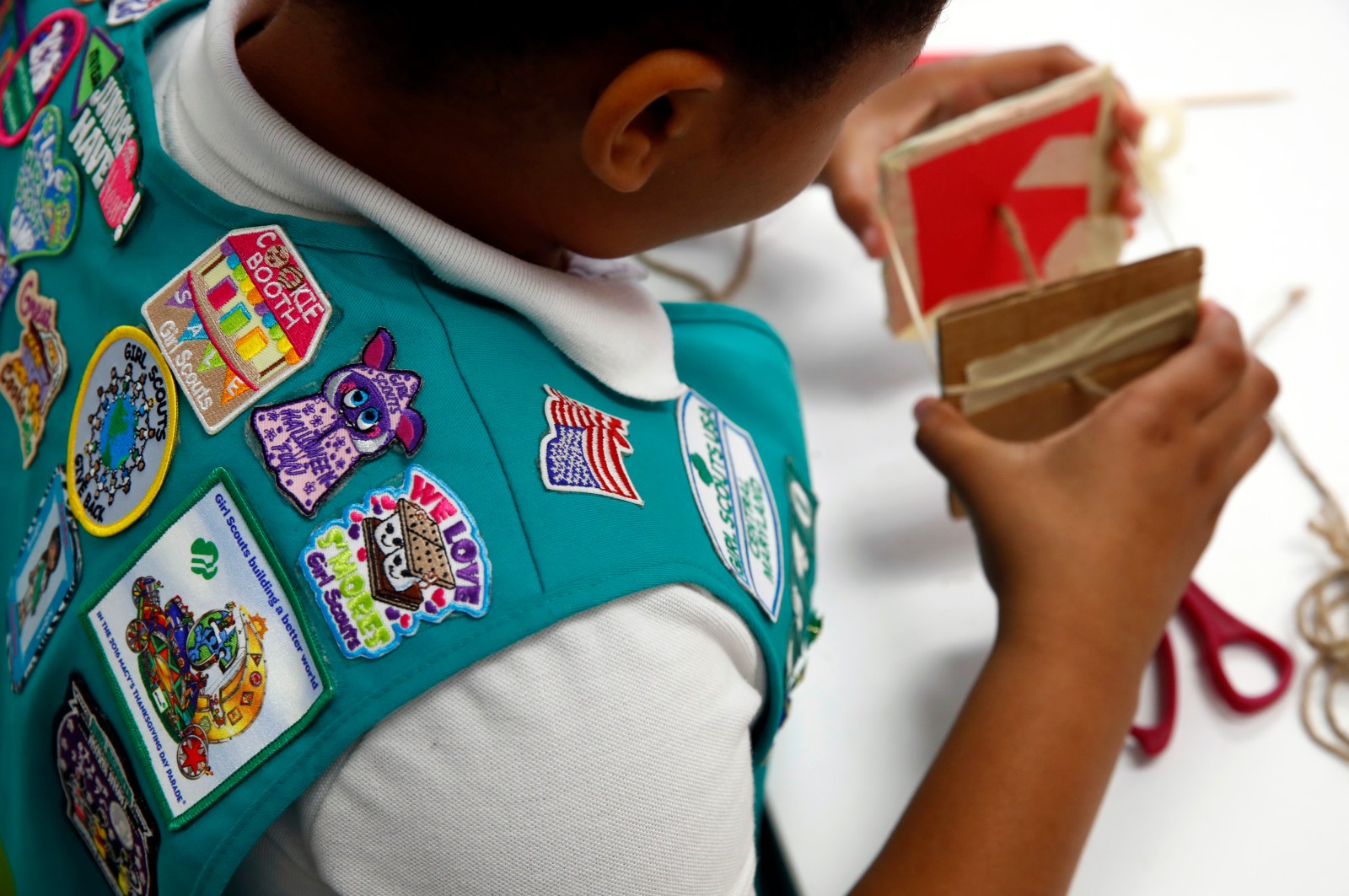
The Girl Scouts of the USA faced criticism after social media posts drew attention to Islamic badge programs. The debate began when Natalie Winters, a White House correspondent and War Room co-host, claimed the Girl Scouts offered ‘Muslim badges.’ These badges, Winters stated, could be earned by understanding Islamic practices such as the pillars of Islam and mosque visits.
Winters’s post on X highlighted ‘mosque-based programs’ in areas like Sacramento, Naperville, and Brooklyn. The programs reportedly included prayer, hijab guidelines, Ramadan, Islamic education, and mosque outreach embedded in Girl Scouting activities.
“There’s misinformation circulating online today about Girl Scouts and religion,” the organization said. “Girl Scouts is not a religious organization and does not teach religion. For more than a century, we’ve welcomed girls of every faith and background.”
The Girl Scouts clarified that religious recognition awards and badges are developed by independent faith organizations, not by the Girl Scouts of the USA. They stressed the inclusivity of their program.
Despite this clarification, Winters insisted she presented factual claims. She argued on social media that the Girl Scouts did not counter her statements. According to Winters, her information was based on documented facts.
Response from Muslim Community
Robert S. McCaw, Director of Government Affairs at the Council on American-Islamic Relations, criticized those who use the issue to generate outrage. He pointed out that attacks on Muslim participation in scouting were more about fostering anti-Muslim sentiment than protecting children.
The debate occurs amid scrutiny of how youth organizations, schools, and nonprofits manage religious programming. Detractors argue that the badges equate to religious instruction, while supporters view the programs as optional and available for various faiths.
Focus on Islamic Programs
The controversy centered on Girl Scouts of the Islamic Faith programs. These programs offer religious recognition awards, including medals, for Muslim participants. Activities associated with these awards include learning about Ramadan, Hajj, and mosque visits.
Girl Scouts’ Position
The Girl Scouts stated they neither develop nor manage these faith-based programs but acknowledge their existence. They emphasized their welcoming of an array of faiths and clarified that engagement in religious programs is a personal decision made by members and their families.
Ongoing Debate on Faith in Scouting
This controversy highlights a broader discussion about faith-based activities in scouting organizations. For many years, various scouting groups have allowed separate faith communities to establish and administer programs for their members.
McCaw added that the longstanding multi-faith framework in scouting includes Christian, Jewish, Hindu, and Buddhist traditions, among others, supporting diverse religious recognition. He noted that singling out Muslim scouts shows a biased focus.
Proponents of the faith-based programs argue they build connections between scouts and their religious communities. Meanwhile, critics view specific activities as blurring the distinction between religious and cultural education. This difference in perspective has fueled discussions, with social media amplifying concerns.