
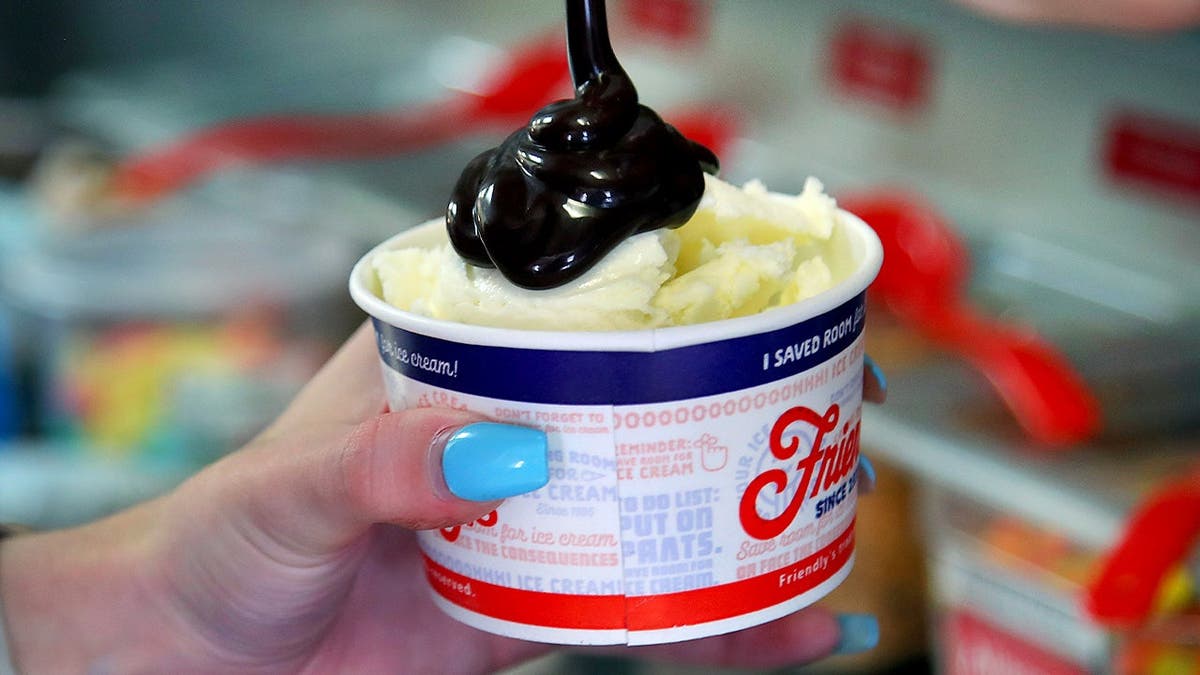
Friendly’s, the well-known casual dining chain, started in the mid-1930s as an ice-cream shop and expanded to a peak of about 850 restaurants. Today, fewer than 100 locations remain across 11 states.
Origins and Expansion
The journey began in 1935 when brothers Prestley and Curtis Blake opened the first ‘Friendly’ ice-cream shop in Springfield, Massachusetts. Amid the Great Depression, they sold double-dip cones for 5 cents, crafting a niche in affordability.
By 1940, they expanded to a second location, adding hamburgers to their menu. Rapid growth followed, with 10 restaurants by 1951 in Massachusetts and Connecticut. Then by 1974, Friendly’s had 500 locations throughout the Northeast and Mid-Atlantic regions.
Growth and Challenges
The chain became celebrated for its ice-cream desserts and family-friendly settings. It made strides like setting a Guinness World Record for the largest sundae in 1980 and adding an apostrophe and ‘s’ to its name in 1989.
Friendly’s signed a pivotal deal when Hershey’s acquired it in 1979, but the brand changed hands again with Tennessee Restaurant Company taking over in 1988.
The company first faced bankruptcy in 2011, then again in November 2020. This financial turmoil was partly due to shifting demographics, rising costs, and the impact of COVID-19, which brought a slump as dine-in services ceased temporarily.
Recent Developments
After its second bankruptcy, Amici Partners Group, LLC acquired Friendly’s in 2021, pledging to invigorate the chain. However, only 87 locations remain, with 22 in Massachusetts. Many users view some outlets as struggling to match modern restaurant trends.
Barbara E. Kahn, a marketing expert from the University of Pennsylvania’s Wharton School, suggests there’s still potential in Friendly’s legacy. Nostalgia plays a significant role, but adaptation to modern tastes and trends remains necessary.
Innovations, similar to those at McDonald’s, could rejuvenate the brand. Options include introducing non-meat items, healthy grains, and salads as part of the menu.