
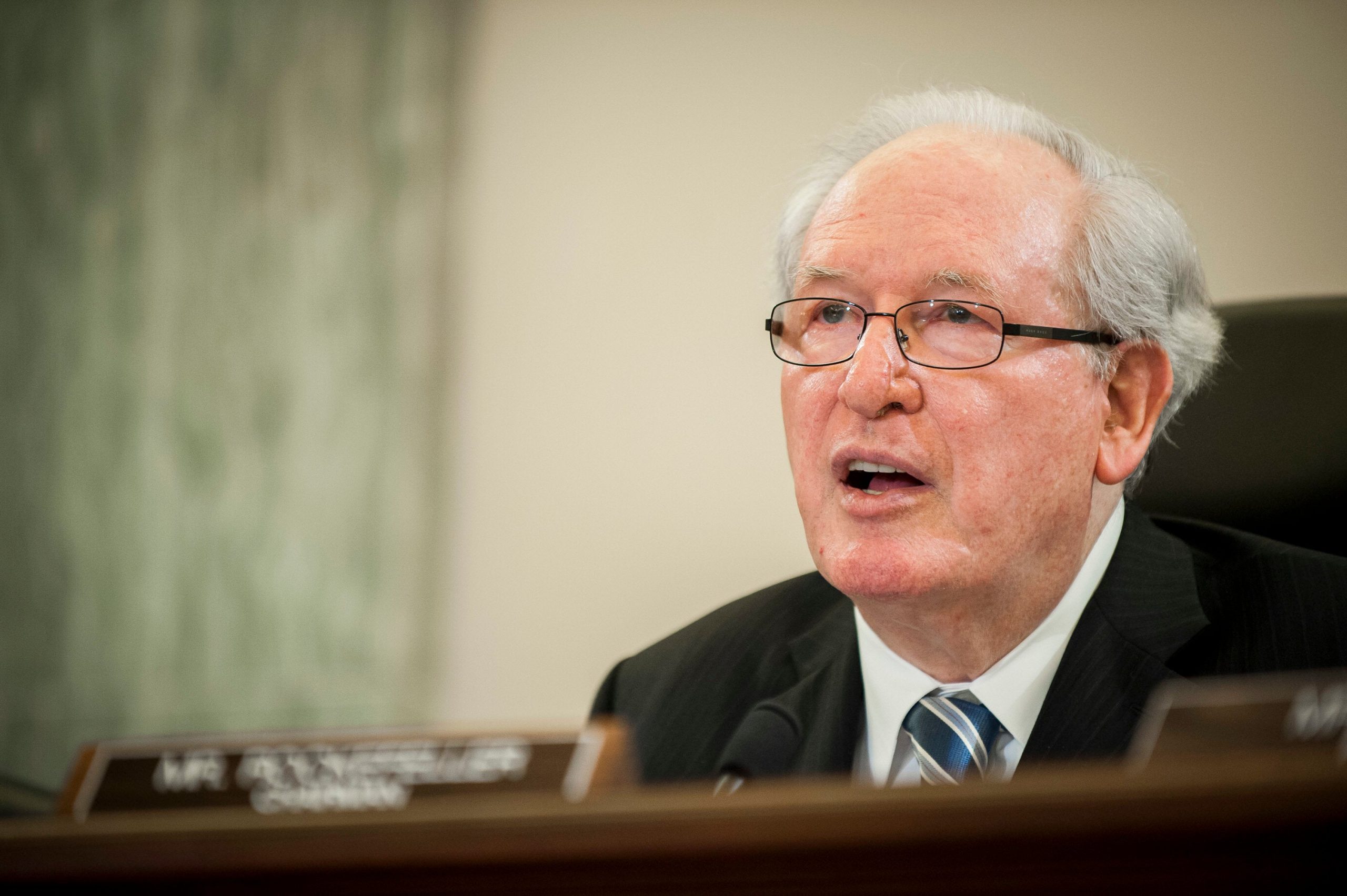
Former U.S. Senator John D. “Jay” Rockefeller IV has passed away at the age of 89. The Washington Post and Associated Press reported his death. Rockefeller, a Democrat from West Virginia, was the longest-serving senator from the state, representing it from 1985 to 2015. During his tenure, he focused on protecting America’s cybersecurity infrastructure, consumers’ rights, and coal miners’ safety.
Rockefeller was born on June 18, 1937, in New York City. He belonged to a wealthy and prominent family. His great-grandfather, John D. Rockefeller, co-founded Standard Oil and became the world’s first billionaire in 1916. Politics ran in the family; his uncle, Nelson Rockefeller, served as Vice President under President Gerald Ford and was also the 49th governor of New York. Another uncle, Winthrop Rockefeller, served as the 37th governor of Arkansas and was notable for being the first Republican to hold the office after Reconstruction.
Jay Rockefeller completed his bachelor’s degree at Harvard University in 1961 and began graduate studies at Yale University. However, he left Yale without finishing his studies to work as an assistant to Sargent Shriver, the first director of the Peace Corps. Rockefeller became the first director of the Peace Corps’ program in the Philippines.
In the mid-1960s, Rockefeller moved to West Virginia through the Volunteers in Service to America (VISTA) program. He was elected to the state House of Delegates in 1966 and became West Virginia’s secretary of state in 1968. He lost a gubernatorial race in 1972 to Arch Moore but went on to serve as president of West Virginia Wesleyan College starting in 1973. Despite losing the election, he remained in the state, which eventually improved his standing among residents.
In 1976, Rockefeller successfully ran for governor and served two terms. He later won a U.S. Senate seat in 1984, initiating his 30-year career in Congress. After retiring from the Senate in January 2015, Rockefeller joined the Council on Foreign Relations as a distinguished fellow. He donated his senatorial archives to West Virginia University, which hosted an exhibit on his career in April 2016.