
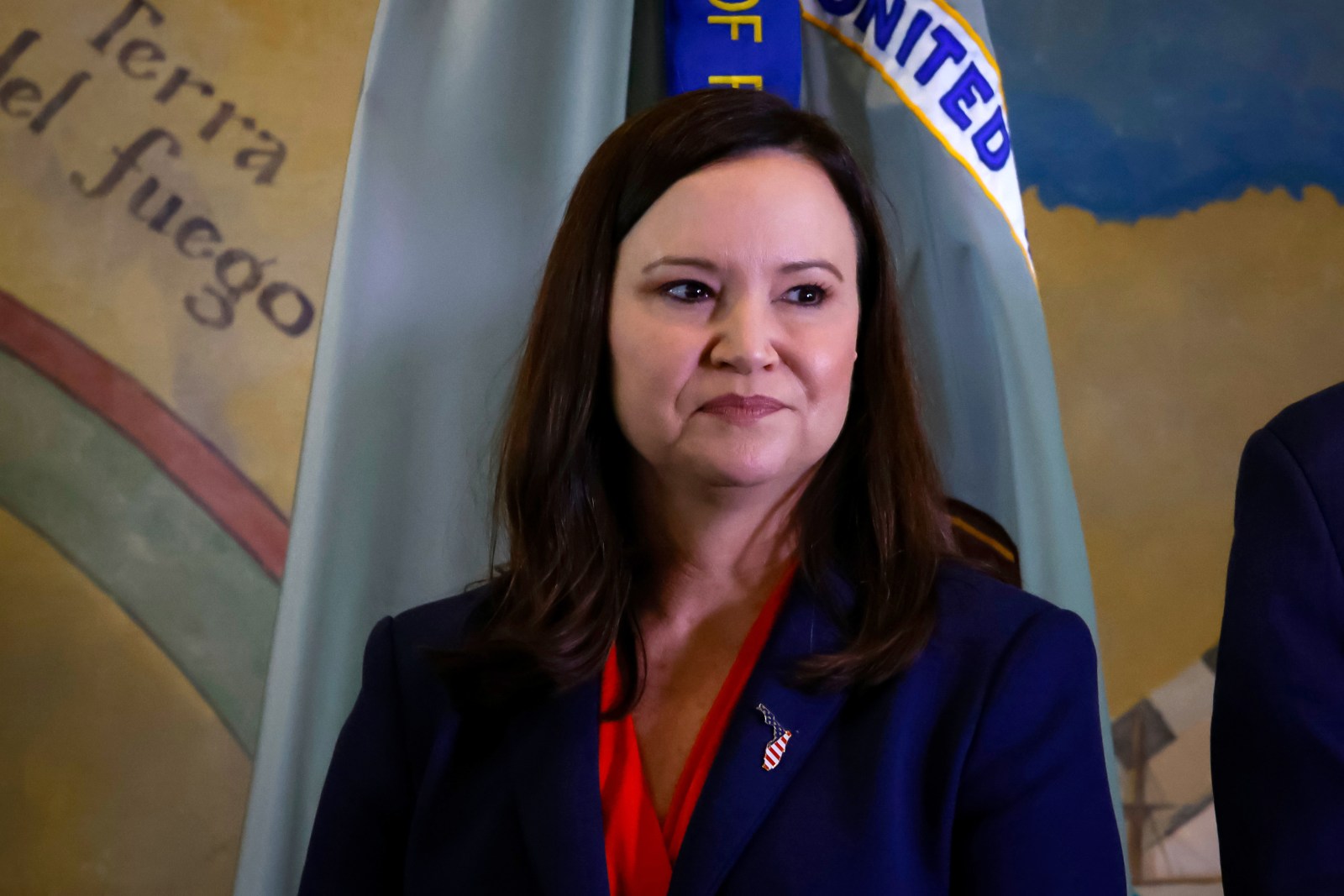
The upcoming Florida Senate race represents a significant challenge for progressive influence, as a progressive Democrat faces off against a Republican endorsed by Trump. Senator Ashley Moody, initially appointed by Governor Ron DeSantis after Marco Rubio became Secretary of State, is running her first statewide election as an incumbent. This presents her with an advantage. However, Democrats view it as a potential opportunity to win a seat Rubio held for over a decade.
On Tuesday, Angie Nixon claimed victory in the Democratic primary with 55.2 percent of the vote, surpassing opponent Alexander Vindman. At the time of the announcement, 83 percent of votes were counted. Senate Democratic Leader Chuck Schumer and Senator Kirsten Gillibrand acknowledged Nixon’s dedication to Florida, emphasizing her commitment to supporting working families and criticizing Moody’s past votes.
Despite this, the task for Democrats is formidable. Over the past decade, Florida has leaned toward Republican control. The GOP’s voter registration edge and its success in statewide contests reflect this shift. Although Moody is favored, recent polls show her lead over Nixon is narrower than past contests.
Angie Nixon’s Campaign Strategy
Nixon emerges as a prominent progressive Democrat with strong ties to Jacksonville. Her history as a grassroots organizer positions her as an outspoken opponent of DeSantis and the Republican Legislature. Her campaign focuses on economic accessibility, wage increases, and health care expansion, aiming to mobilize the working-class electorate that often sits out elections.
Her support base includes left-leaning groups and officials, enhancing her appeal among younger voters and progressives who seek clear contrasts to Republicans. A July survey by the University of North Florida showed Moody leading Nixon by 50 percent to 42 percent in a hypothetical election. It is noteworthy that at a similar point in the 2022 election, Rubio was trailing his opponent, Val Demings, yet eventually secured a decisive victory.
Betting platforms give Republicans a significant edge, with Polymarket and Kalshi suggesting strong odds for a Republican win. Nonetheless, Democrats hope that their progressive messages will energize voters and attract those frustrated by cost-of-living increases. Nixon argues affordability issues offer Democrats a strategic entry point in a state burdened by escalating housing and insurance prices.
Challenges for Nixon
Nixon faces considerable obstacles, as Republicans label her a far-left candidate. Florida’s electorate has shown resistance to progressive labels, with sizable communities like Cuban and Venezuelan Americans often wary of perceived leftist perspectives.
Financial backing is another issue. Nixon’s fundraising lags behind both Moody and Vindman, while Florida’s extensive media markets demand substantial financial investments for sustained campaigns. Hence, Nixon’s potential success relies on significant Democratic voter turnout and persuading independents to overlook ideological divides in favor of economic solutions.
Democratic Past in Florida Senate Elections
The last Democratic victory in a Florida U.S. Senate race traces back to 2012, when Bill Nelson defeated Republican Connie Mack IV for a third term. Nelson’s subsequent defeat in 2018 by Republican Rick Scott marked the decline of Democratic presence in Florida’s Senate seats. Since then, Republicans have solidified their grip, encompassing gubernatorial, senatorial, and down-ballot victories, further amplified by a voter-registration edge.
To triumph in November, Nixon must not only counter Moody’s incumbency and visibility but also reverse Florida’s decade-long Republican-favoring trend. While Moody currently leads based on polling, fundraising, and electoral history, affordability concerns and the broader political climate leave room for contestation.