
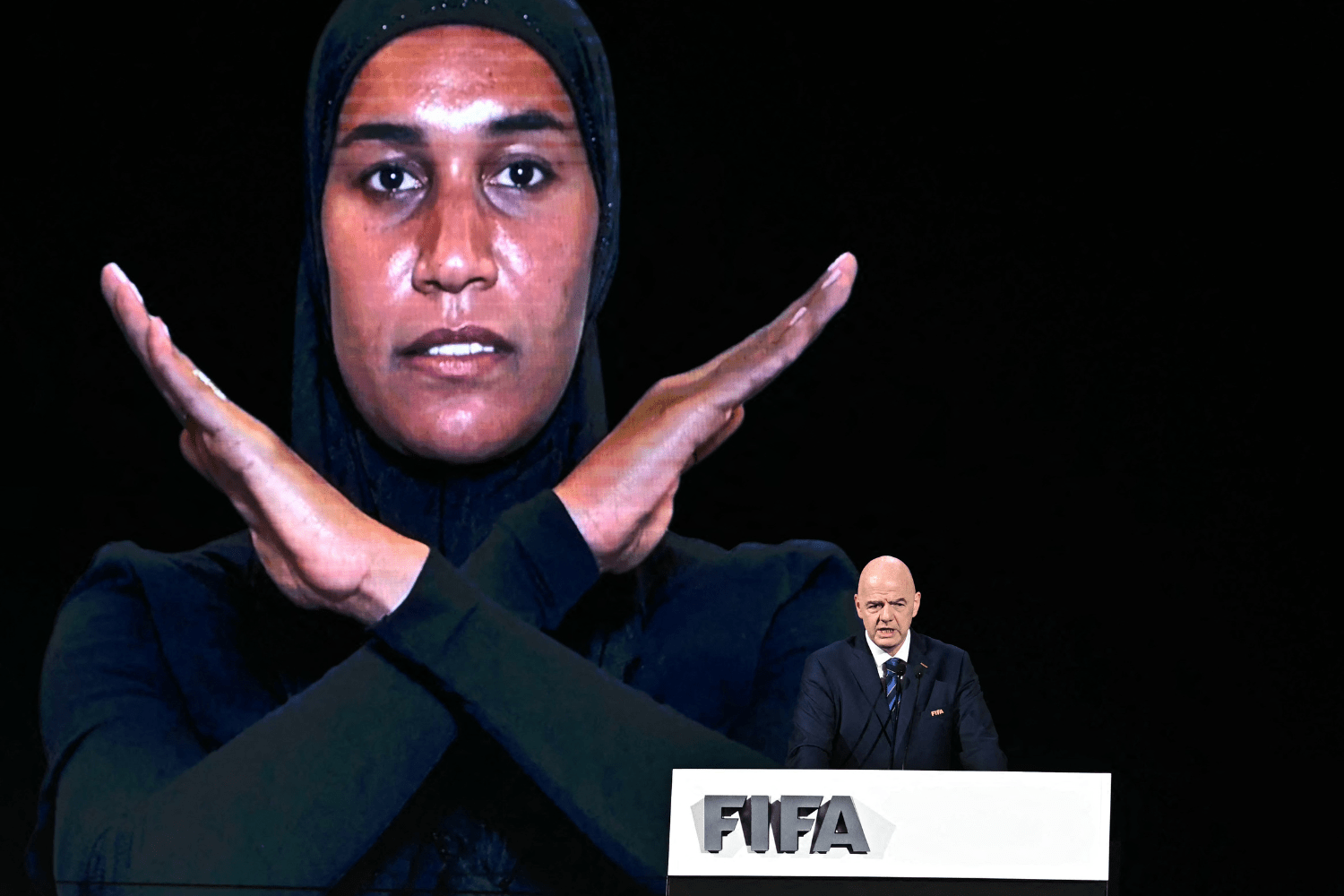
In the 2026 World Cup, players have a new method to report racist abuse. By crossing their arms to form an “X,” they can activate FIFA’s anti-discrimination protocol. This gesture allows for the possible halting of play.
First presented at the 2024 Under-20 Women’s World Cup in Colombia, this “No Racism” gesture will now be implemented across all FIFA competitions. The governing body for soccer is under persistent pressure to react more swiftly and visibly to racial incidents that frequently taint international tournaments.
What Happens When a Player Makes the ‘X’ Gesture?
Under FIFA guidelines, if players, referees, or team officials witness racist or discriminatory acts, they use the “X” signal. This triggers soccer’s three-step anti-discrimination protocol.
The initial step is for the referee to halt play and make a stadium announcement demanding an end to such behavior. If it persists, players may leave the field, and the match could be suspended. If there is still no resolution, the referee can abandon the game altogether.
FIFA clarifies that the gesture complements the existing procedure, providing a distinct indication to activate it.
How Is This Different From Previous Approaches?
FIFA’s anti-discrimination procedure has been in place for several years. However, its execution often relied on referees identifying the abuse or players reporting it verbally during games. The new gesture seeks to remove this uncertainty.
By introducing a universally recognized signal, FIFA aims to enhance the speed and consistency of identifying and addressing incidents. The move reflects criticism from players and anti-racism advocates who claim governing bodies have been slow to act when abuse occurs.
This initiative forms part of a broader effort to standardize anti-racism enforcement ahead of the 2026 World Cup, occurring across the United States, Canada, and Mexico.
The Racism Incidents Behind the Move
Racist incidents during major tournaments and high-profile matches have necessitated this change. One significant case arose during a Euro 2020 qualifier between England and Bulgaria, where racist chants and gestures targeted England players, leading to a near-abandonment of the match.
At the most recent men’s World Cup in Qatar 2022, FIFA handed out disciplinary measures over discriminatory behaviors, including sanctions against federations for offensive chants by supporters. The issue of abuse extends beyond stadiums too.
Following England’s loss to Italy in the Euro 2020 final, players such as Bukayo Saka, Marcus Rashford, and Jadon Sancho faced online racist abuse. This led to police investigations and widespread condemnation.